Farmer's Carry
Activation
Muscles worked
Movement
Core
Beginner · Free Weights
Secondary muscles
Movement pattern
Equipment category
How to perform
- 1
Set up
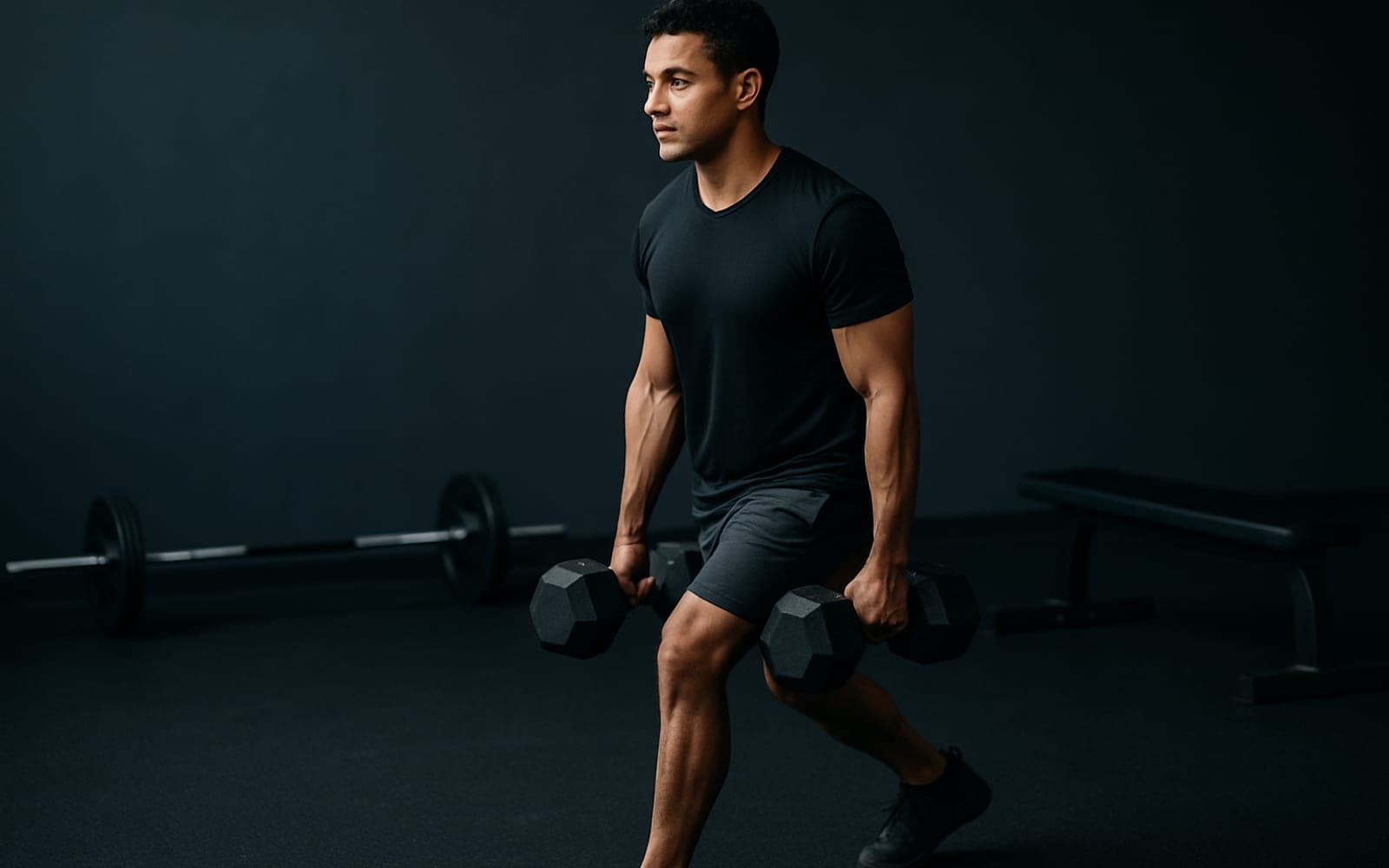
Hold a heavy dumbbell or kettlebell in each hand at your sides.
- 2
Execute the movement
Stand tall with shoulders back and core braced, then walk with short, controlled steps for a set distance or time. Don't lean or let the weights swing.
Common mistakes
- Shrugging or hunching
- Rushing the steps
- Letting the load pull you sideways
Make it harder
Make it easier
Accessibility
Substitutions
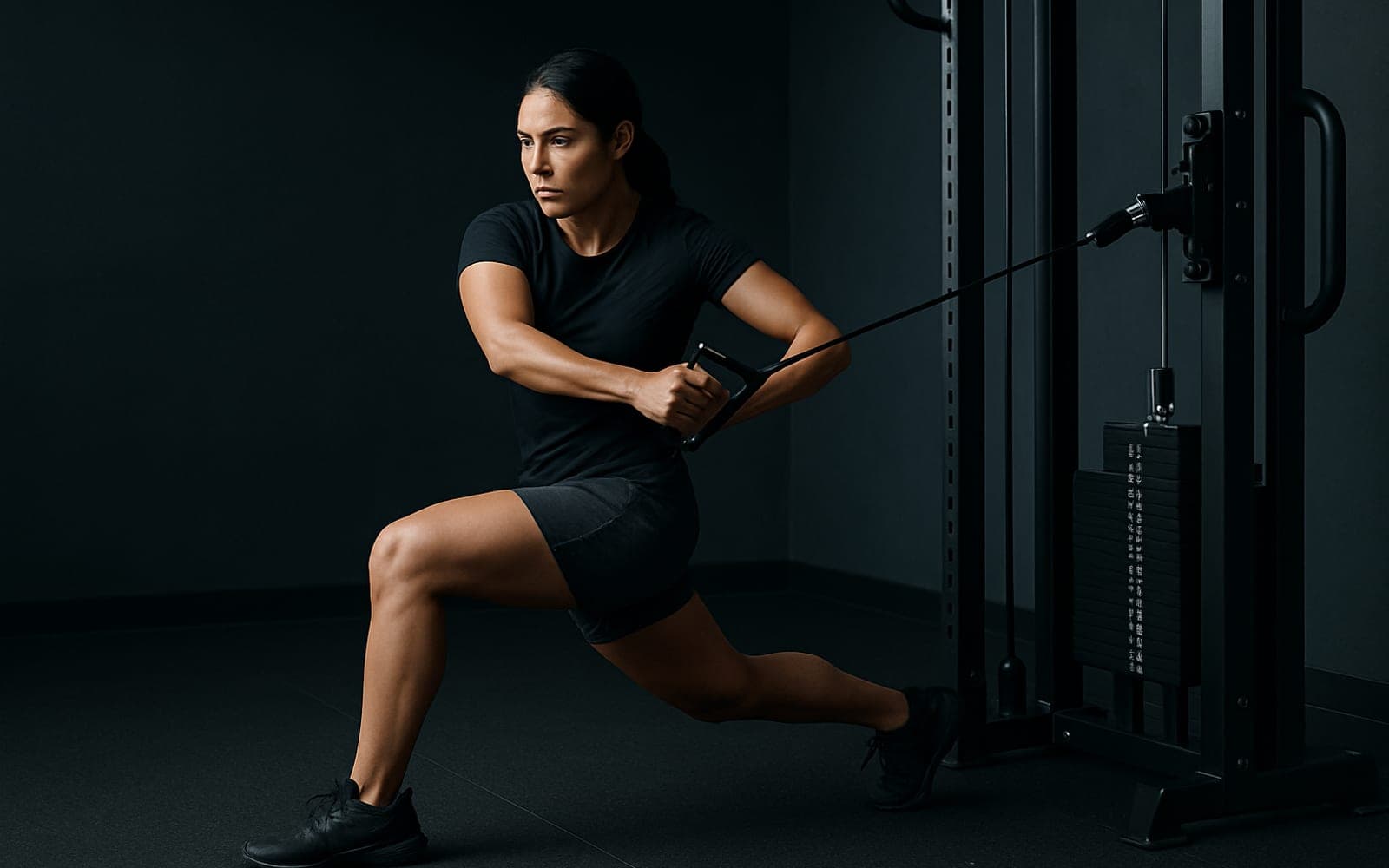
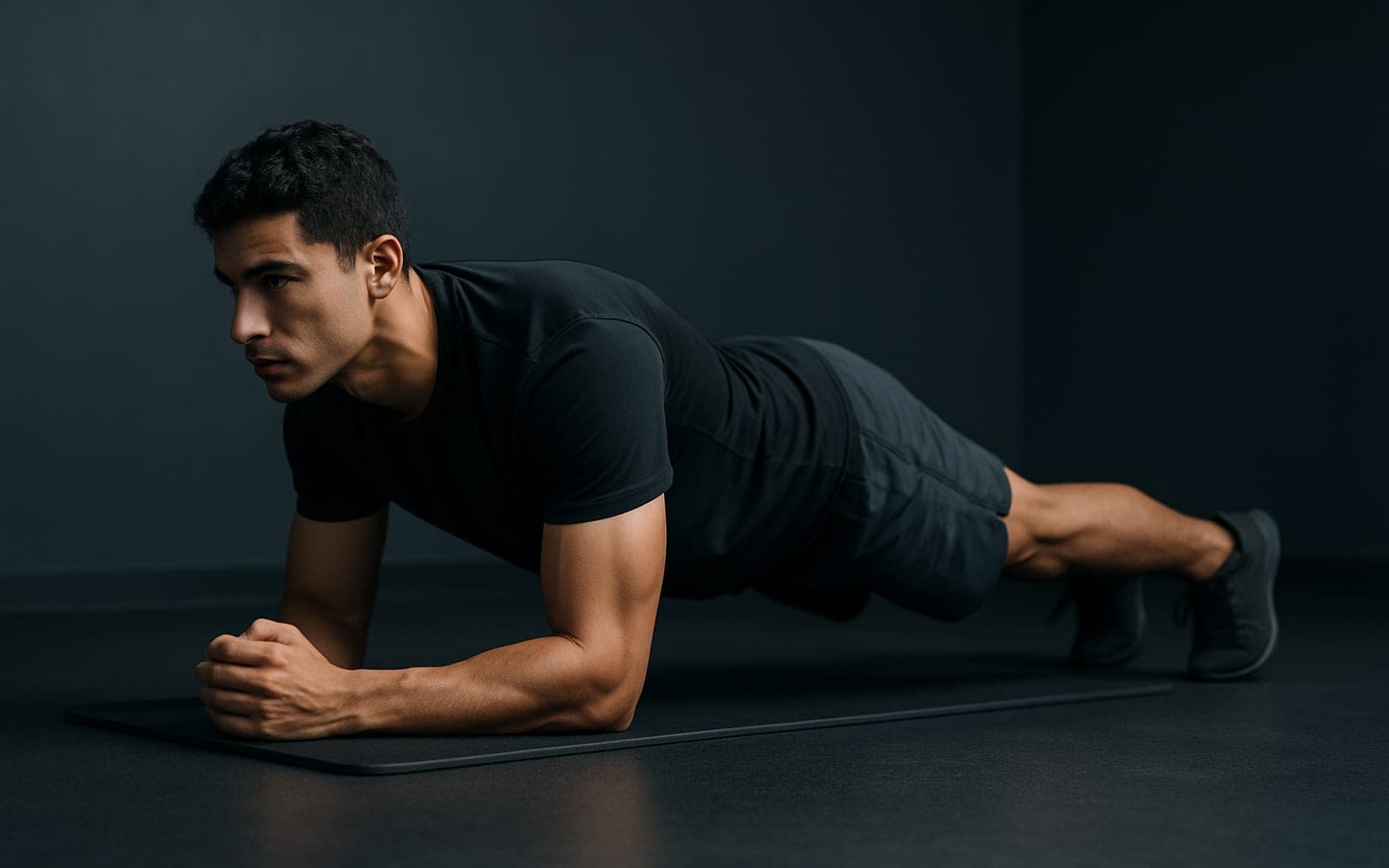
If a machine is busy or unavailable, these train the same pattern a different way.
Your progress over time
What to expect from training this consistently — everyone progresses at their own pace.
- 1
First few sessions
Learn the setup and bracing cues: neutral spine, packed shoulders, firm core and short steady steps; carry light loads for short distances (20–40 m) to groove technique and prevent swinging.
- 2
Weeks 2–4
Grip endurance and core tension improve noticeably allowing longer sets or added time under load; you can progress weight modestly while maintaining upright posture and steady cadence.
- 3
Months 1–3
Significant increases in grip strength and core stability permit heavier carries and longer distances (e.g., heavier implements for 60–120 seconds or 40–100 m), with improved transfer to loaded walks and farm-style conditioning.
- 4
Months 3–6
Developed upper-back and anti-rotation strength reduces forward lean under heavier loads; carries become a reliable conditioning and strength tool, often used as a finisher or to build capacity between strength sessions.
- 5
6+ months
Substantial improvements in maximal carry load and duration, robust grip strength, and transferable gains in upright stability for athletic tasks and everyday handling of heavy objects; you can include complex variations (single-arm, uneven loads) to target asymmetries and sport-specific demands.
Benefits of the farmer's carry
Builds grip and forearm strength through sustained holds, which transfers to deadlifts, pulls and daily tasks that require carrying objects.
Develops anti-extension and anti-rotation core strength because the midline must stay rigid while walking under load.
Improves upper-back endurance and posture as the scapular stabilizers resist rounding when carrying weight at the sides.
Enhances lower-body and gait coordination by reinforcing short, controlled steps and force transfer through the hips and legs during locomotion.
Serves as a low-skill, high-return conditioning tool that raises work capacity and metabolic demand without complex technique.
Easy to scale and progress (weight, distance, time, unilateral variations), making it useful for beginners through advanced athletes to target functional strength.
Exercises that pair with this
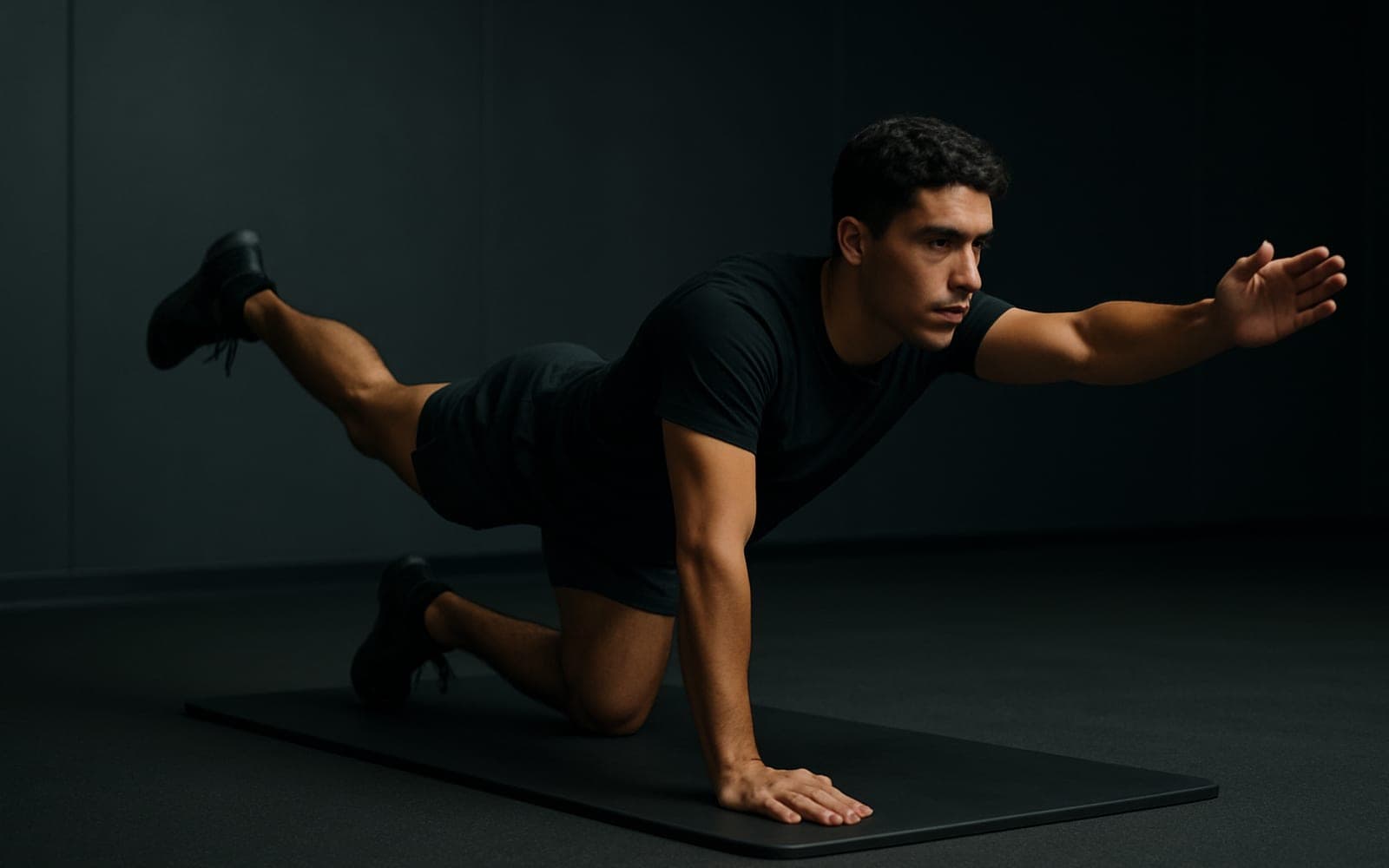
Same muscles or the same movement pattern — useful for building the rest of the session.
Farmer's Carry — questions people ask
What muscles does the farmer's carry work?
The farmer's carry trains the forearms and core as the primary target, with the upper back, legs working as support. It is a core pattern, so it also trains the coordination that pattern needs.
How many sets and reps of the farmer's carry should I do?
Three to five sets of 3–6 reps with two to three minutes of rest, adding a small amount of weight when all sets feel solid.
Is the farmer's carry good for beginners?
Yes. The farmer's carry is a beginner-friendly movement. Use lighter weights and shorter carries. If it feels like too much, build the pattern on the functional cable training first.
What can I do instead of the farmer's carry?
Functional Cable Training, Plank all train the same core pattern with different equipment, so any of them works when the machine is busy or your gym does not have it.
What are the most common farmer's carry mistakes?
Shrugging or hunching; Rushing the steps; Letting the load pull you sideways. Stand tall with shoulders back and core braced, then walk with short, controlled steps for a set distance or time. Don't lean or let the weights swing.
Can I do the farmer's carry at home?
The farmer's carry needs free weights equipment, which most home gyms do not have. The plank trains the same pattern with nothing more than your bodyweight or a band.