Dead Bug
Activation
Muscles worked
Movement
Core
Beginner · Bodyweight
Primary muscles
Secondary muscles
Movement pattern
Equipment category
How to perform
- 1
Set up
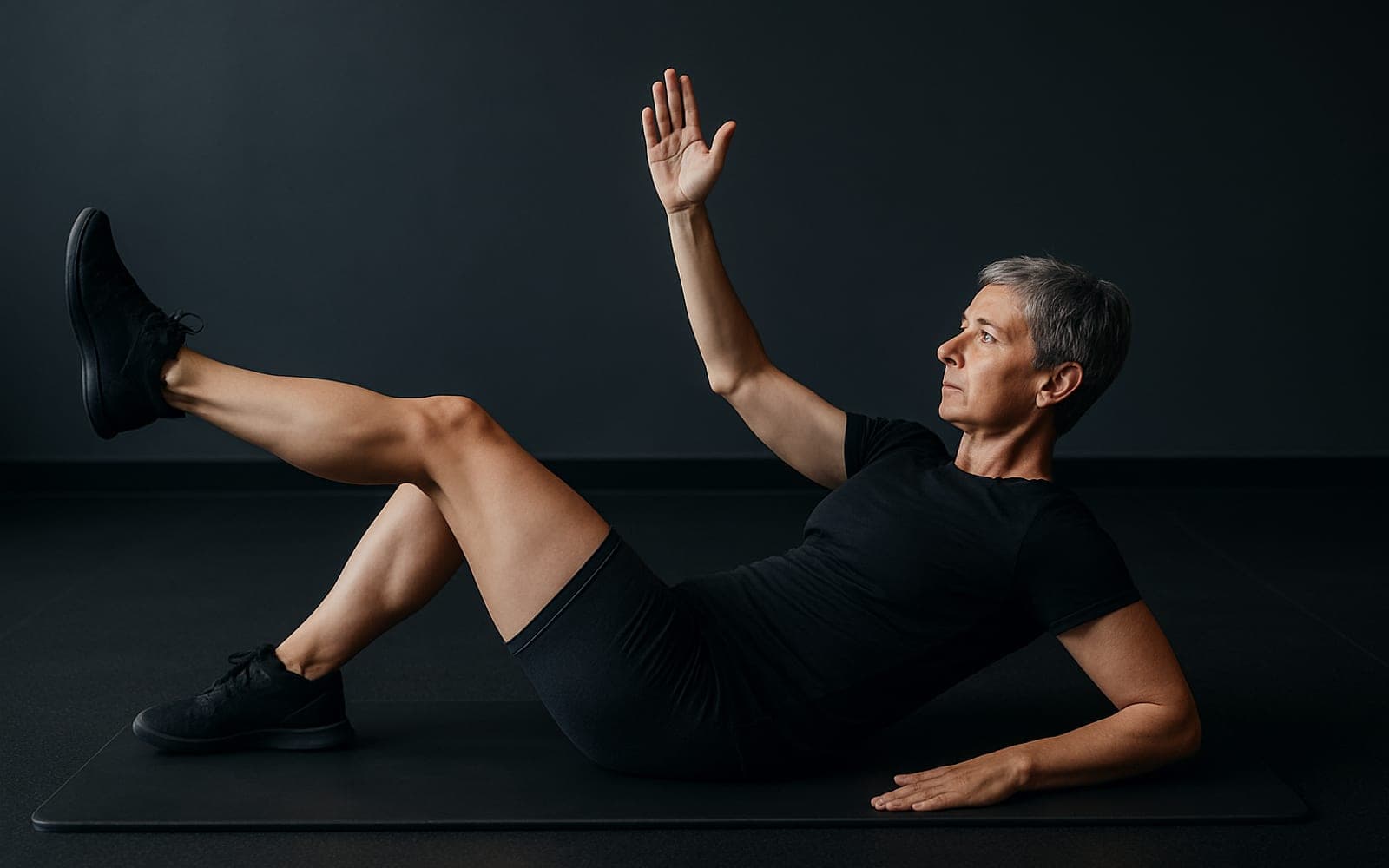
On your back, arms up, knees at 90°.
- 2
Execute the movement
Lower an opposite arm and leg while keeping the lower back flat, return, alternate.
Common mistakes
- Lower back arching up
Make it harder
Make it easier
Accessibility
Substitutions
If a machine is busy or unavailable, these train the same pattern a different way.

Your progress over time
What to expect from training this consistently — everyone progresses at their own pace.
- 1
First few sessions
Learn the movement pattern and diaphragmatic breathing while maintaining a flat lower back; typically able to perform slow, guided repetitions with cues for bracing and alignment.
- 2
Weeks 2–4
Improved neuromuscular control and endurance of deep core musculature: you can complete more reps/longer sets with a neutral spine and less need for external cueing.
- 3
Months 2–3
Noticeable improvement in pelvic control and anti-extension strength translating to cleaner movement in squats, hinges, and single‑leg tasks; able to progress to tempo variations and reach higher rep ranges.
- 4
6+ months
Reliable core endurance and coordination under load-free conditions and readiness to advance to loaded or more challenging anti‑extension variations (e.g., weighted dead bug, stability ball progressions) while maintaining movement quality.
Benefits of the dead bug
Develops core stability by training the deep abdominal muscles to resist lumbar extension while moving the limbs.
Teaches pelvic control and anti‑extension mechanics that improve movement quality in squats, deadlifts and everyday lifting tasks.
Improves coordination and contralateral limb control by practicing controlled opposite arm‑leg movements.
Builds muscular endurance of the trunk in a low‑impact, beginner‑friendly way suitable for regular practice.
Reinforces proper breathing and bracing patterns (diaphragmatic breathing with abdominal engagement) useful across many exercises and daily activities.
Accessible progression options allow steady overload and variation for continued technical and strength improvements without complex equipment.
Exercises that pair with this
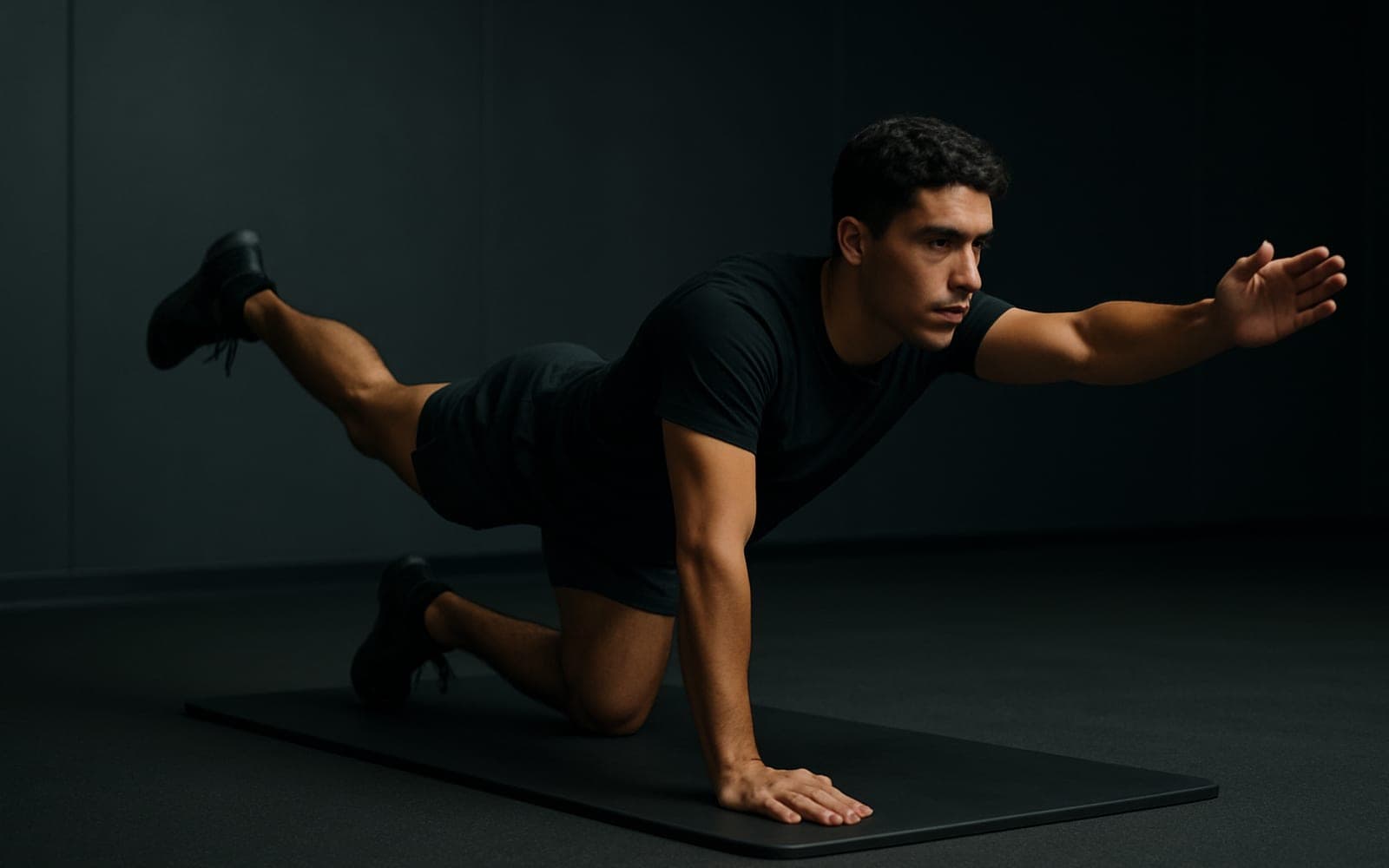
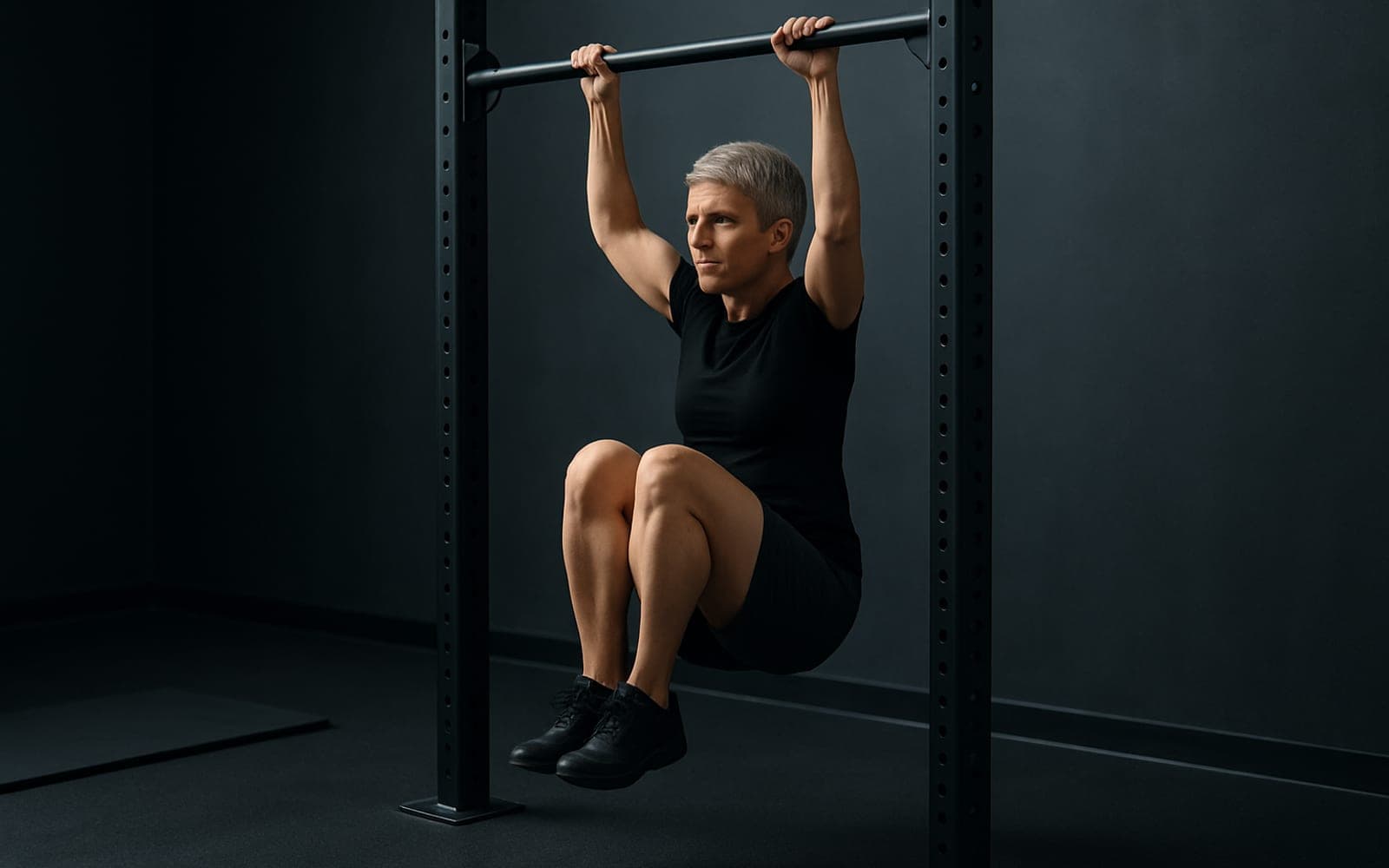
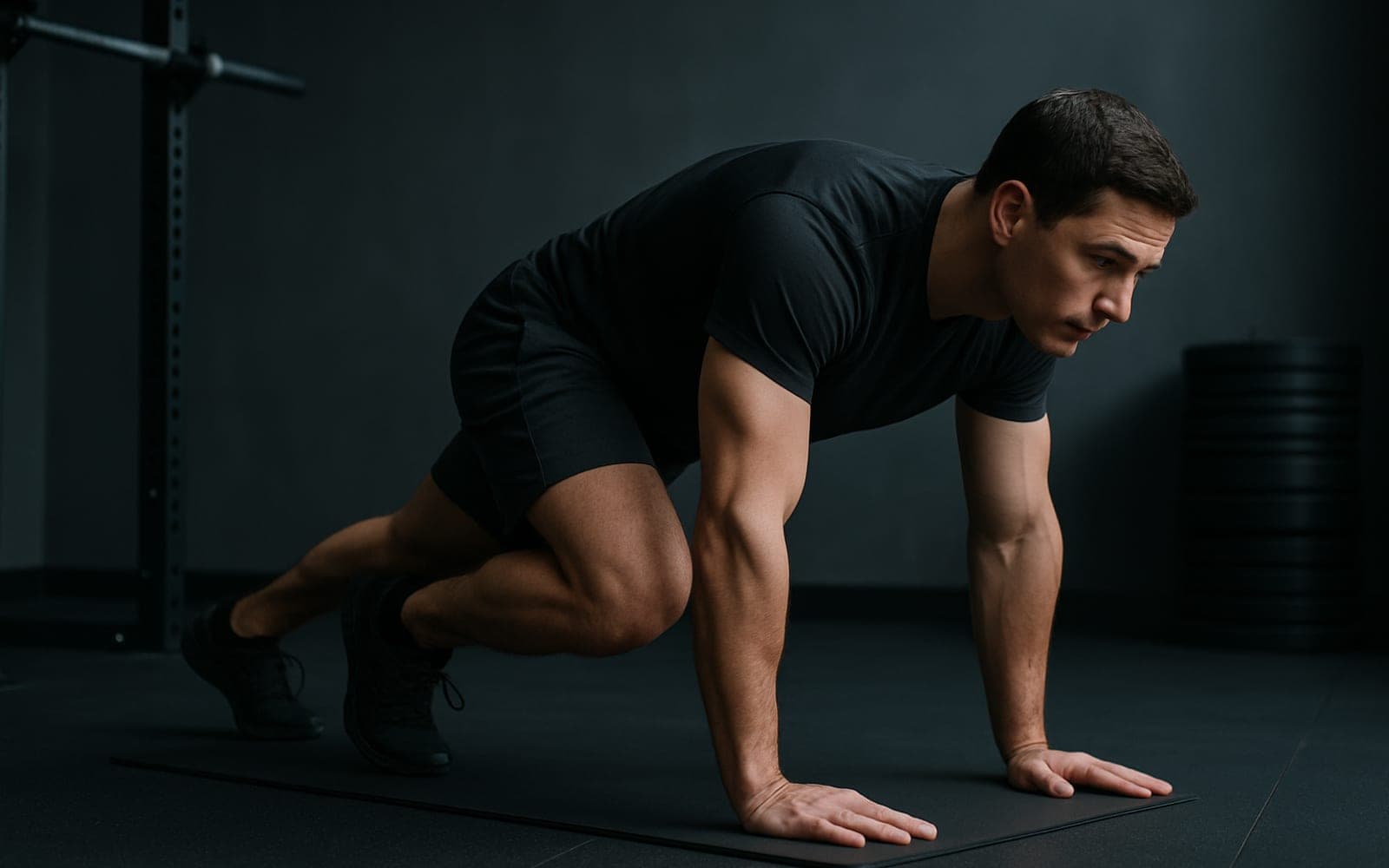
Same muscles or the same movement pattern — useful for building the rest of the session.

Dead Bug — questions people ask
What muscles does the dead bug work?
The dead bug trains the core as the primary target. It is a core pattern, so it also trains the coordination that pattern needs.
How many sets and reps of the dead bug should I do?
Two to four sets of 8–15 reps, or 20–45 second holds. Stop the set when your form breaks, not when the count runs out.
Is the dead bug good for beginners?
Yes. The dead bug is a beginner-friendly movement. Move only the legs. If it feels like too much, build the pattern on the core stability (machine/anti-rotation) first.
What can I do instead of the dead bug?
Core Stability (Machine/Anti-Rotation) all train the same core pattern with different equipment, so any of them works when the machine is busy or your gym does not have it.
What are the most common dead bug mistakes?
Lower back arching up. Lower an opposite arm and leg while keeping the lower back flat, return, alternate.