Push Press
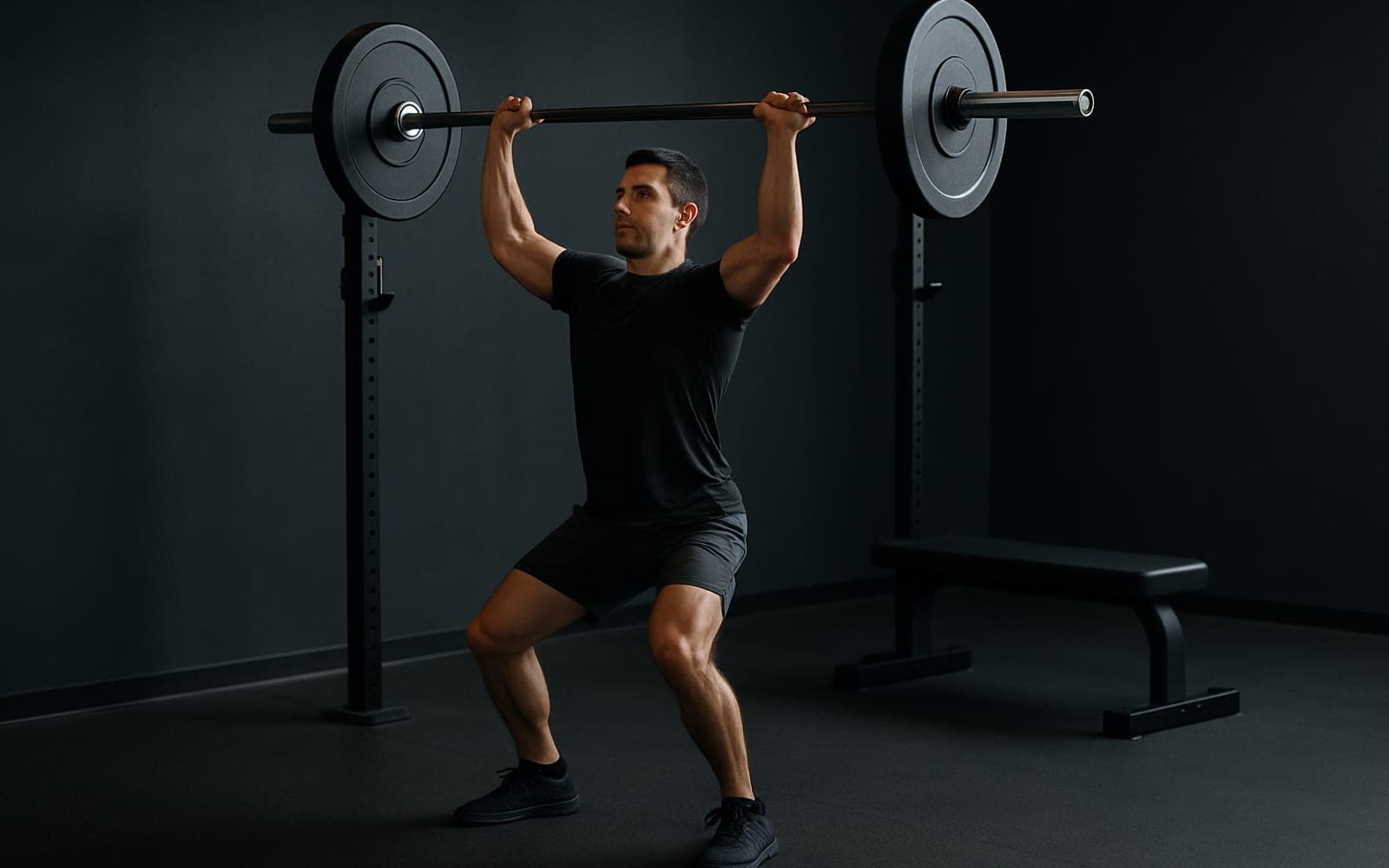
Activation
Muscles worked
Movement
Vertical Push
Advanced · Free Weights
Primary muscles
Movement pattern
Equipment category
How to perform
- 1
Set up
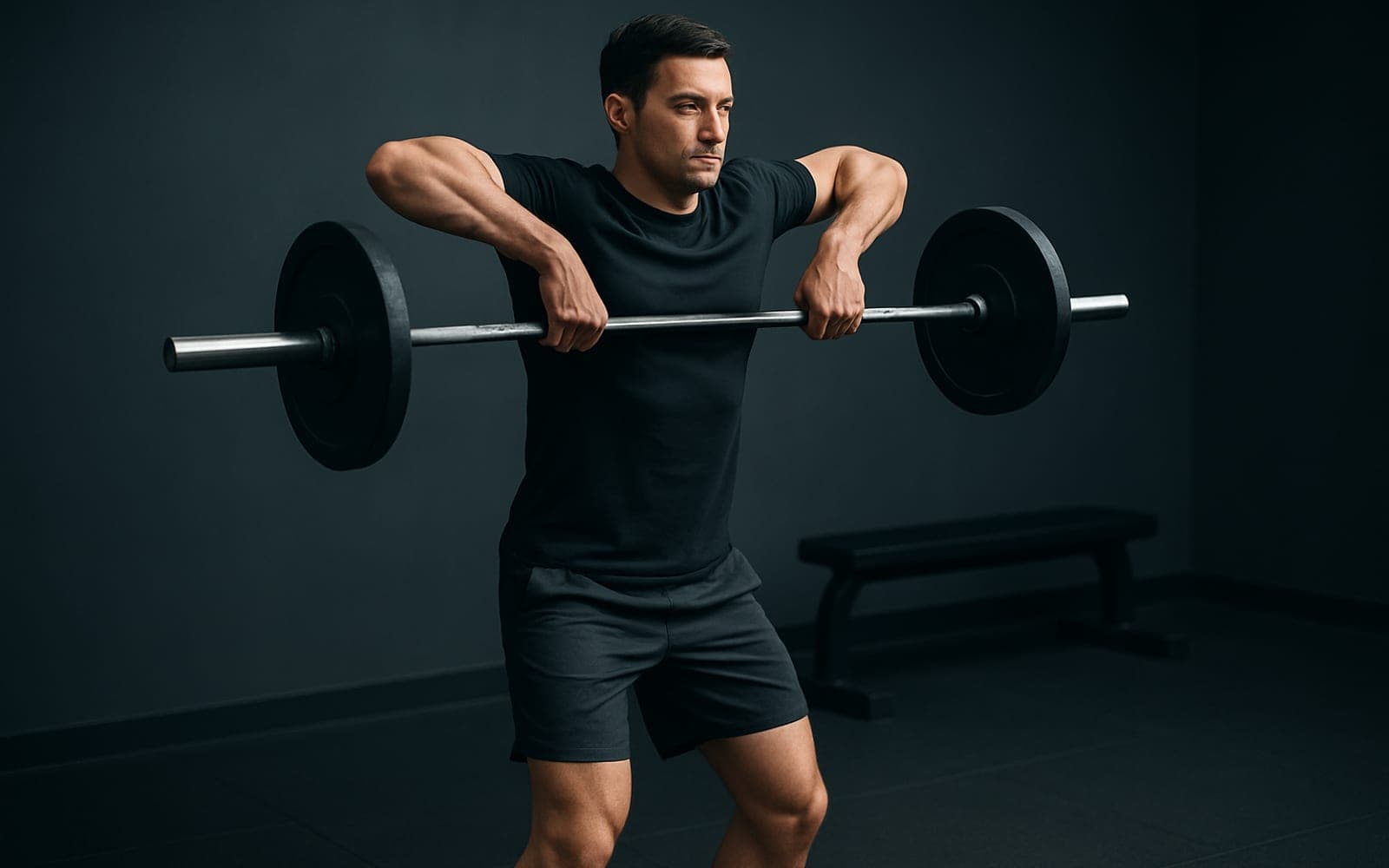
Rack a barbell on the front delts, feet hip-width, core braced.
- 2
Execute the movement
Dip a few inches at the knees, then drive explosively through the legs to launch the bar overhead; lock out with the bar over the mid-foot. Uses leg drive to move more than a strict press.
Common mistakes
- Pressing before the legs finish
- Over-arching the lower back
- Bar drifting forward
Make it harder
Make it easier
Substitutions
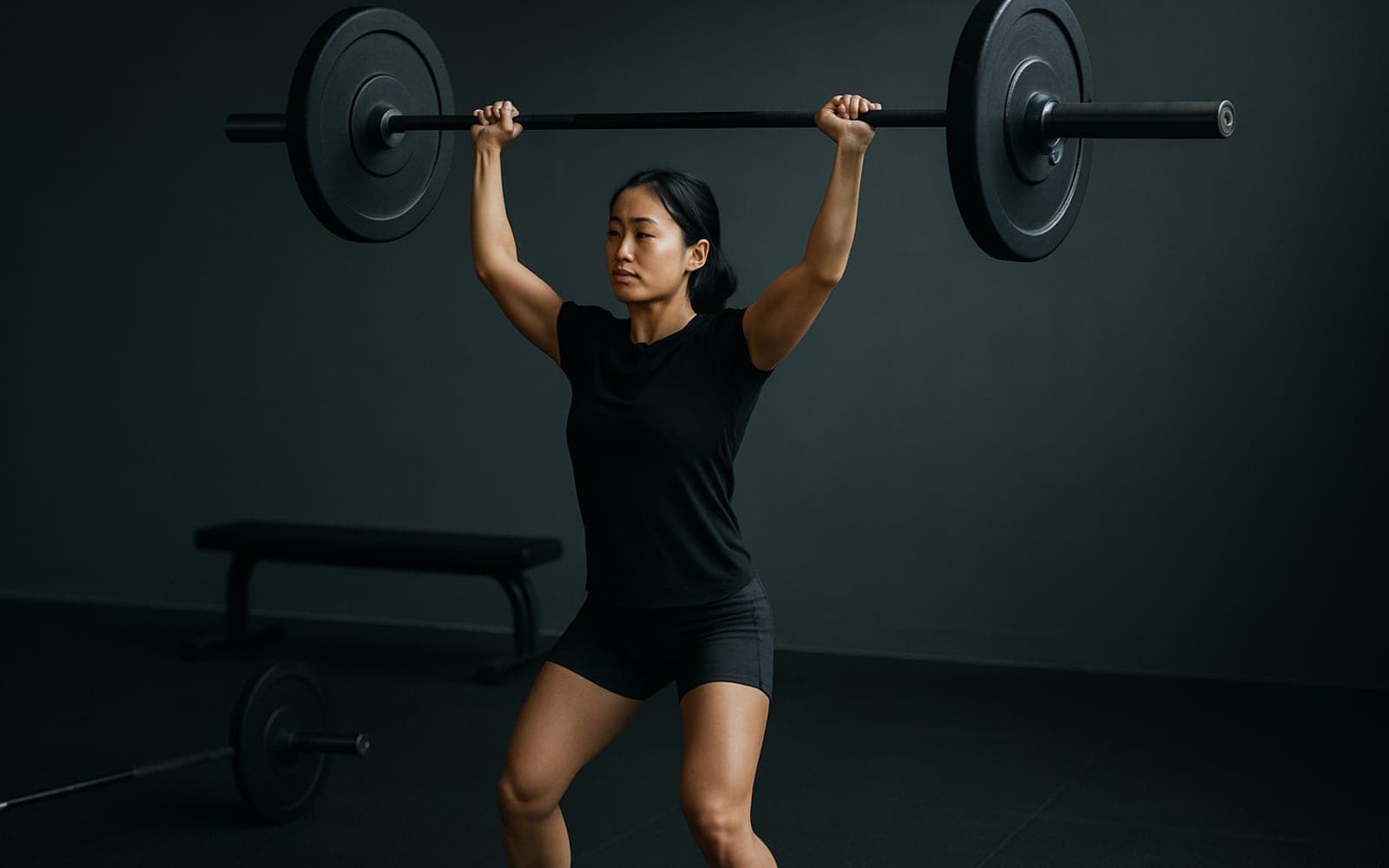
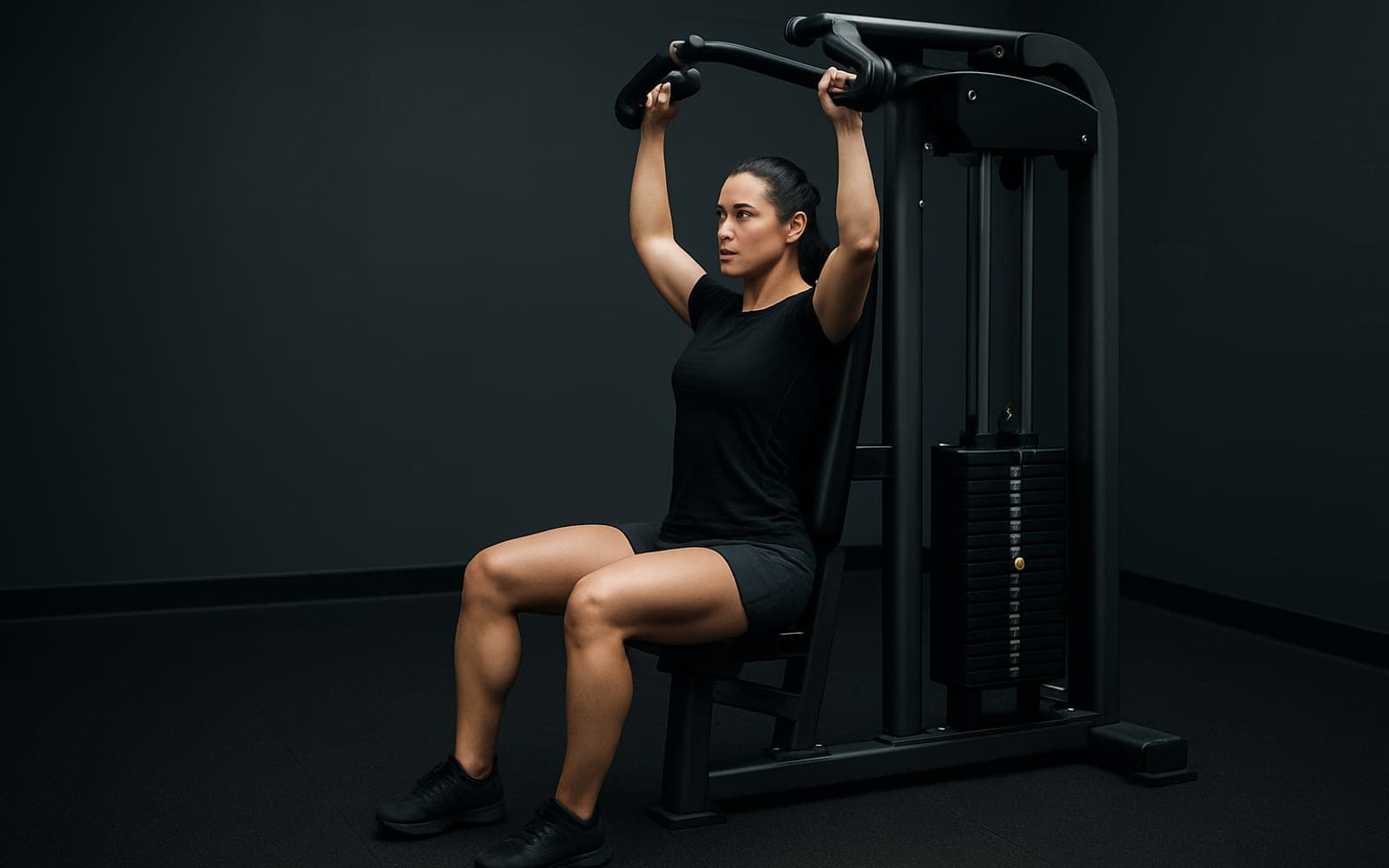
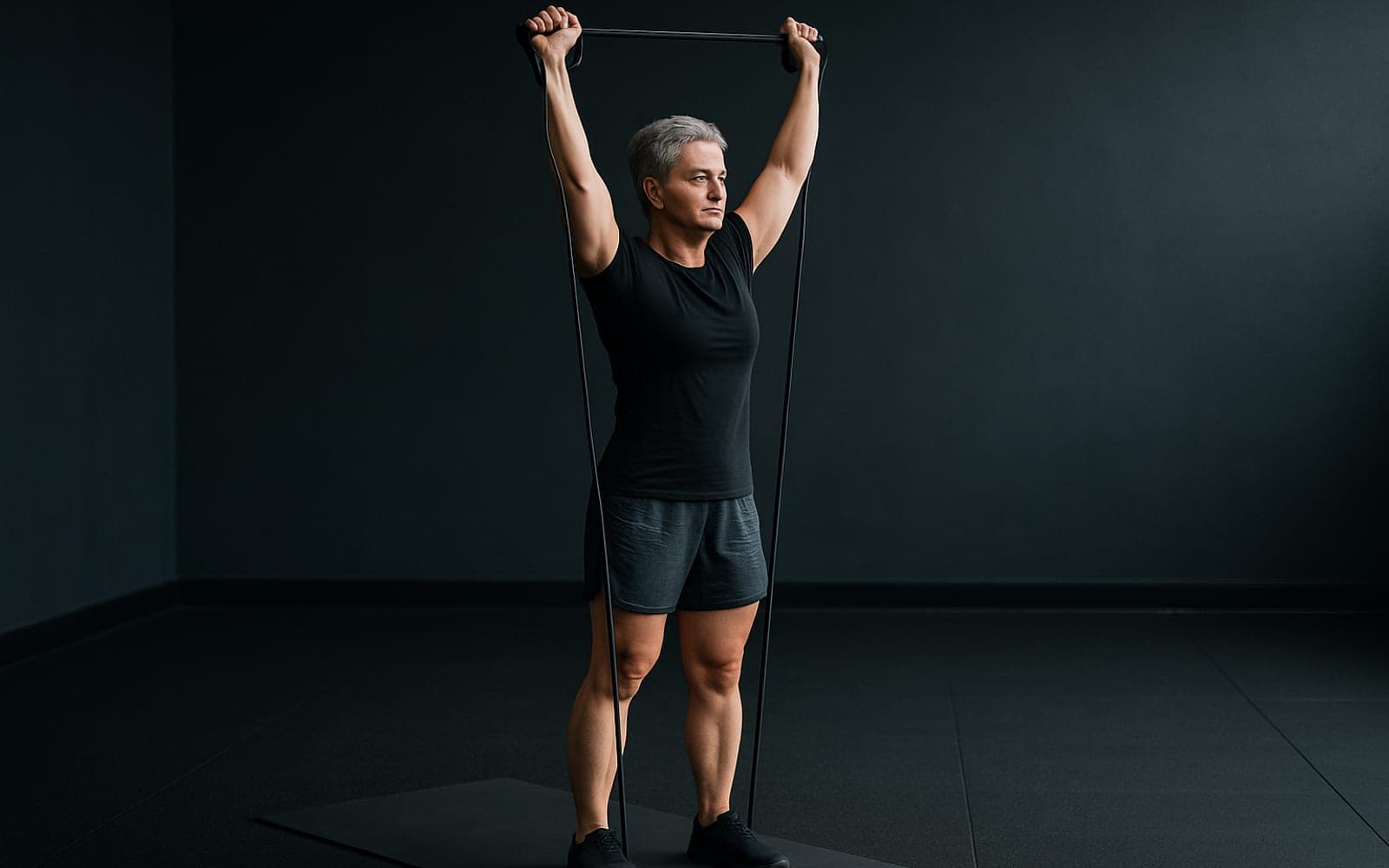
If a machine is busy or unavailable, these train the same pattern a different way.
Your progress over time
What to expect from training this consistently — everyone progresses at their own pace.
- 1
First few sessions
Learn the timing and technique: a controlled short dip, explosive hip extension, and a confident lockout overhead; light-to-moderate loads used to groove coordination and safety.
- 2
Weeks 2–4
Notice improved bar path and more powerful leg-to-arm transfer, allowing you to push significantly more than your strict press while maintaining stable overhead positions.
- 3
Months 2–3
Build measurable strength and power — heavier working sets, increased reps at challenging loads, and clearer athletic carryover (e.g., faster standing vertical power and more explosive drives).
- 4
Months 4–6
Substantial increases in overhead loading and shoulder/triceps hypertrophy, better core/bracing under load, and refined technique under fatigue for higher-volume or complex training sessions.
- 5
6+ months
Convert push press strength into advanced performance: higher 1–3RM push press numbers, improved transfer to sport-specific explosive actions, and a durable, strong overhead press base for heavy lifts and athletic work.
Benefits of the push press
Develops explosive vertical pressing power by training coordinated hip drive into an overhead lockout, improving ability to move heavy loads overhead.
Directly strengthens the deltoids and triceps under loaded, athletic conditions, promoting both size and force production in the shoulders and arms.
Builds lower-body power (quads and hips) and triple-extension timing that transfers to jumps, throws, and sprint drive phases.
Enhances core stability and bracing because the torso must resist flexion/extension while transferring force from the legs to the bar.
Teaches efficient load management and recovery under overhead bar paths, reducing reliance on shoulder-only pressing and enabling heavier work safely.
Serves as an effective strength–power hybrid lift for advanced trainees, improving work-capacity for high-intensity training sessions and complex Olympic/strength variations.
Exercises that pair with this
Same muscles or the same movement pattern — useful for building the rest of the session.
Push Press — questions people ask
What muscles does the push press work?
The push press trains the shoulders as the primary target, with the triceps, quads, core working as support. It is a vertical push pattern, so it also trains the coordination that pattern needs.
How many sets and reps of the push press should I do?
Three to five sets of 2–5 reps, fully rested between sets. Power work is about speed, so end the set the moment the bar slows down.
Is the push press good for beginners?
Not as a first exercise. The push press is an advanced movement. Use a strict overhead press first. It is also form-sensitive, so it is worth having a coach or an experienced lifter watch your first few sessions. If it feels like too much, build the pattern on the machine shoulder press first.
What can I do instead of the push press?
Barbell Overhead Press, Machine Shoulder Press, Band Overhead Press all train the same vertical push pattern with different equipment, so any of them works when the machine is busy or your gym does not have it.
What are the most common push press mistakes?
Pressing before the legs finish; Over-arching the lower back; Bar drifting forward. Dip a few inches at the knees, then drive explosively through the legs to launch the bar overhead; lock out with the bar over the mid-foot. Uses leg drive to move more than a strict press.
Can I do the push press at home?
The push press needs free weights equipment, which most home gyms do not have. The band overhead press trains the same pattern with nothing more than your bodyweight or a band.