Dumbbell Shoulder Press
Activation
Muscles worked
Movement
Vertical Push
Intermediate · Free Weights
Primary muscles
Secondary muscles
Movement pattern
Equipment category
How to perform
- 1
Set up
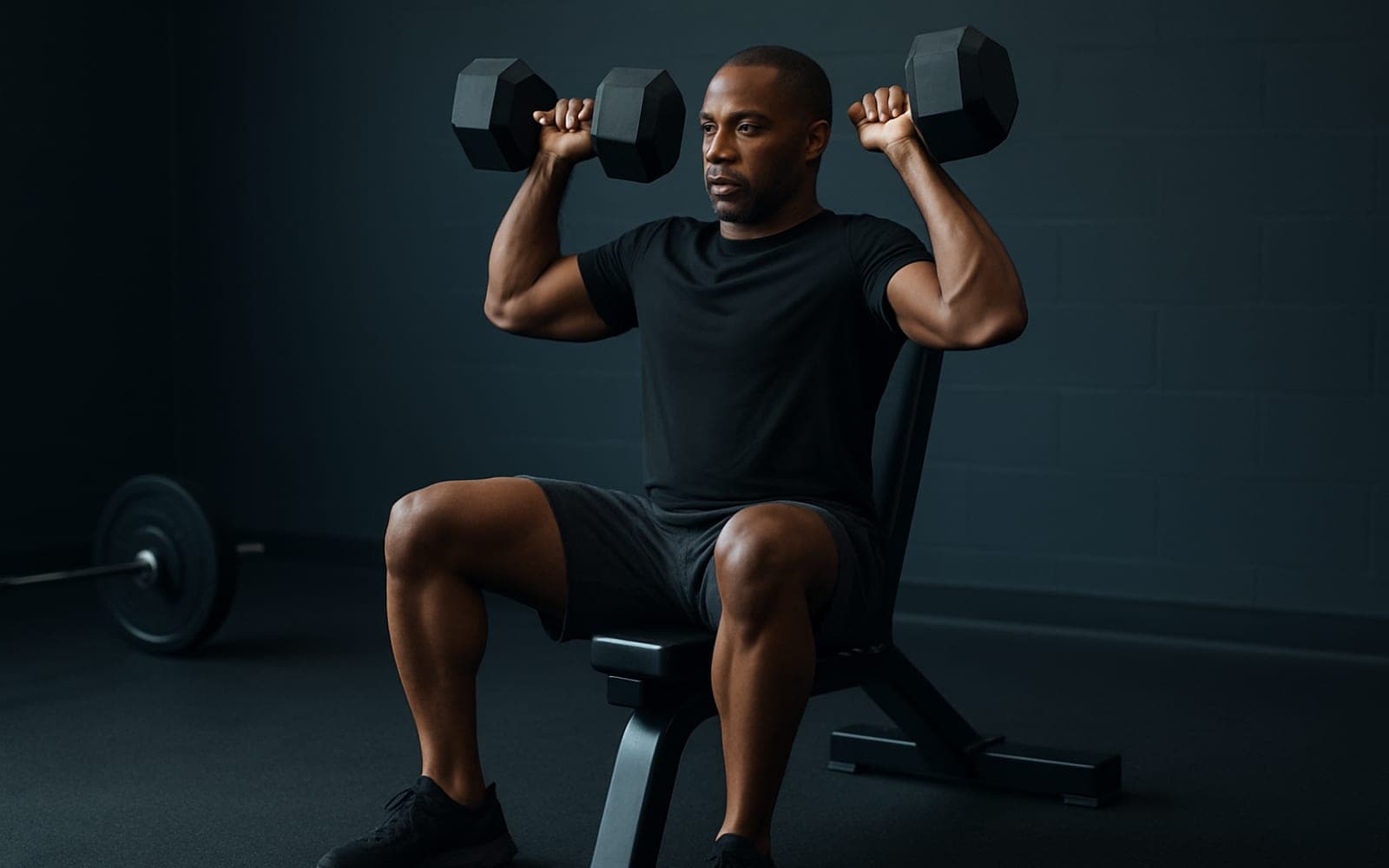
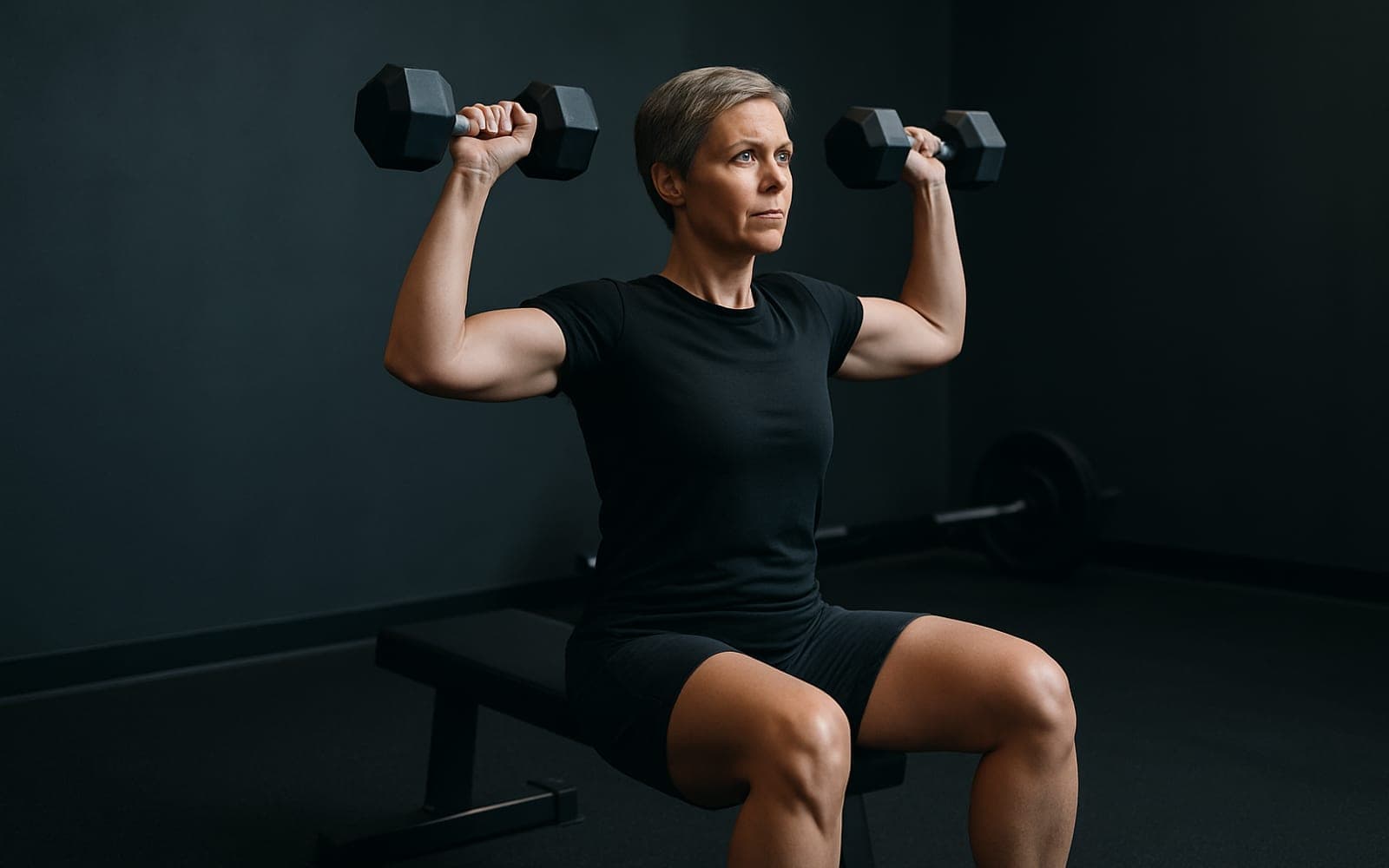
Seated on an upright bench, dumbbells at shoulder height.
- 2
Execute the movement
Press up until arms are nearly straight; lower to ear level.
Common mistakes
- Excessive back arch
Make it harder
Make it easier
Substitutions
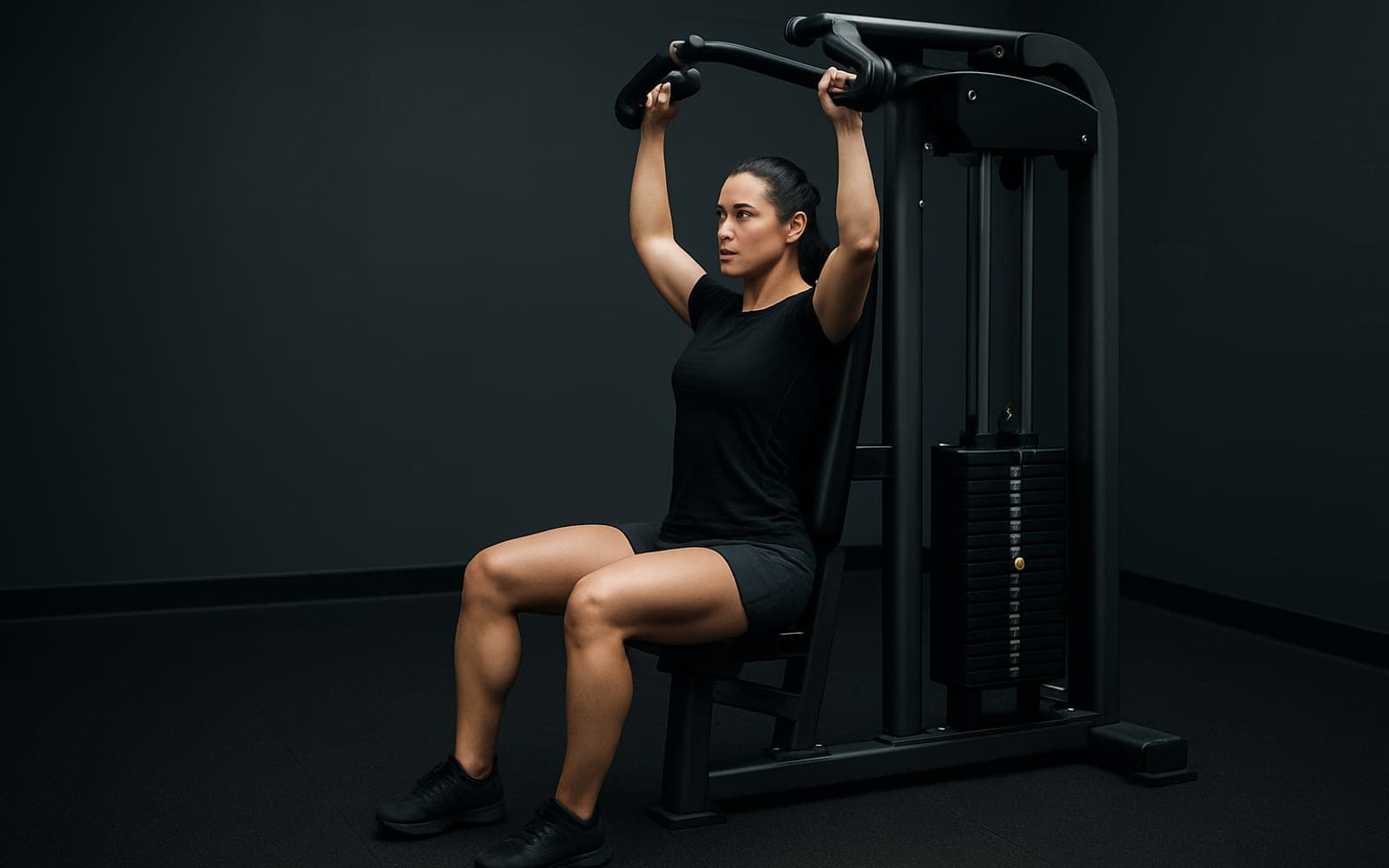
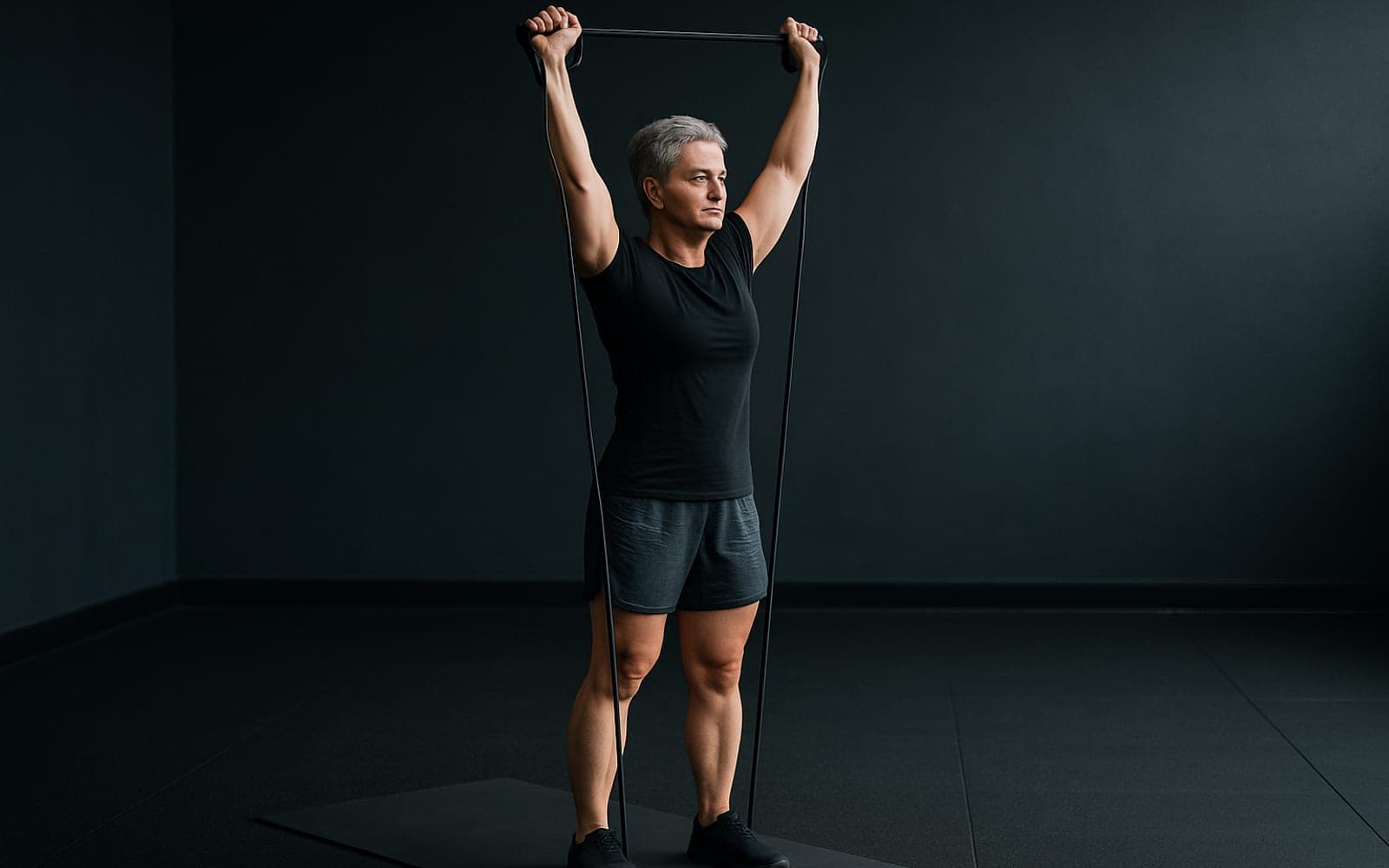
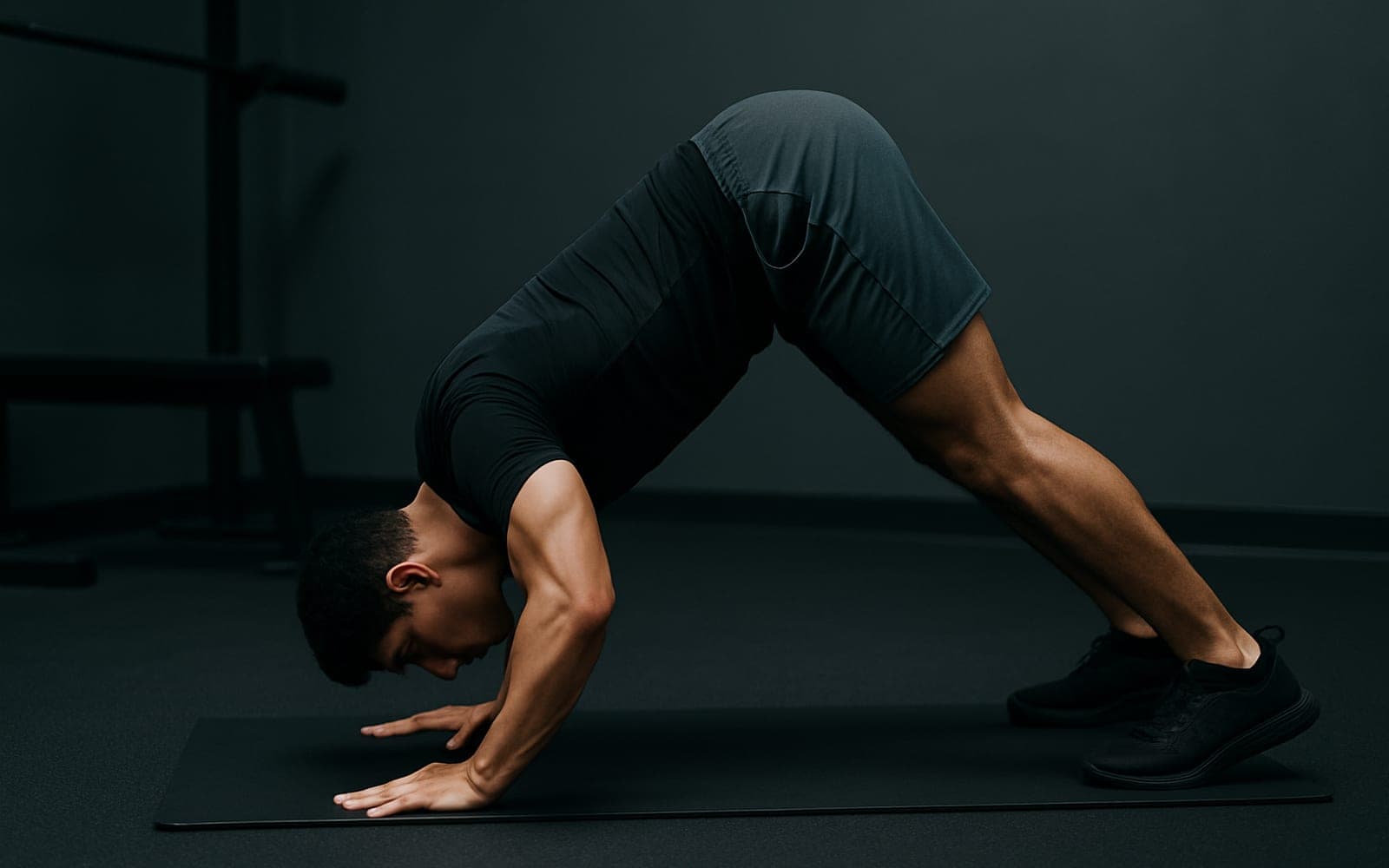
If a machine is busy or unavailable, these train the same pattern a different way.
Your progress over time
What to expect from training this consistently — everyone progresses at their own pace.
- 1
First few sessions
Learn the movement pattern and breathing: rack the dumbbells, braced core, press to near-lockout and lower to ear level with controlled tempo; expect light loads while cueing wrist, elbow and scapular positioning and noticing initial shoulder fatigue.
- 2
Weeks 2–4
Build baseline shoulder endurance and stability; you should comfortably complete sets with moderate weights for 8–12 reps, reduce compensatory trunk lean, and start adding small weight increments session-to-session.
- 3
Months 1–3
Notice measurable hypertrophy and strength gains in the deltoids and triceps: typical progress is a steady increase in working set weights and the ability to perform additional sets or reps at a given load.
- 4
Months 4–6
Significant strength and muscular development: many intermediate trainees can expect to press noticeably heavier dumbbells for multiple sets, with improved overhead stability, reduced reliance on momentum, and clearer carryover to other pressing movements.
- 5
6+ months
Long-term improvements in upper-body pressing strength and shoulder resilience: continued progressive overload leads to larger deltoid mass, stronger triceps lockout, and reliable performance in heavy or high-volume vertical push variations.
Benefits of the dumbbell shoulder press
Directly develops the deltoid muscles (especially the anterior and medial heads), increasing shoulder size and cap-city for overhead work.
Strengthens the triceps through the lockout portion of the press, improving upper-arm pushing power.
Improves overhead pressing strength and stability, which transfers to better performance in other upper-body lifts and daily tasks that require lifting overhead.
Enhances shoulder girdle coordination and scapular control when performed with proper technique, reducing inefficient movement patterns.
Supports balanced upper-body development and posture by loading the anterior chain and encouraging upright torso bracing during lifts.
Is a convenient unilateral or bilateral tool for progressive overload, making it easy to measure and drive gradual increases in load for hypertrophy and strength goals.
Exercises that pair with this
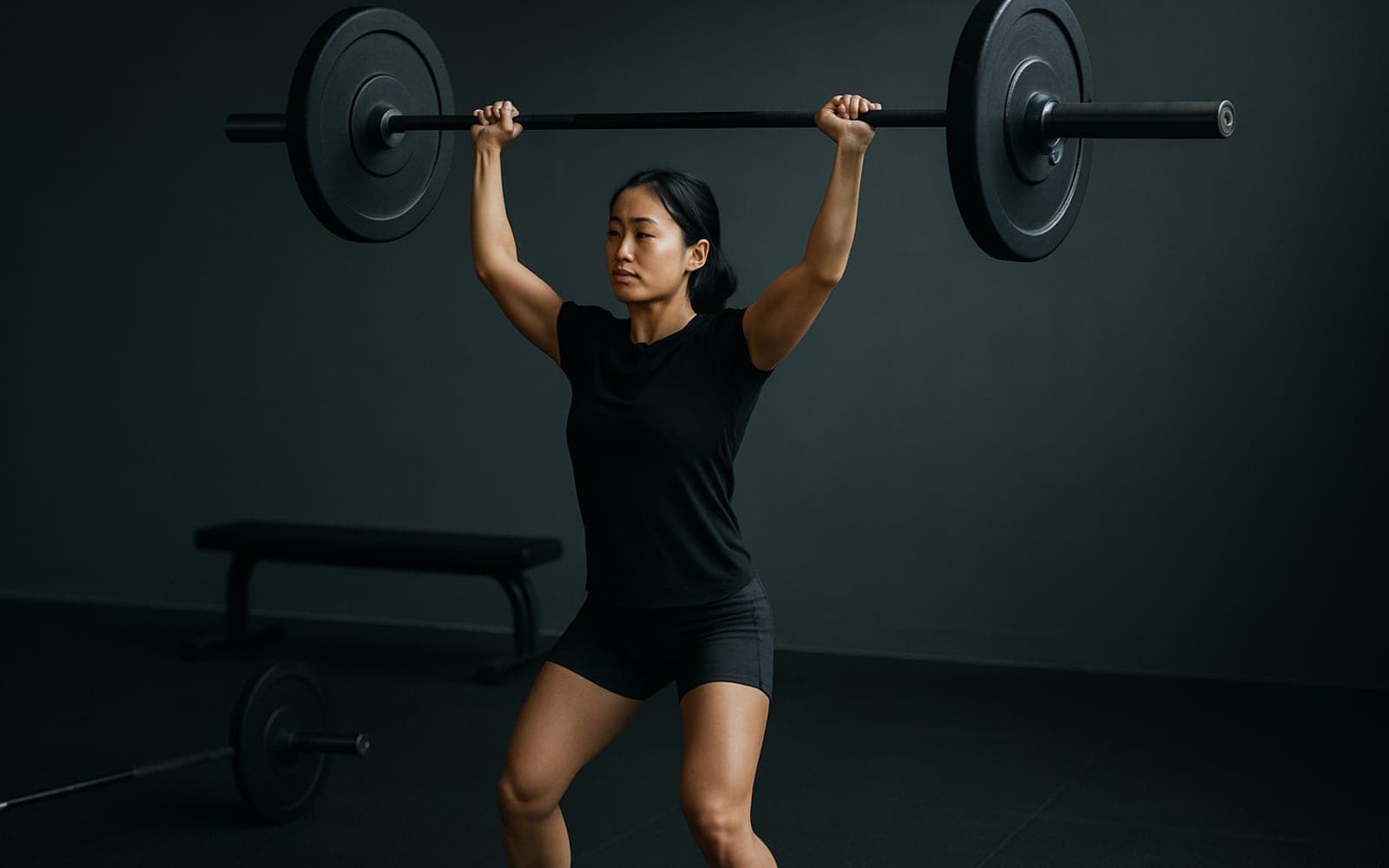
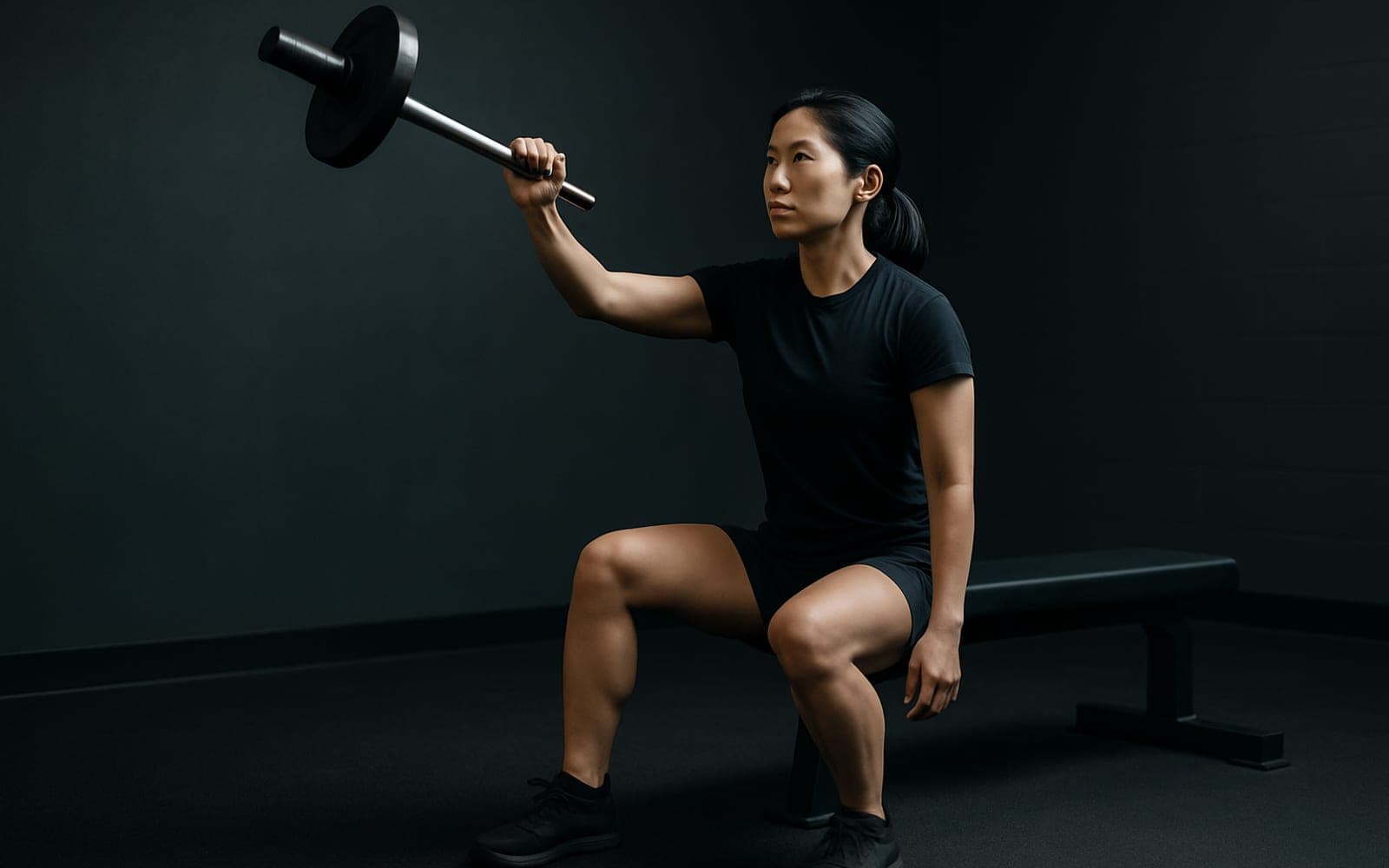
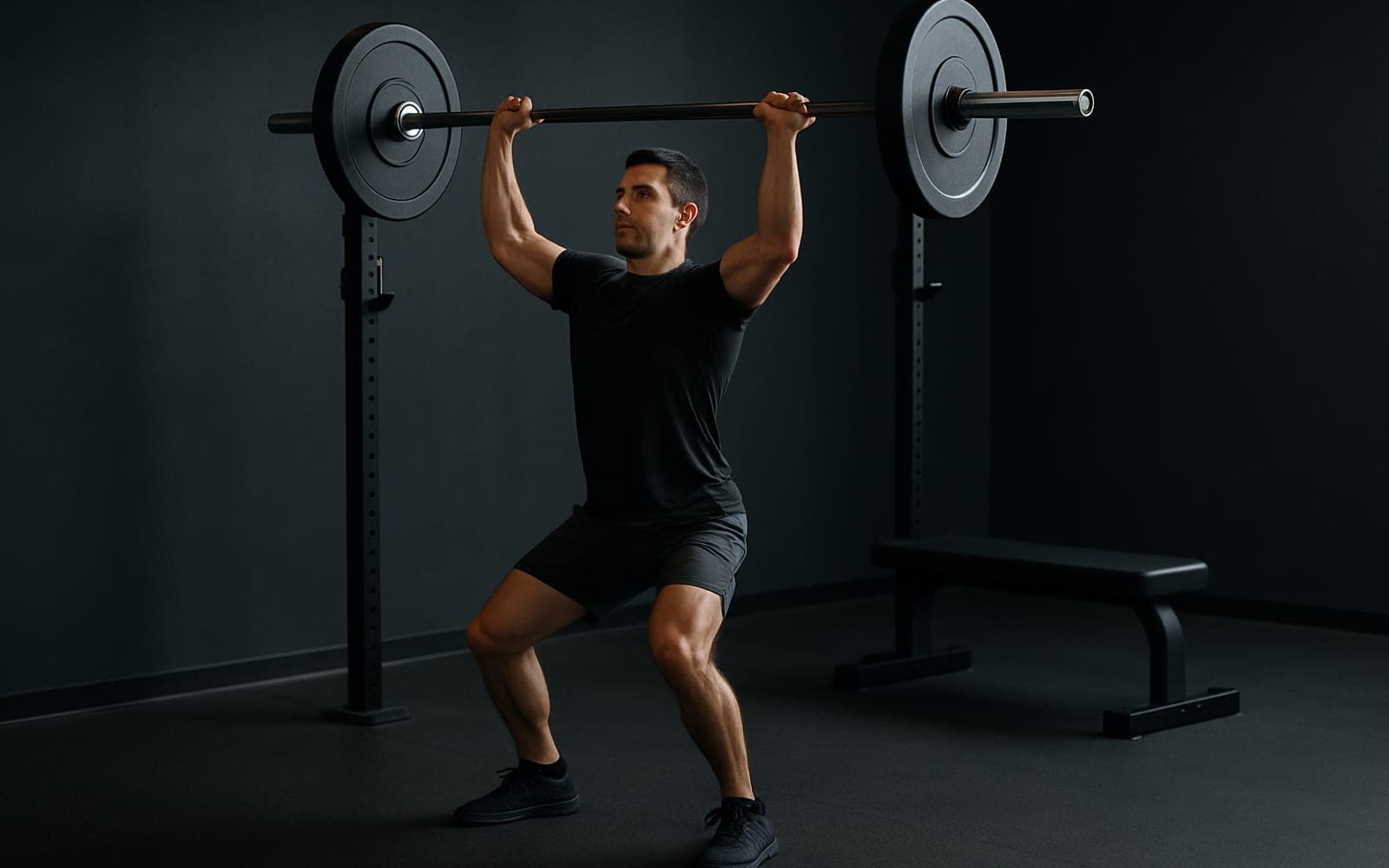
Same muscles or the same movement pattern — useful for building the rest of the session.
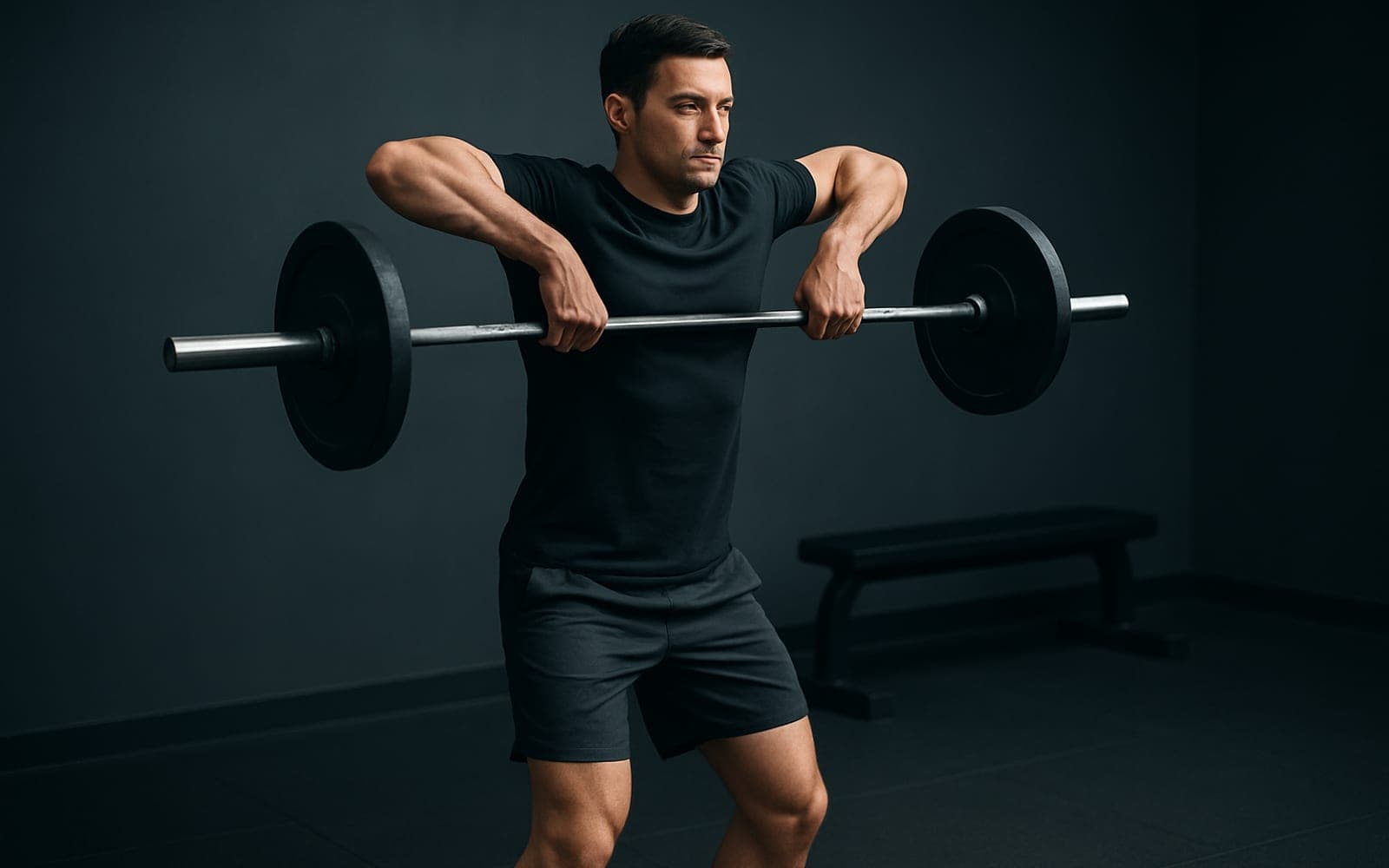
Dumbbell Shoulder Press — questions people ask
What muscles does the dumbbell shoulder press work?
The dumbbell shoulder press trains the shoulders as the primary target, with the triceps working as support. It is a vertical push pattern, so it also trains the coordination that pattern needs.
How many sets and reps of the dumbbell shoulder press should I do?
For size, three to four sets of 8–12 reps with 60–90 seconds of rest. For strength, three to five sets of 3–6 reps with longer rest. Add a little weight once you hit the top of the range on every set.
Is the dumbbell shoulder press good for beginners?
It is a reasonable second step. The dumbbell shoulder press asks for some control and body awareness. Use the machine press. If it feels like too much, build the pattern on the machine shoulder press first.
What can I do instead of the dumbbell shoulder press?
Machine Shoulder Press, Band Overhead Press, Pike Push-Up all train the same vertical push pattern with different equipment, so any of them works when the machine is busy or your gym does not have it.
What are the most common dumbbell shoulder press mistakes?
Excessive back arch. Press up until arms are nearly straight; lower to ear level.
Can I do the dumbbell shoulder press at home?
The dumbbell shoulder press needs free weights equipment, which most home gyms do not have. The pike push-up trains the same pattern with nothing more than your bodyweight or a band.