Barbell Overhead Press
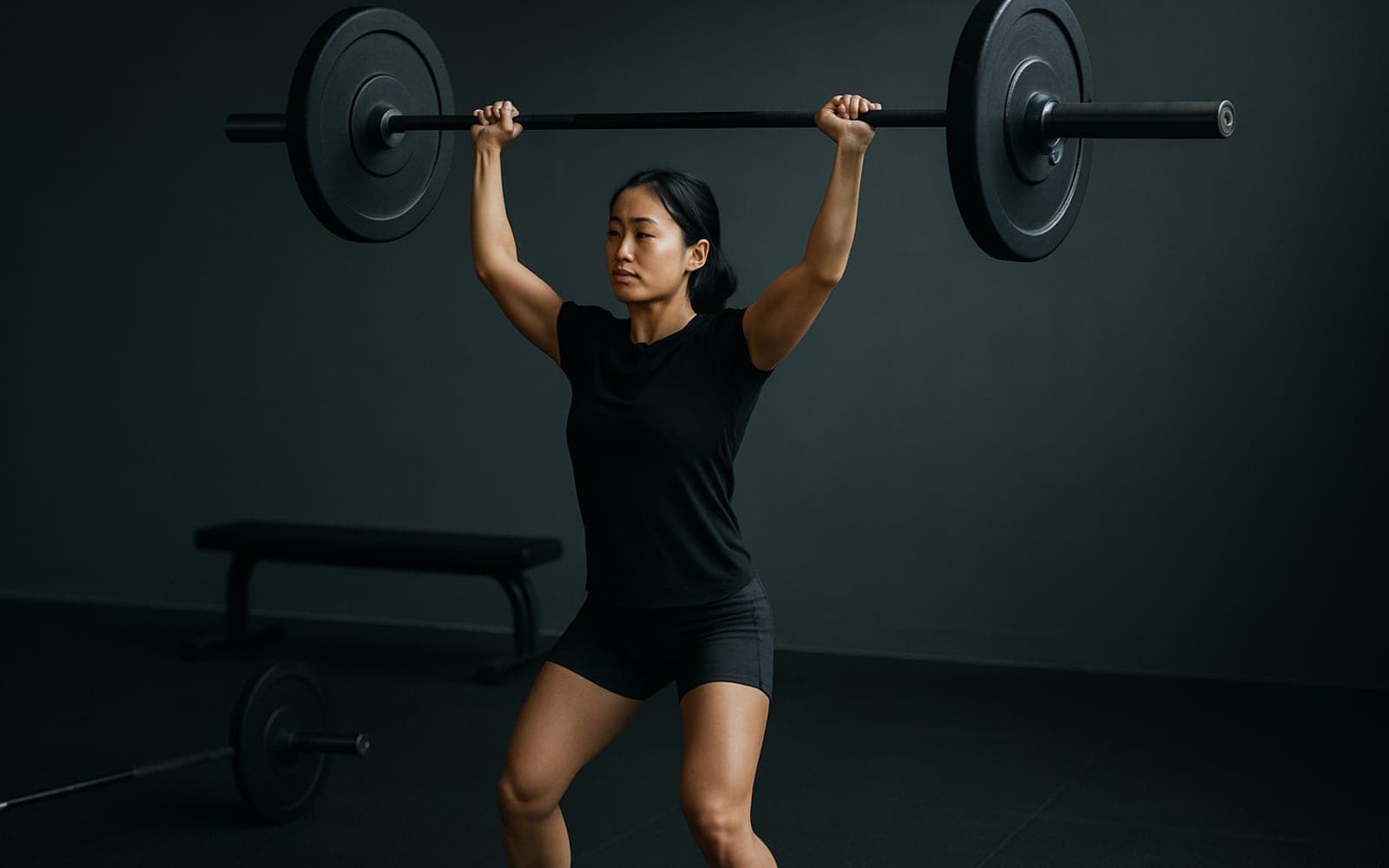
Activation
Muscles worked
Movement
Vertical Push
Advanced · Free Weights
Primary muscles
Movement pattern
Equipment category
How to perform
- 1
Set up
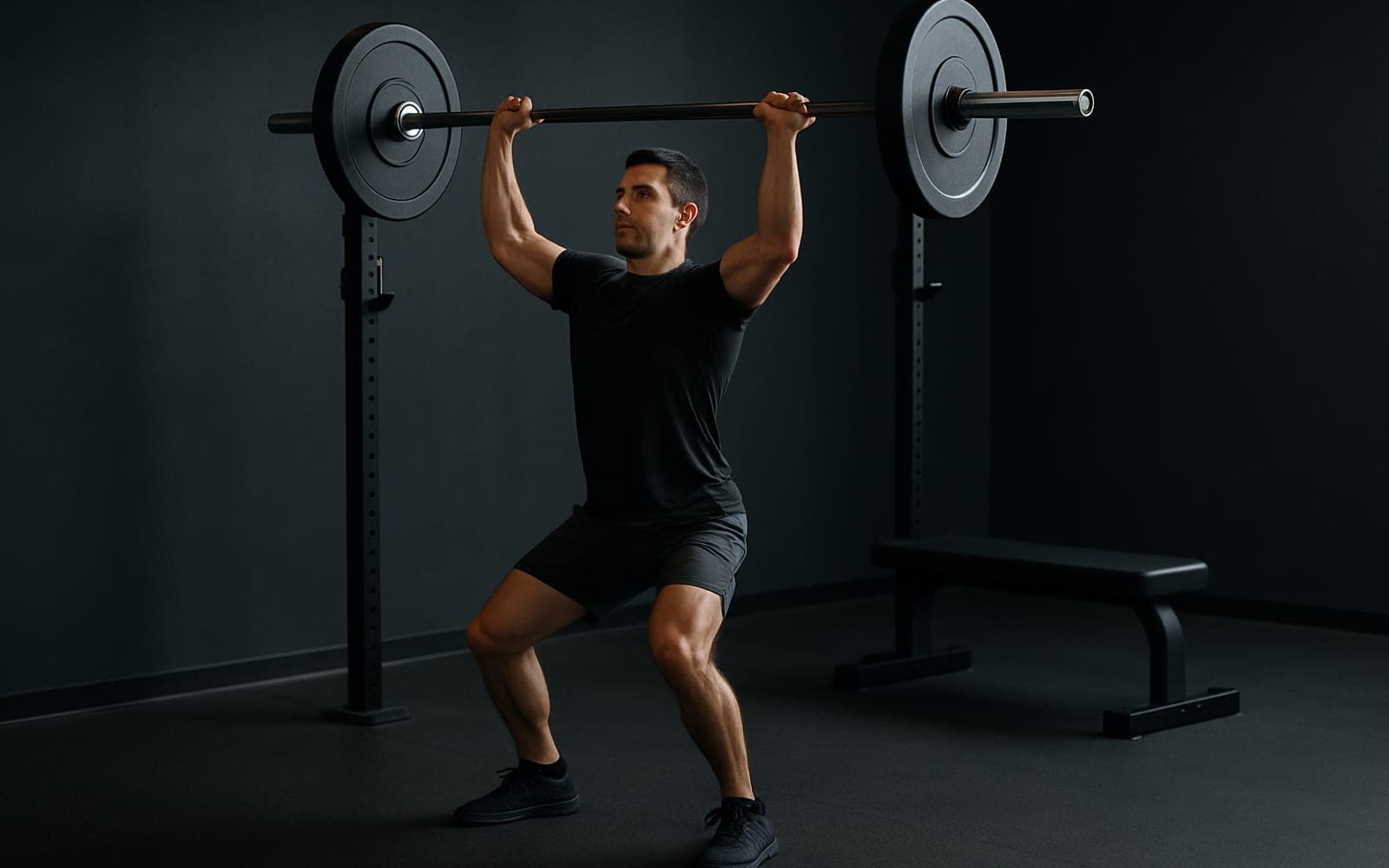
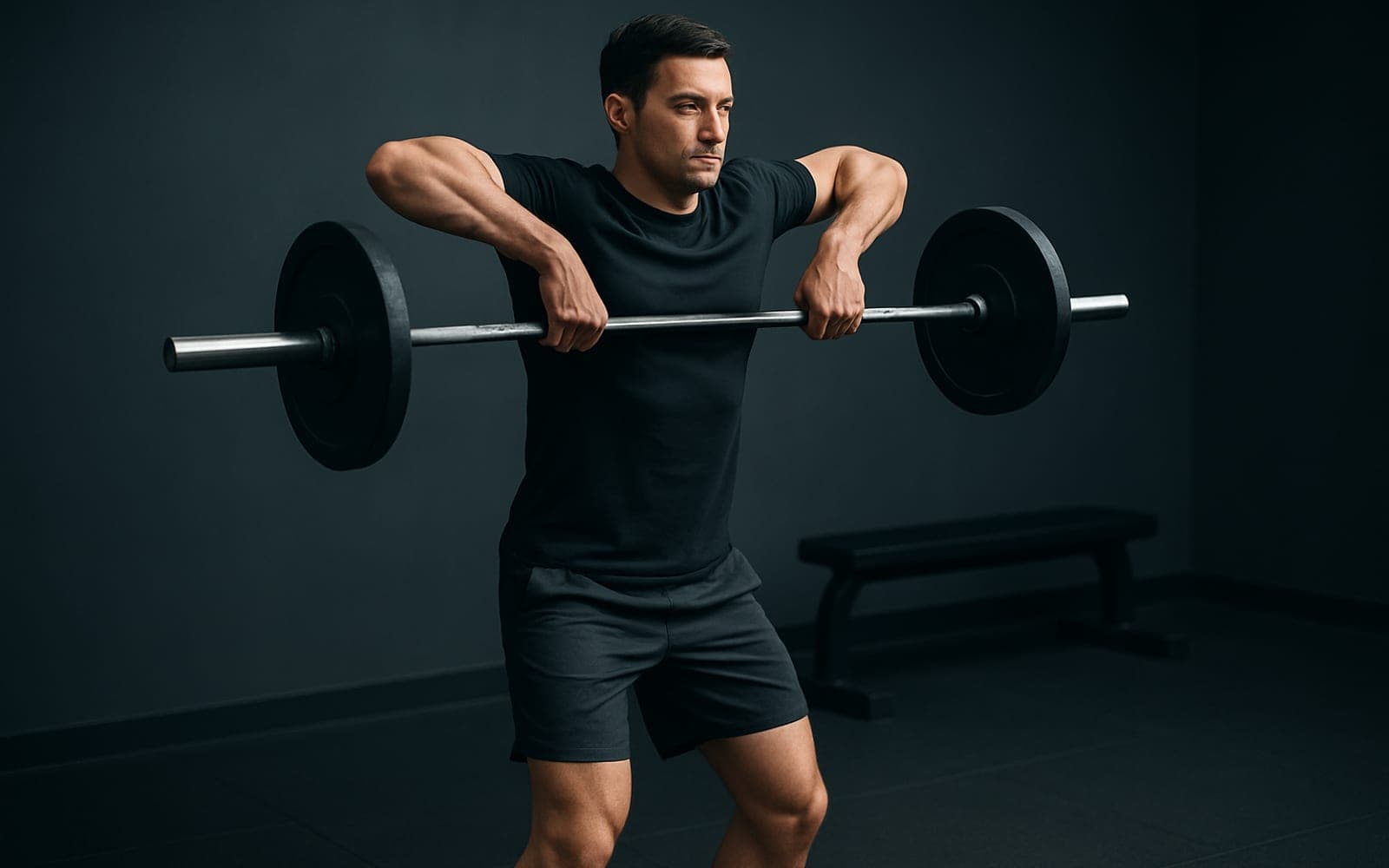
Bar on front delts, grip just outside shoulders, brace hard.
- 2
Execute the movement
Press the bar overhead in a straight line, moving the head slightly back then through.
Common mistakes
- Overarching to 'bench' the bar up
- Soft core
Make it harder
Make it easier
Substitutions
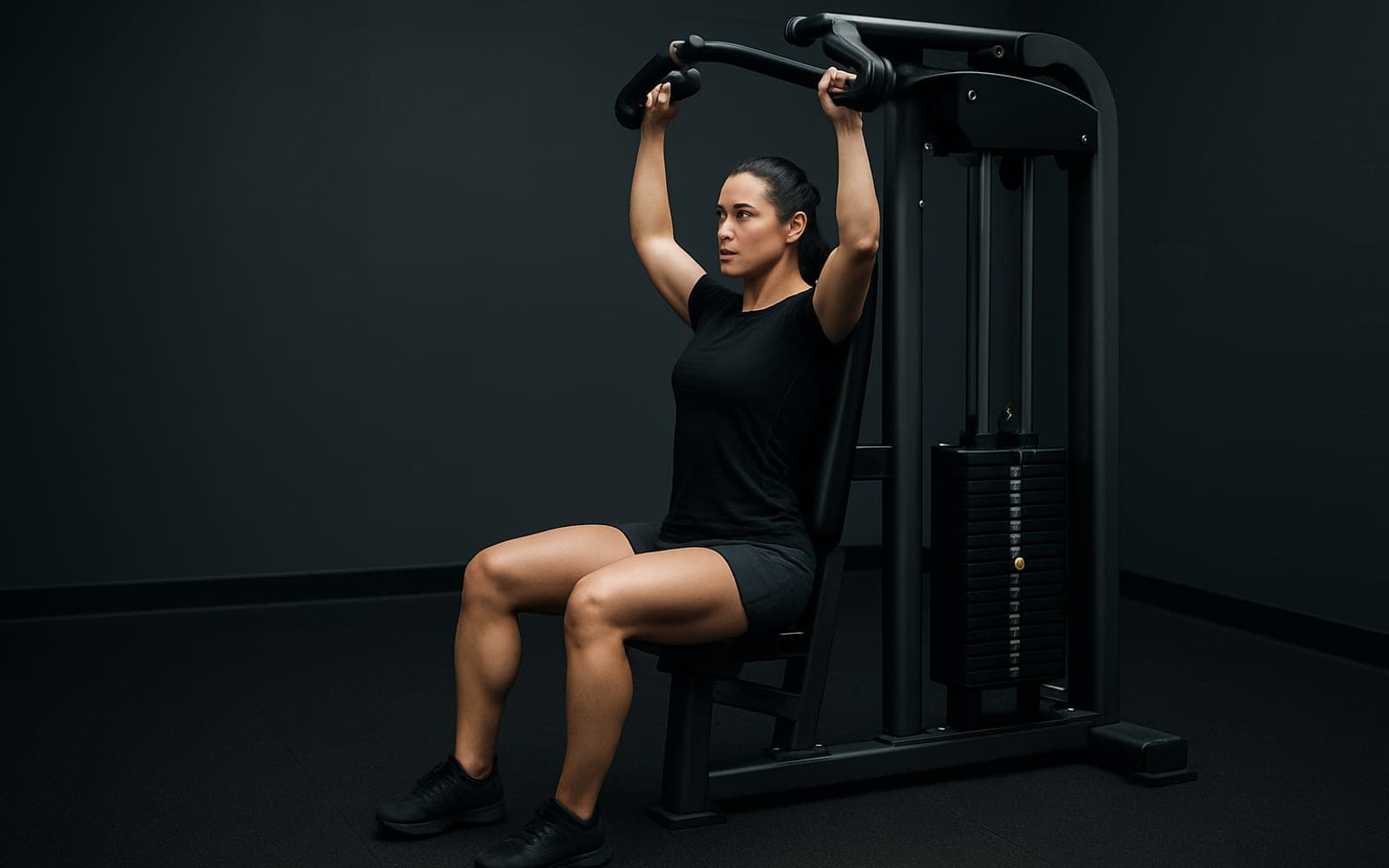
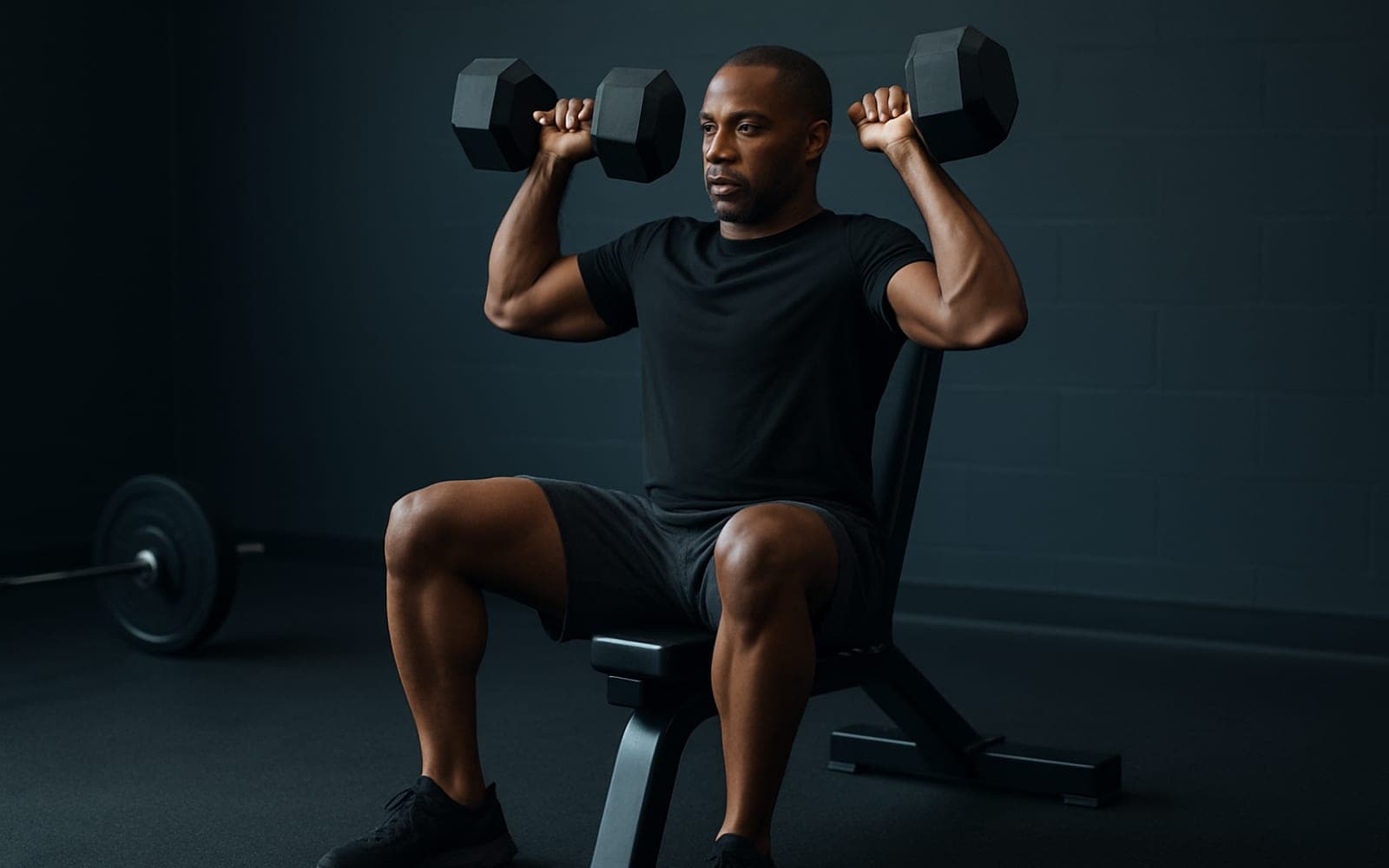
If a machine is busy or unavailable, these train the same pattern a different way.
Your progress over time
What to expect from training this consistently — everyone progresses at their own pace.
- 1
First few sessions
Learn the groove: establish bar path, breathing, rack position, and the head movement; start with light loads to ingrain technique and shoulder/scapular control.
- 2
Weeks 2–6
Build confidence and neuromuscular efficiency: consistent practice increases load tolerance, you’ll add moderate weight each week and notice improved lockout stability and reduced bar drift.
- 3
Months 2–4
Strength and muscle gains become apparent: expect steady 5–15% increases in 1RM for trained lifters, clearer deltoid development, and stronger triceps contributing to a solid top-end press.
- 4
Months 4–8
Higher relative loads and program variety pay off: ability to handle heavier singles and doubles improves, accessory work enhances shoulder thickness and pressing endurance, and core/bracing becomes more robust.
- 5
6+ months
Meaningful long-term strength and size: consistent progressive overload yields substantial overhead pressing strength, noticeable shoulder muscle hypertrophy, and reliable carryover to other upper-body pressing and overhead tasks.
Benefits of the barbell overhead press
Directly develops the deltoids—especially anterior and medial fibers—producing broader, stronger shoulders.
Strengthens the triceps and lockout mechanics, improving your ability to finish overhead presses and similar pushing movements.
Demands and trains full-body bracing and core stability, which transfers to better spine support during loaded overhead tasks.
Improves scapular control and shoulder joint resilience through repeated, controlled overhead positioning.
Carries over to real-world activities that require lifting or holding objects overhead, such as placing items on high shelves or loading overhead racks.
As a heavy, compound lift, it contributes to overall upper-body strength and muscle mass when programmed consistently with progressive overload.
Exercises that pair with this
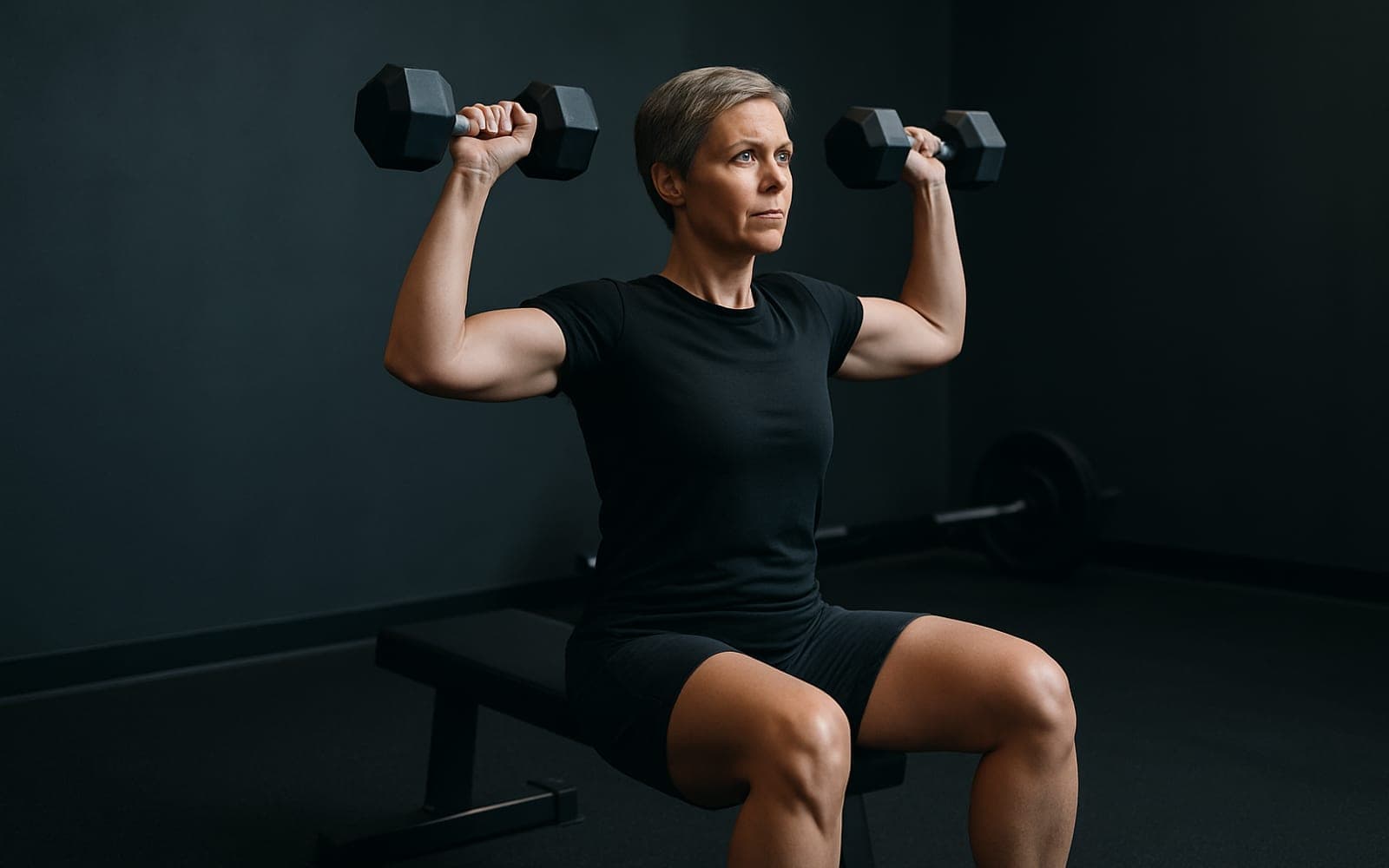
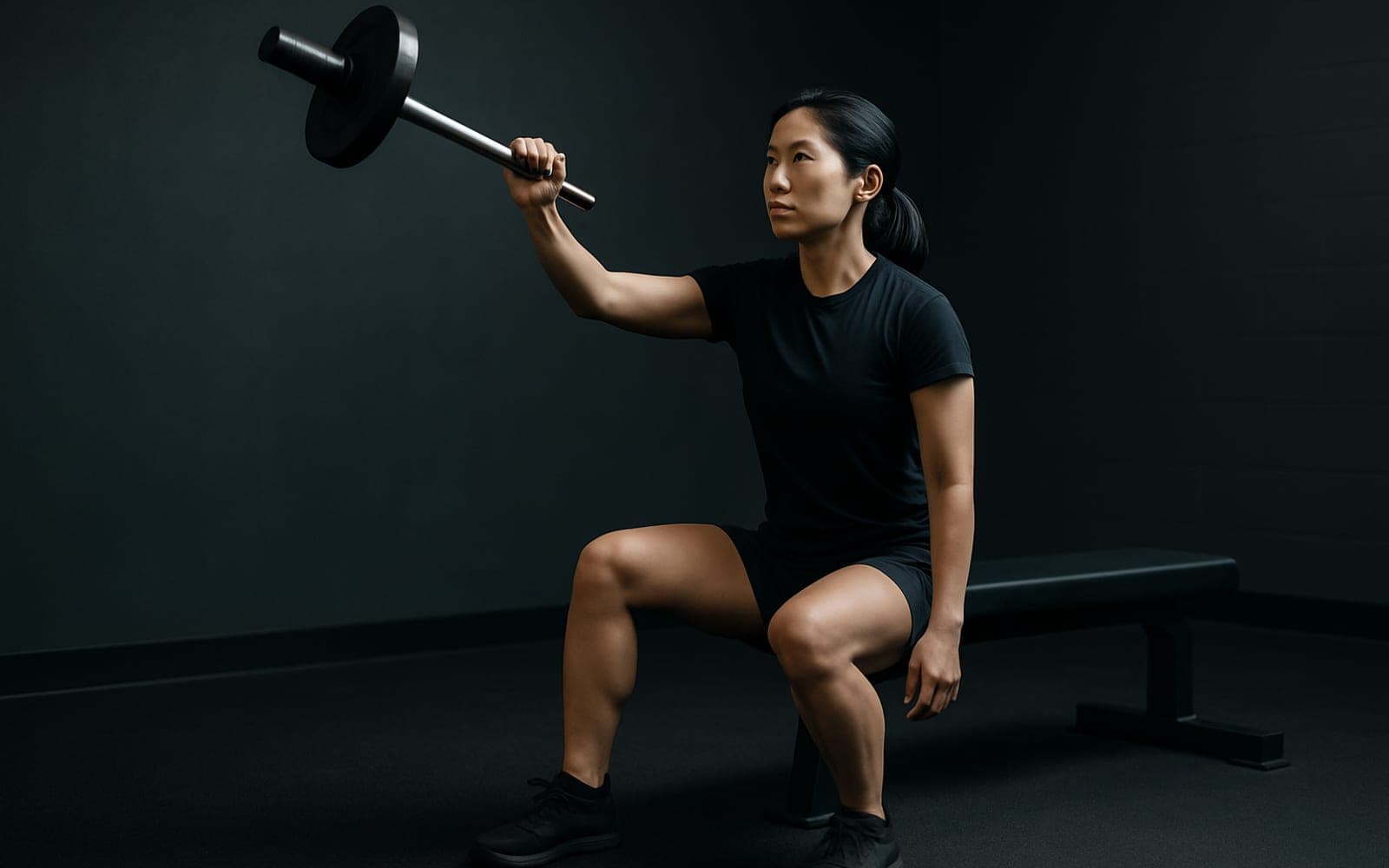
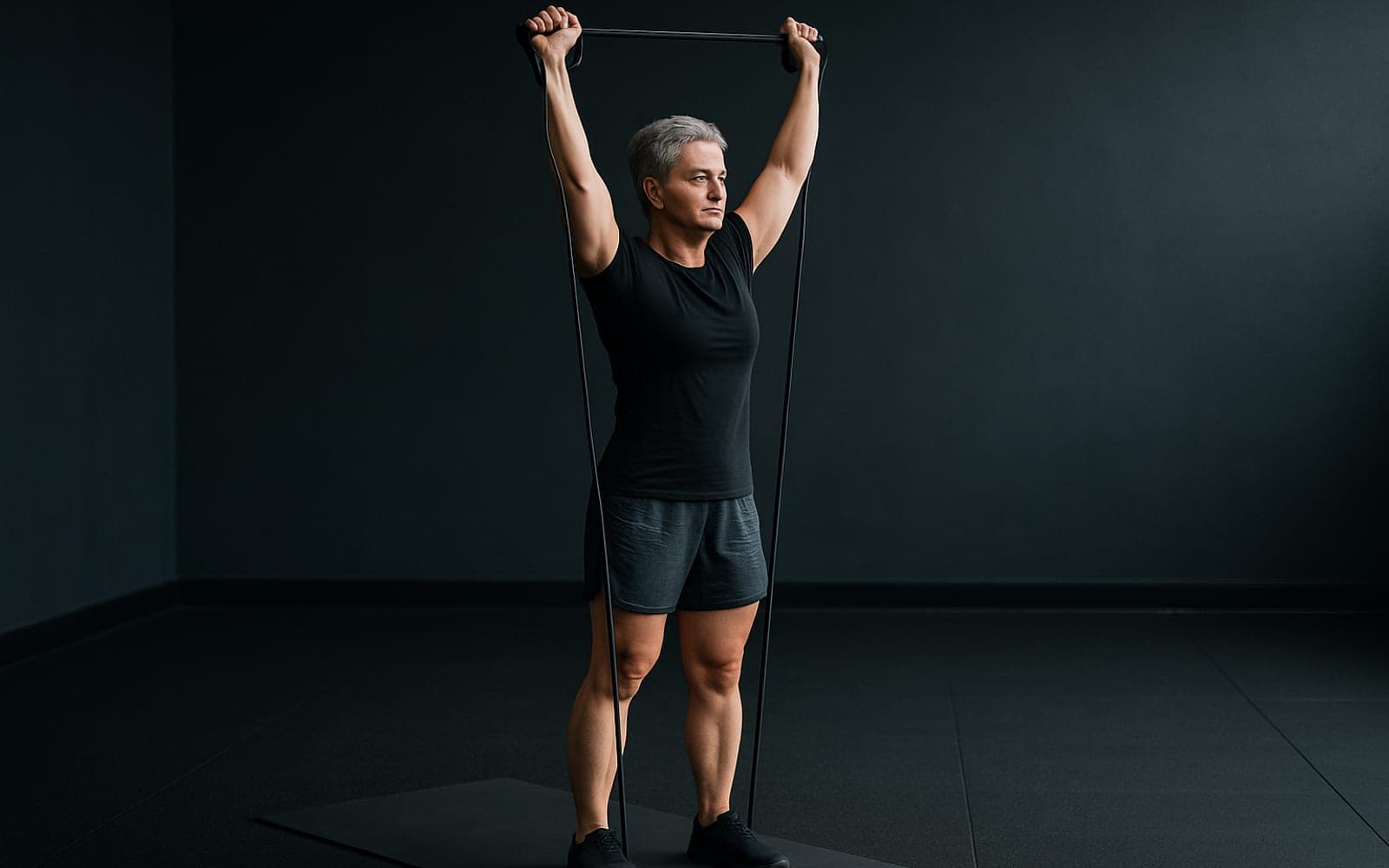
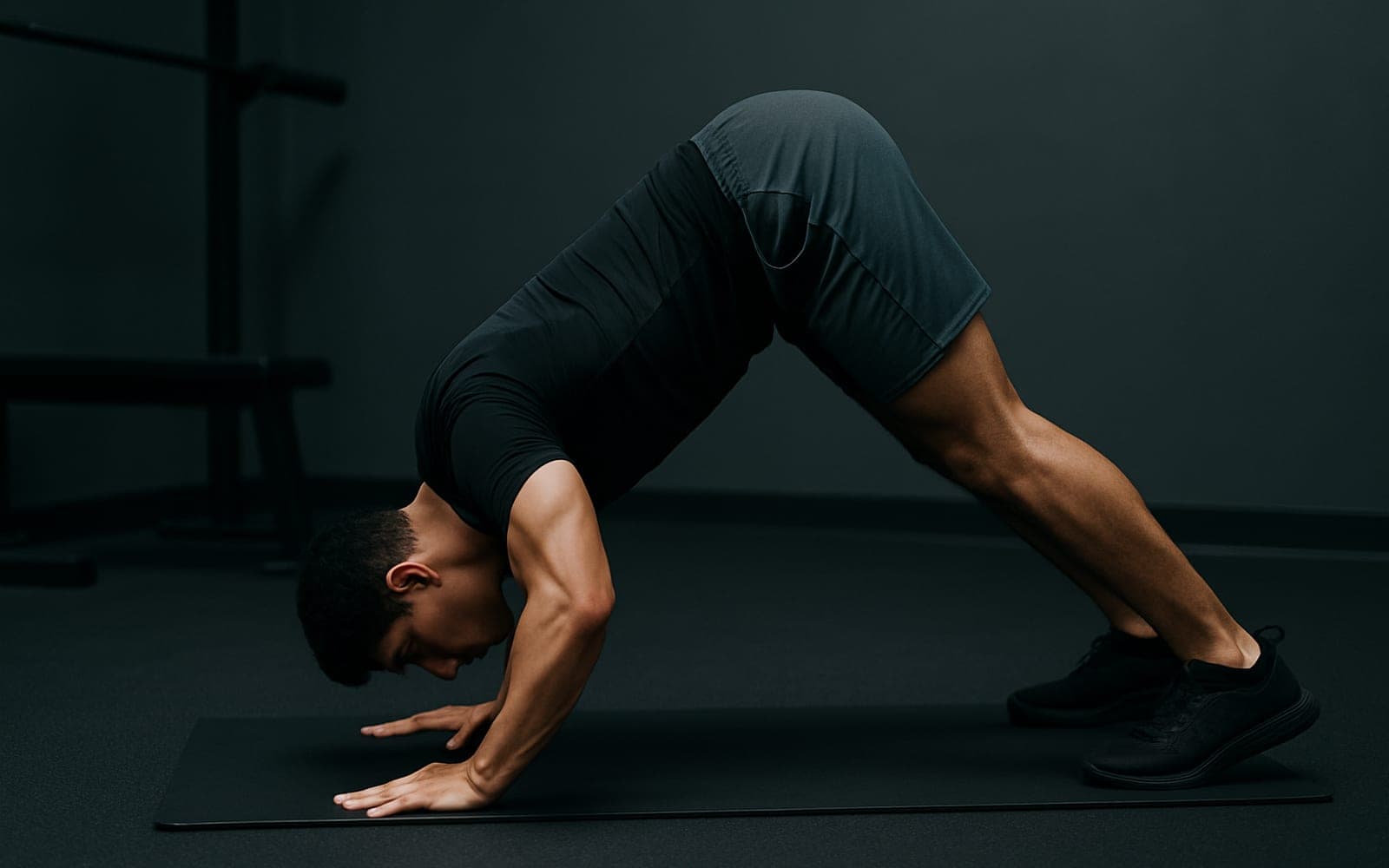
Same muscles or the same movement pattern — useful for building the rest of the session.
Barbell Overhead Press — questions people ask
What muscles does the barbell overhead press work?
The barbell overhead press trains the shoulders as the primary target, with the triceps, core working as support. It is a vertical push pattern, so it also trains the coordination that pattern needs.
How many sets and reps of the barbell overhead press should I do?
For size, three to four sets of 8–12 reps with 60–90 seconds of rest. For strength, three to five sets of 3–6 reps with longer rest. Add a little weight once you hit the top of the range on every set.
Is the barbell overhead press good for beginners?
Not as a first exercise. The barbell overhead press is an advanced movement. Press with dumbbells or the machine. It is also form-sensitive, so it is worth having a coach or an experienced lifter watch your first few sessions. If it feels like too much, build the pattern on the machine shoulder press first.
What can I do instead of the barbell overhead press?
Machine Shoulder Press, Dumbbell Shoulder Press all train the same vertical push pattern with different equipment, so any of them works when the machine is busy or your gym does not have it.
What are the most common barbell overhead press mistakes?
Overarching to 'bench' the bar up; Soft core. Press the bar overhead in a straight line, moving the head slightly back then through.
Can I do the barbell overhead press at home?
It needs free weights equipment, so it belongs in a gym session rather than a home workout unless you own that equipment.