Incline Dumbbell Press
Activation
Muscles worked
Movement
Horizontal Push
Intermediate · Free Weights
Primary muscles
Secondary muscles
Movement pattern
Equipment category
How to perform
- 1
Set up
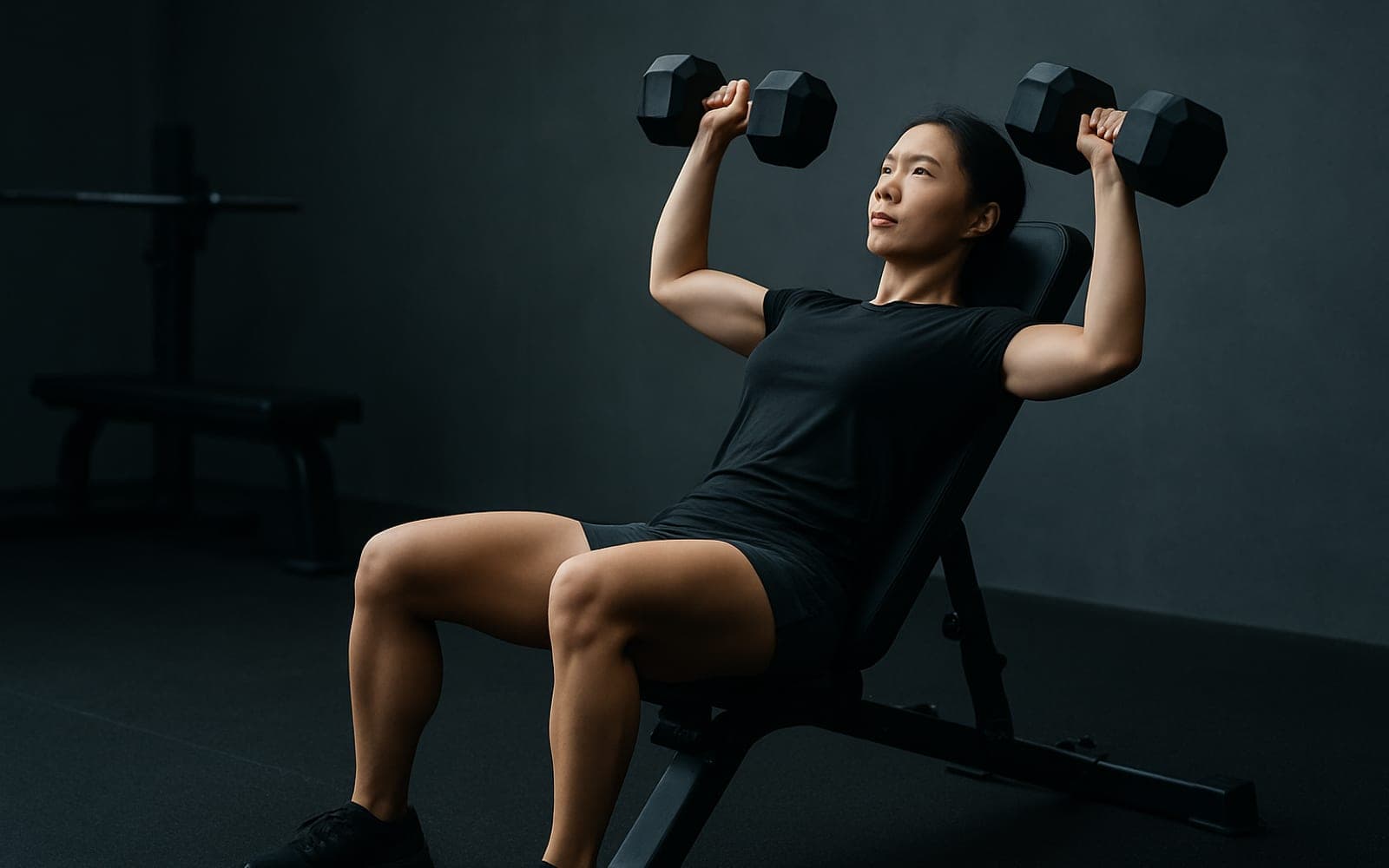
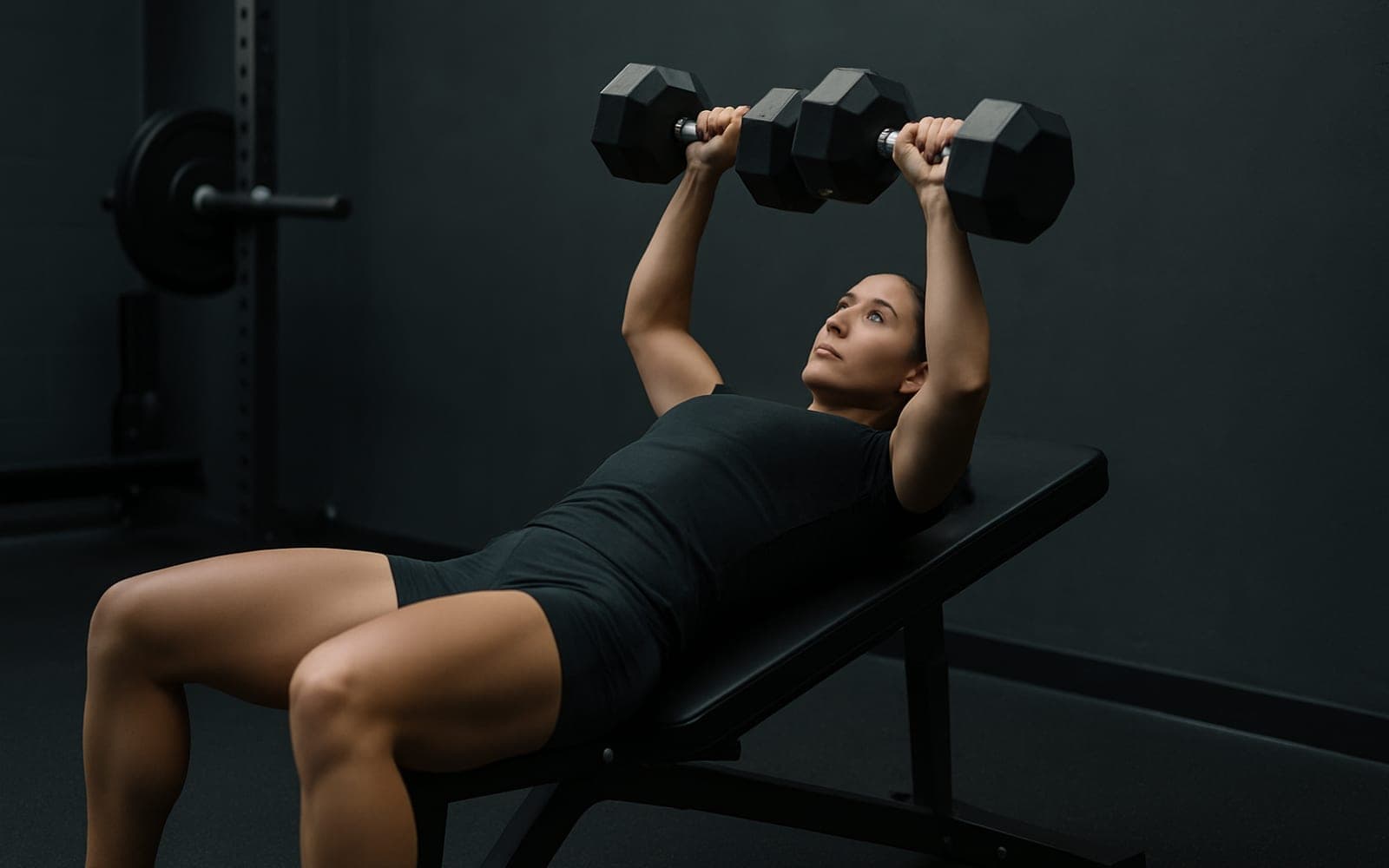
Set a bench to ~30°; sit back with a dumbbell in each hand at upper-chest level.
- 2
Execute the movement
Press up and slightly together; lower under control until you feel a stretch across the upper chest.
Common mistakes
- Bench too steep (turns into a shoulder press)
- Flaring elbows to 90°
Make it harder
Make it easier
Substitutions
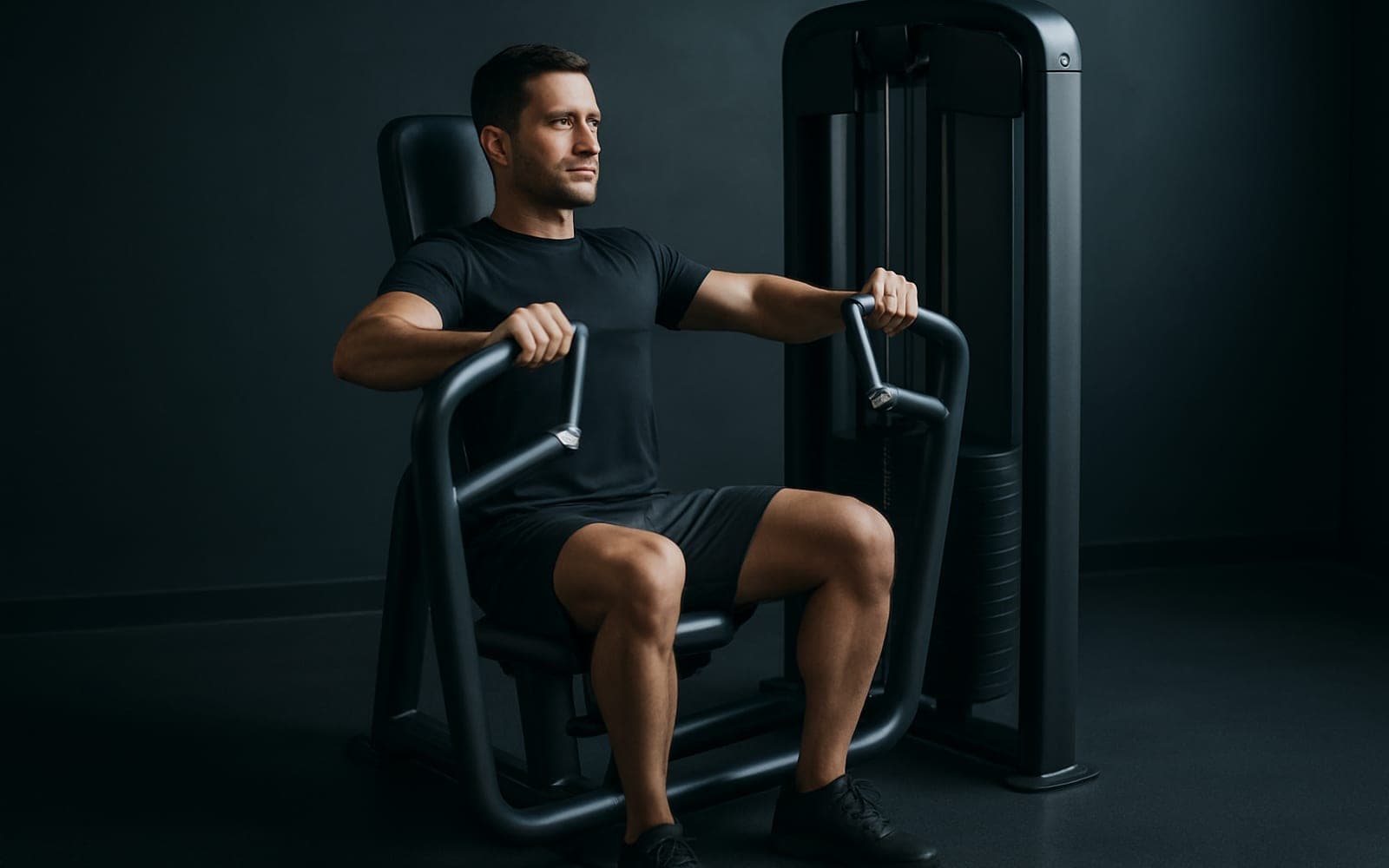
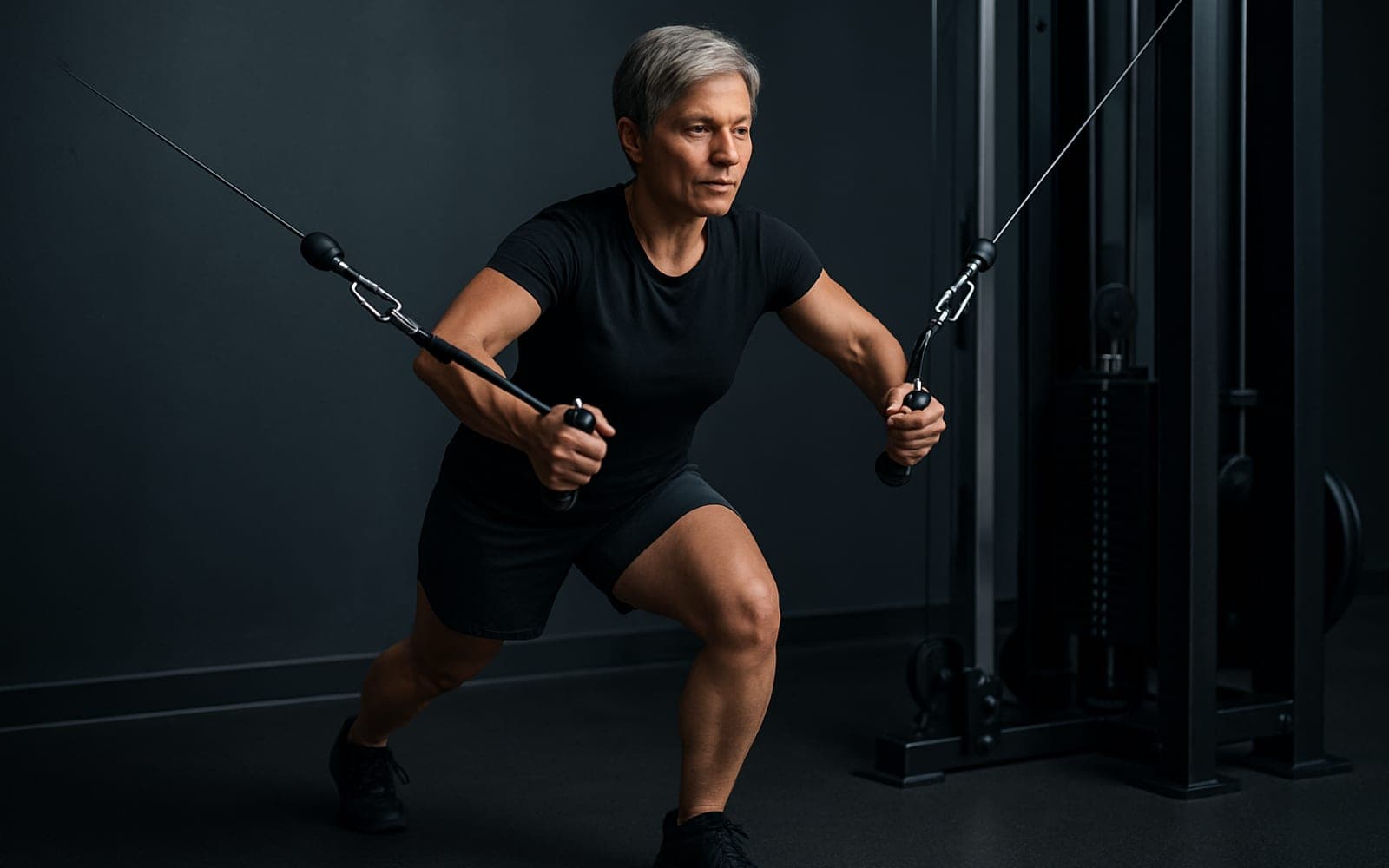
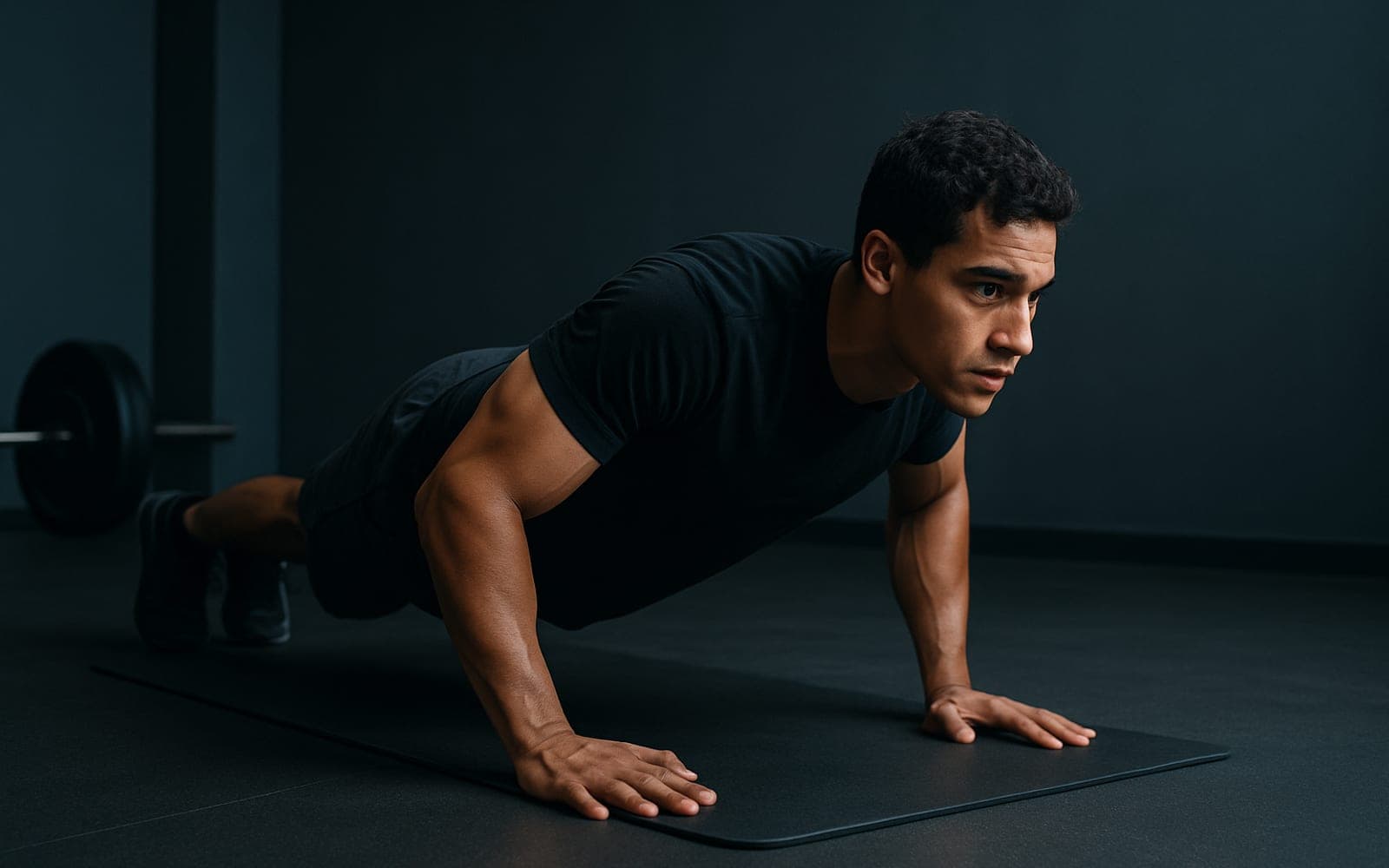
If a machine is busy or unavailable, these train the same pattern a different way.
Your progress over time
What to expect from training this consistently — everyone progresses at their own pace.
- 1
First few sessions
Learn setup and groove: consistent bench angle, scapular position, and a controlled up-and-together path; expect mild muscle soreness and improved motor control of the upper-chest pressing pattern.
- 2
Weeks 2–4
Noticeable technique refinement and capacity to handle progressively heavier dumbbells for 6–12 reps; upper-chest pump and modest hypertrophy begin as volume accumulates.
- 3
Months 2–3
Clear increases in working-set loads and visible size gains in the clavicular (upper) chest and front delts; 5–10% strength improvements on incline pressing and improved stability through the range.
- 4
Months 4–6
Substantial hypertrophy and appreciable strength gains: heavier 4–8 rep sets become routine, better transfer to flat pressing variations, and improved upper-chest fullness and shoulder resilience.
- 5
6+ months
Well-developed upper-chest and pressing strength relative to starting point, ability to use advanced loading strategies (paused reps, heavier singles, progressive overload) with reliable technique and lower injury risk when programmed sensibly.
Benefits of the incline dumbbell press
Directly targets the upper (clavicular) portion of the pectoralis major, promoting targeted hypertrophy in the upper chest.
Strengthens the anterior deltoids through the inclined pressing line, improving shoulder pressing capacity.
Develops triceps pressing strength, especially through the top half of the movement, aiding lockout power on other presses.
Improves unilateral stability and balances left/right strength when dumbbells are used, reducing dominance-related imbalances.
Carries over to better performance on flat bench and overhead pressing by enhancing upper-chest contribution and general horizontal push strength.
Provides a practical, progressive exercise for aesthetic upper-chest development and functional pushing strength useful in daily pushing tasks.
Exercises that pair with this
Same muscles or the same movement pattern — useful for building the rest of the session.
Incline Dumbbell Press — questions people ask
What muscles does the incline dumbbell press work?
The incline dumbbell press trains the upper chest as the primary target, with the front delts, triceps working as support. It is a horizontal push pattern, so it also trains the coordination that pattern needs.
How many sets and reps of the incline dumbbell press should I do?
For size, three to four sets of 8–12 reps with 60–90 seconds of rest. For strength, three to five sets of 3–6 reps with longer rest. Add a little weight once you hit the top of the range on every set.
Is the incline dumbbell press good for beginners?
It is a reasonable second step. The incline dumbbell press asks for some control and body awareness. Lower the incline or reduce weight. If it feels like too much, build the pattern on the machine chest press first.
What can I do instead of the incline dumbbell press?
Machine Chest Press, Cable Fly, Push-Up all train the same horizontal push pattern with different equipment, so any of them works when the machine is busy or your gym does not have it.
What are the most common incline dumbbell press mistakes?
Bench too steep (turns into a shoulder press); Flaring elbows to 90°. Press up and slightly together; lower under control until you feel a stretch across the upper chest.
Can I do the incline dumbbell press at home?
The incline dumbbell press needs free weights equipment, which most home gyms do not have. The push-up trains the same pattern with nothing more than your bodyweight or a band.