Barbell Bench Press

Activation
Muscles worked
Movement
Horizontal Push
Advanced · Free Weights
Primary muscles
Secondary muscles
Movement pattern
Equipment category
How to perform
- 1
Set up
Lie back with eyes under the bar; grip slightly wider than shoulders; feet planted.
- 2
Execute the movement
Unrack, lower to the mid-chest with a tucked elbow path, press back up.
Common mistakes
- No spotter on heavy sets
- Bouncing off the chest
- Flared elbows
Make it harder
Make it easier
Substitutions
If a machine is busy or unavailable, these train the same pattern a different way.


Your progress over time
What to expect from training this consistently — everyone progresses at their own pace.
- 1
First few sessions
Learn unrack, set-up (arch, scapular retraction, foot drive), and safe bar path with light to moderate loads; expect technical errors and prioritize groove over weight.
- 2
Weeks 2–6
Rapid neuromuscular improvements — smoother eccentric control and tighter setup — allowing 5–15% increases in working weight and noticeable increases in training volume.
- 3
Months 2–4
Consistent progressive overload yields meaningful hypertrophy of the chest, triceps, and front delts and steady 1–3 rep improvements on heavy sets as technique and accessory strength improve.
- 4
Months 4–8
Strength gains slow to a steadier rate; many lifters add 5–20% to their 1RM compared with month 2 as specialized assistance work, bench frequency, and peaking strategies are applied.
- 5
9+ months
With long-term, well-structured programming expect continued size and strength increases, better top-end loading, and the ability to manage plateaus through periodization, though gains become progressively smaller year-to-year.
Benefits of the barbell bench press
Directly develops horizontal pushing strength by loading the pectoralis major under heavy tension.
Increases triceps and anterior deltoid strength and size, improving lockout ability on pressing movements.
High mechanical overload potential makes it one of the most time-efficient exercises for upper-body mass and maximal strength.
Teaches bracing, breathing, and coordinated whole-body tension that transfers to other compound lifts and athletic actions.
When programmed progressively, improves bone and connective tissue robustness in the shoulder and chest region through sustained loaded exposure.
Exercises that pair with this
Same muscles or the same movement pattern — useful for building the rest of the session.



Barbell Bench Press — questions people ask
What muscles does the barbell bench press work?
The barbell bench press trains the chest as the primary target, with the triceps, front delts working as support. It is a horizontal push pattern, so it also trains the coordination that pattern needs.
How many sets and reps of the barbell bench press should I do?
For size, three to four sets of 8–12 reps with 60–90 seconds of rest. For strength, three to five sets of 3–6 reps with longer rest. Add a little weight once you hit the top of the range on every set.
Is the barbell bench press good for beginners?
Not as a first exercise. The barbell bench press is an advanced movement. Switch to dumbbells or a machine to groove the pattern first. It is also form-sensitive, so it is worth having a coach or an experienced lifter watch your first few sessions. If it feels like too much, build the pattern on the machine chest press first.
What can I do instead of the barbell bench press?
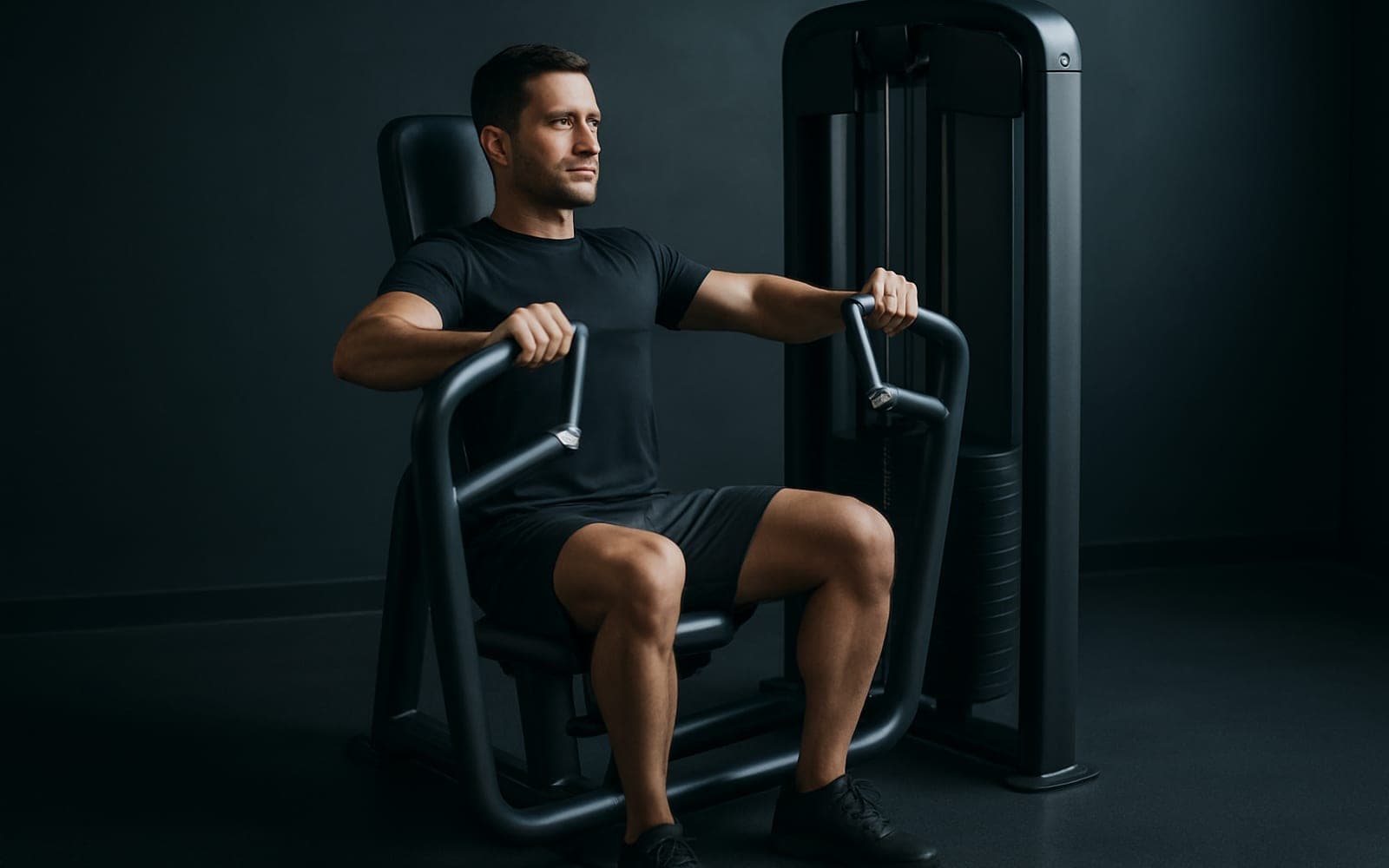
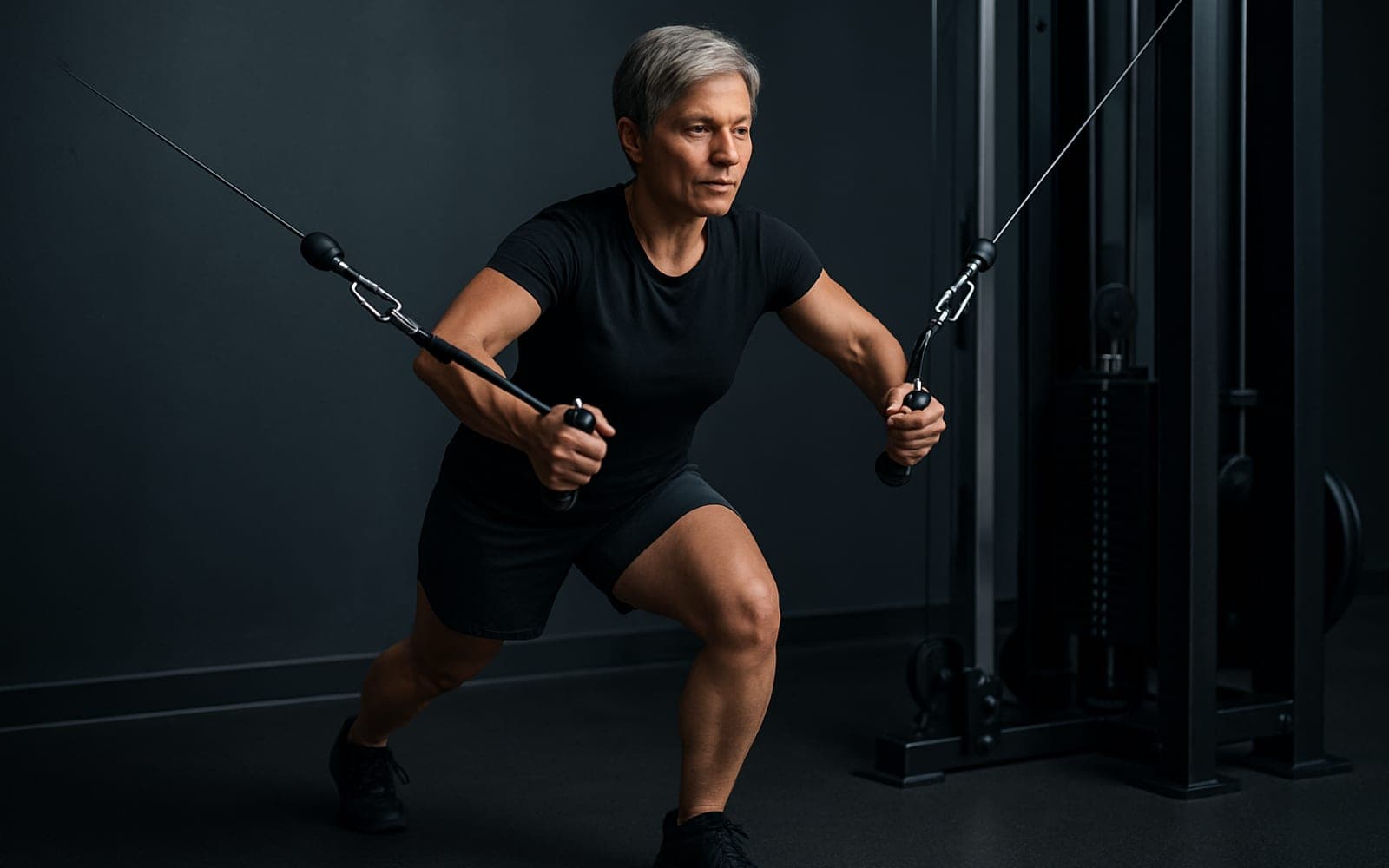
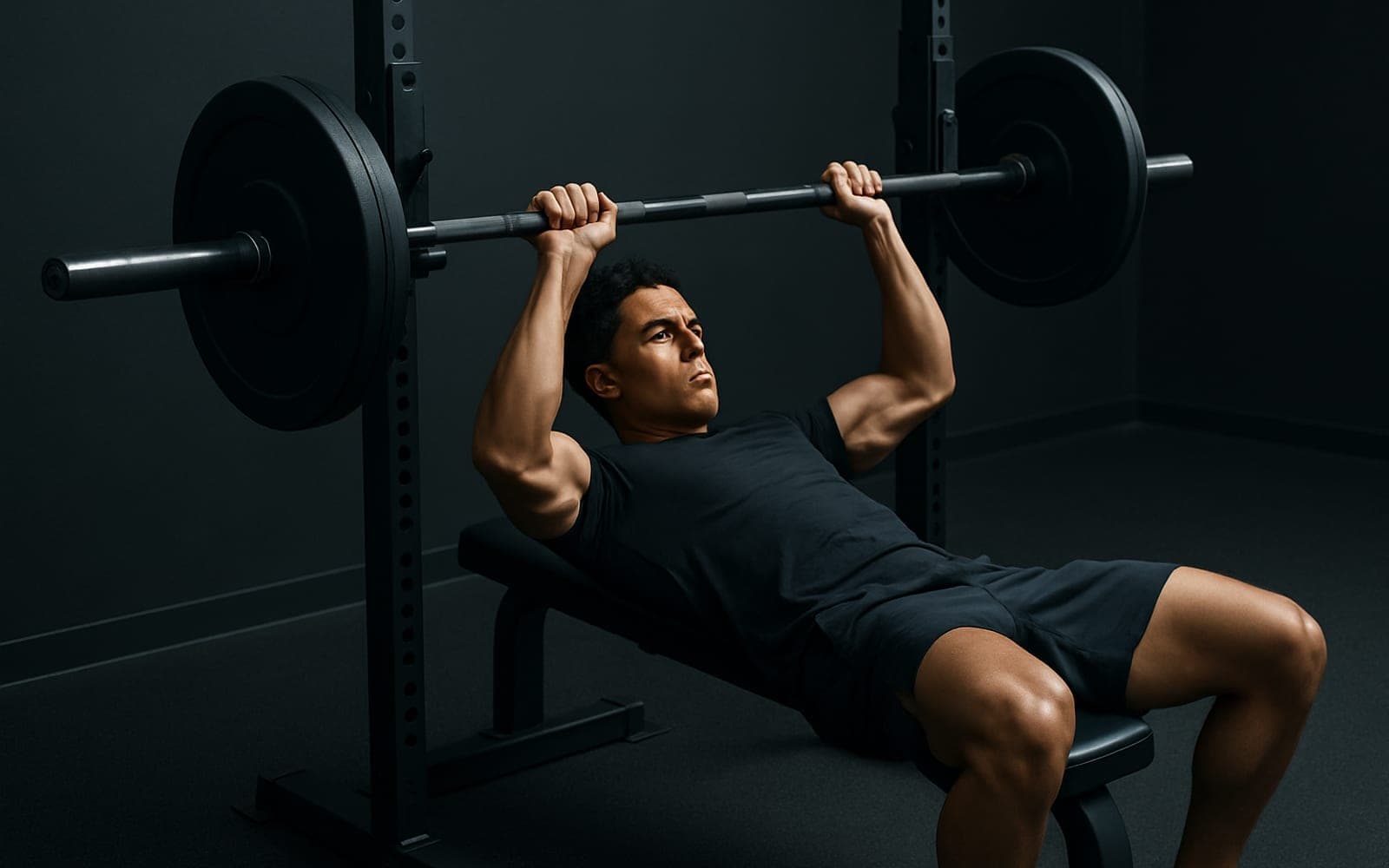
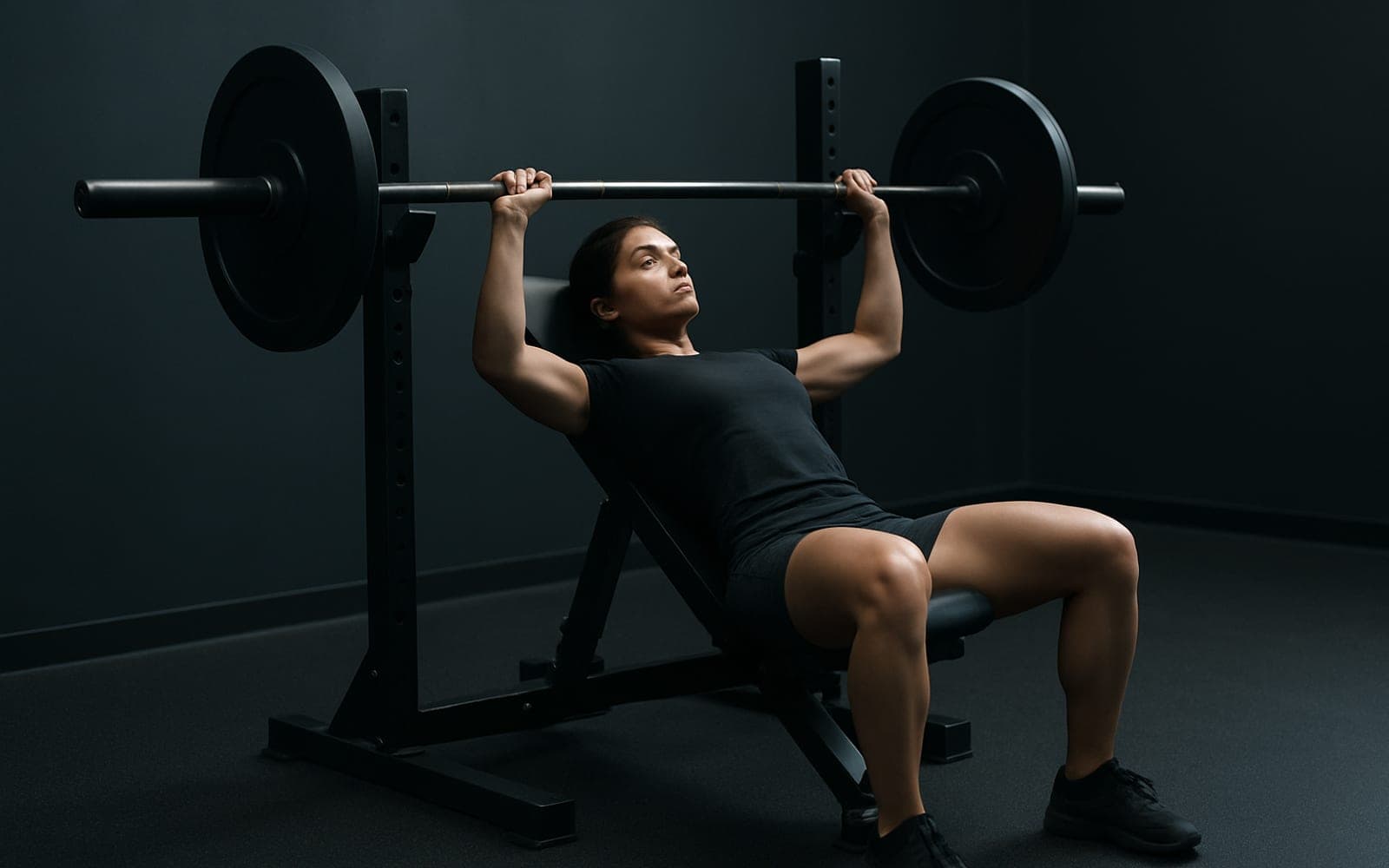
Machine Chest Press, Dumbbell Bench Press, Push-Up all train the same horizontal push pattern with different equipment, so any of them works when the machine is busy or your gym does not have it.
What are the most common barbell bench press mistakes?
No spotter on heavy sets; Bouncing off the chest; Flared elbows. Unrack, lower to the mid-chest with a tucked elbow path, press back up.
Can I do the barbell bench press at home?
The barbell bench press needs free weights equipment, which most home gyms do not have. The push-up trains the same pattern with nothing more than your bodyweight or a band.