Jumping Jacks
Activation
Muscles worked
Movement
Cardio
Beginner · Bodyweight
Primary muscles
Movement pattern
Equipment category
How to perform
- 1
Set up
Stand tall with room to move; nothing needed.
- 2
Execute the movement
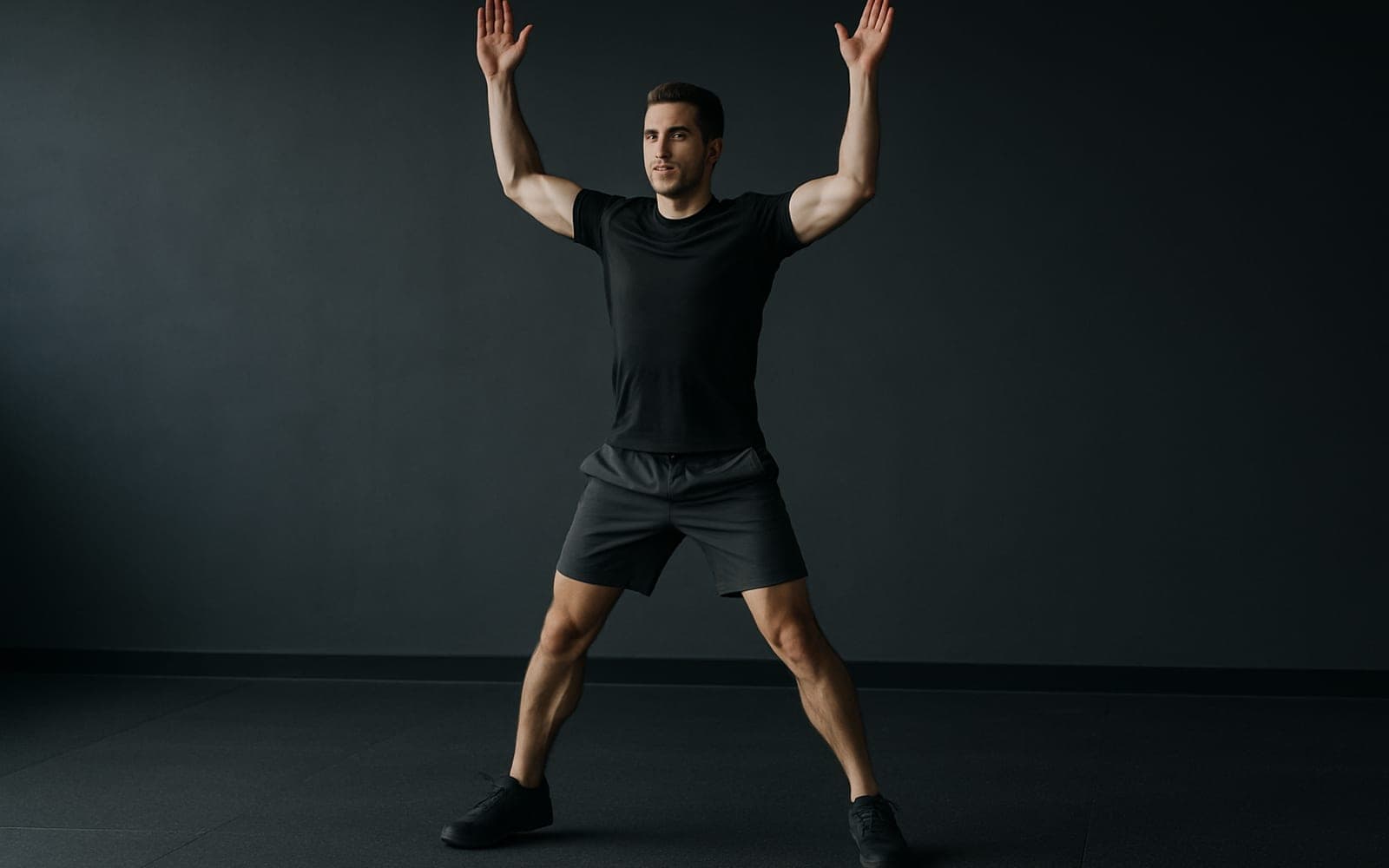
Jump the feet out while raising the arms overhead, then jump back in — a simple, rhythmic way to raise the heart rate and warm up.
Common mistakes
- Stiff, jarring landings
- Half-raising the arms
Make it harder
Make it easier
Accessibility
Substitutions
If a machine is busy or unavailable, these train the same pattern a different way.
Your progress over time
What to expect from training this consistently — everyone progresses at their own pace.
- 1
First few sessions
Learn basic rhythm, coordination of arm swing and foot landing, and build tolerance for short continuous intervals (30–60 seconds) with manageable breath control.
- 2
Weeks 1–2
Increase continuous duration to 2–5 minutes and reduce breathlessness; begin to use jumping jacks as an effective warm-up or short cardio interval in workouts.
- 3
Weeks 3–6
Notice improved cardiovascular endurance and standing muscular endurance (calves, shoulders, hips) allowing longer sets or higher-intensity intervals (e.g., tabata-style) with better form.
- 4
Months 2–3
Sustain higher-intensity sessions and combine jumping jacks into longer circuits for general fitness gains, improved coordination, and modest caloric burn contributing to body-composition goals when combined with diet.
- 5
6+ months
Use jumping jacks as an efficient, low-skill cardio tool for maintenance of aerobic fitness, quick metabolic boosts, and durable movement competency with minimal warm-up required.
Benefits of the jumping jacks
Raises heart rate quickly to improve aerobic conditioning and warm up the body for activity.
Develops coordination between upper and lower body through synchronized arm swings and footwork.
Builds muscular endurance in calves, shoulders, hips, and core through repeated, rhythmic full‑body movement.
Provides a time-efficient, equipment-free cardio option that can be done almost anywhere to support general fitness.
Offers a low-skill, scalable movement that can be modified for lower impact or progressed to higher intensity for interval training.
Helps increase daily calorie expenditure and supports mobility and joint range through repeated dynamic movement.
Exercises that pair with this
Same muscles or the same movement pattern — useful for building the rest of the session.

Jumping Jacks — questions people ask
What muscles does the jumping jacks work?
The jumping jacks trains the full body as the primary target, with the calves, shoulders working as support. It is a cardio pattern, so it also trains the coordination that pattern needs.
How many sets and reps of the jumping jacks should I do?
Work in time, not reps: 20–40 minutes at a conversational pace for base fitness, or 6–10 short hard intervals with equal rest if you are training for speed.
Is the jumping jacks good for beginners?
Yes. The jumping jacks is a beginner-friendly movement. Step side to side without jumping (low-impact). If it feels like too much, build the pattern on the mountain climber first.
What can I do instead of the jumping jacks?
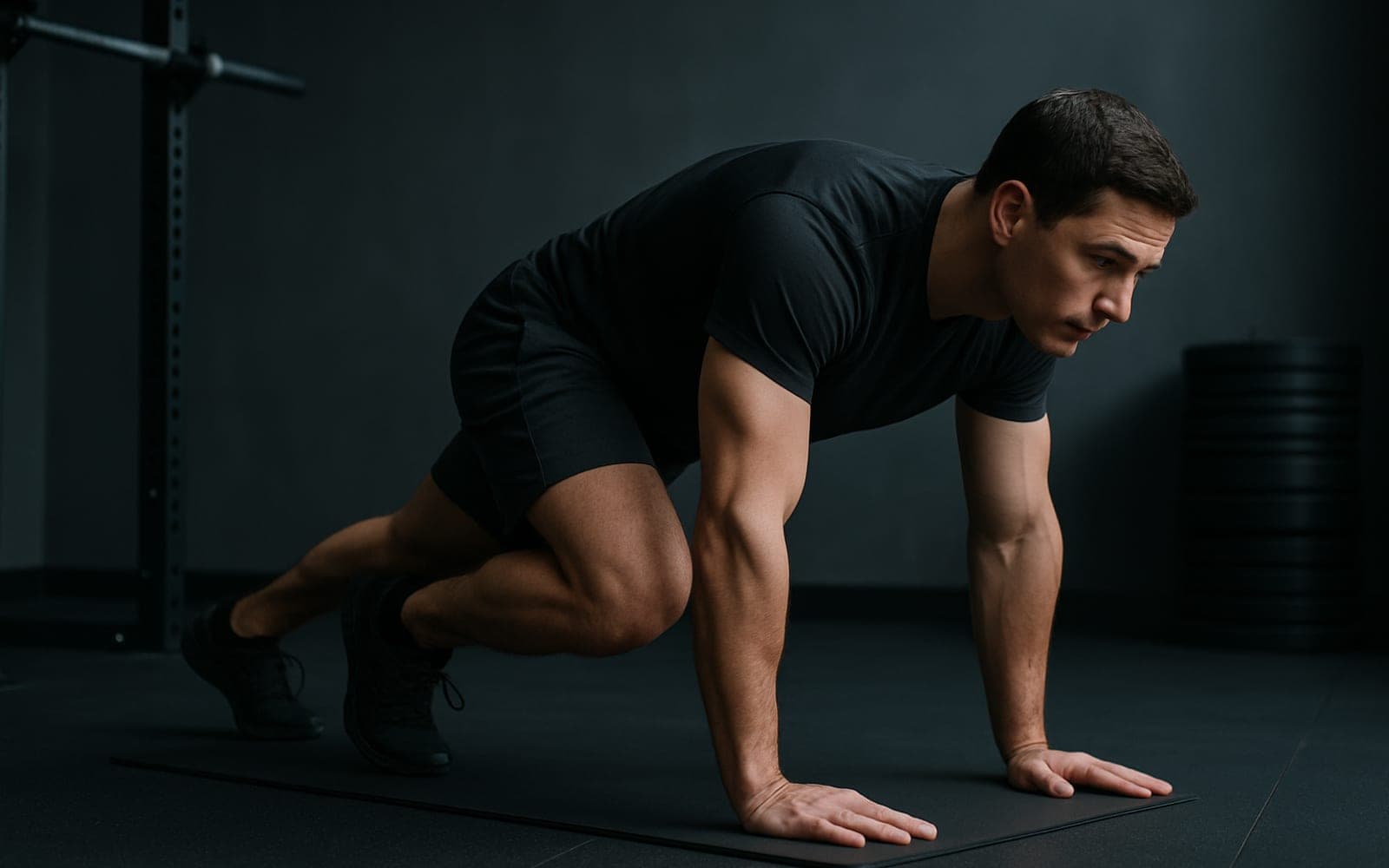
Mountain Climber all train the same cardio pattern with different equipment, so any of them works when the machine is busy or your gym does not have it.
What are the most common jumping jacks mistakes?
Stiff, jarring landings; Half-raising the arms. Jump the feet out while raising the arms overhead, then jump back in — a simple, rhythmic way to raise the heart rate and warm up.