Hammer Curl
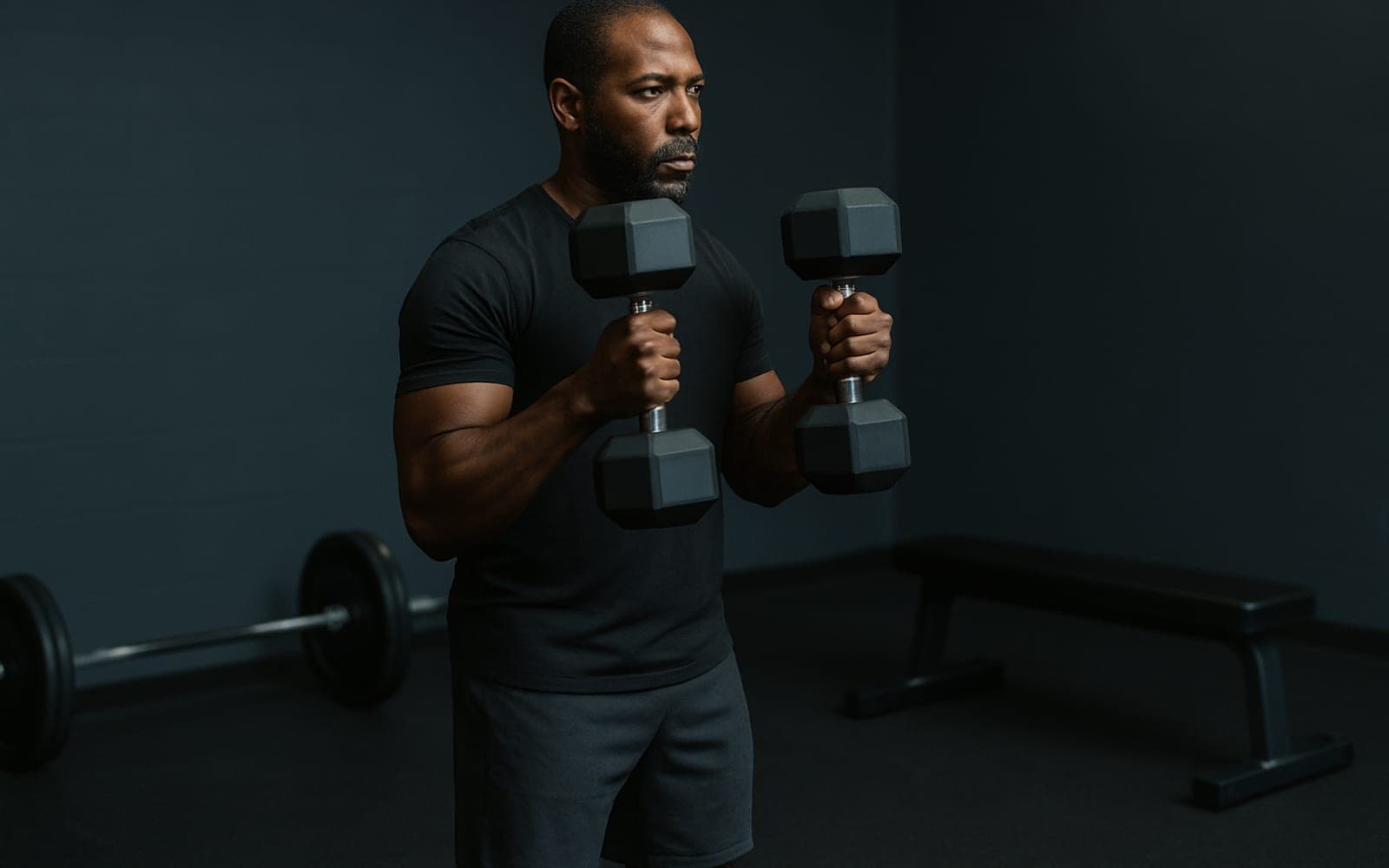
Activation
Muscles worked
Movement
Isolation
Beginner · Free Weights
Secondary muscles
Movement pattern
Equipment category
How to perform
- 1
Set up
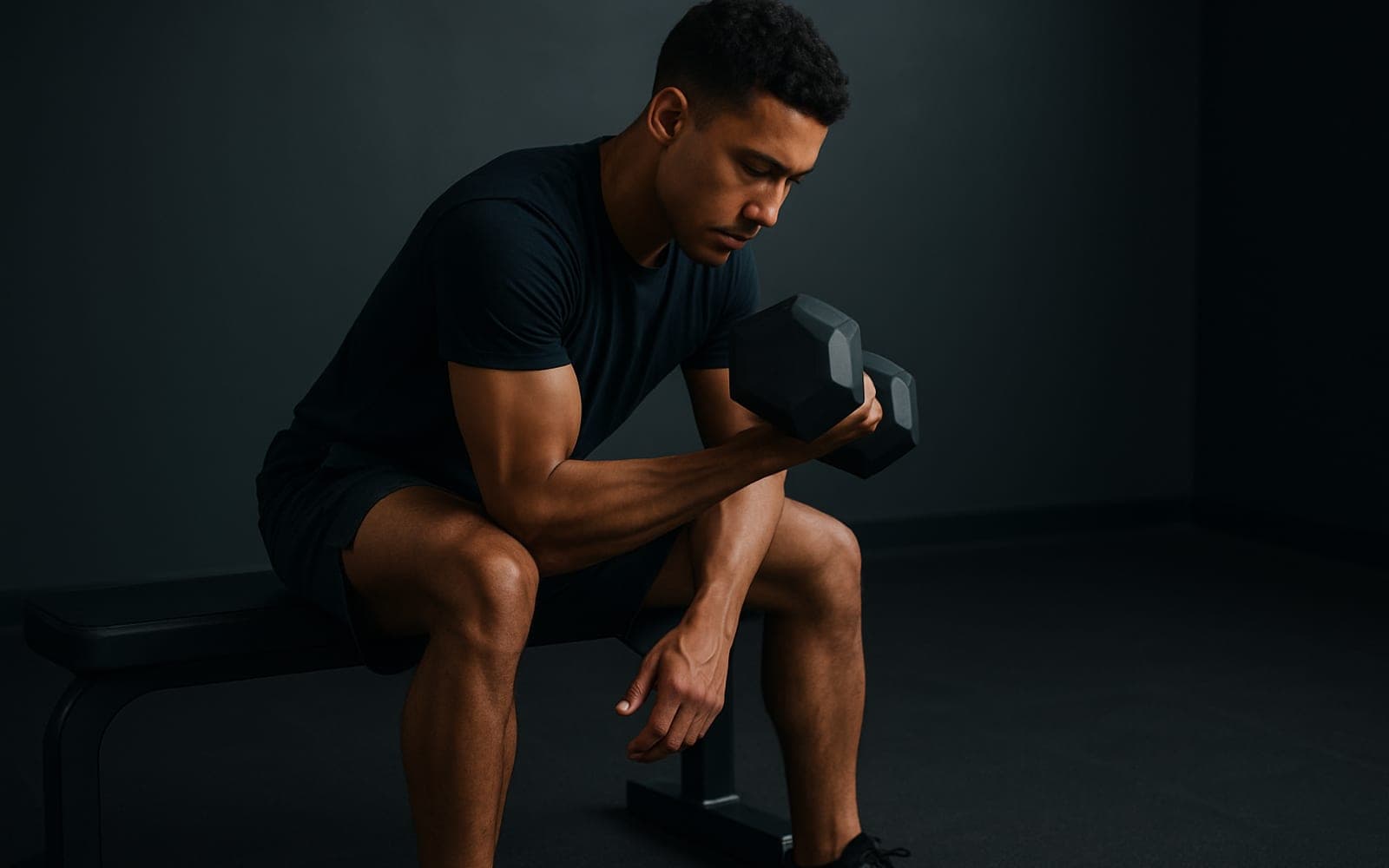
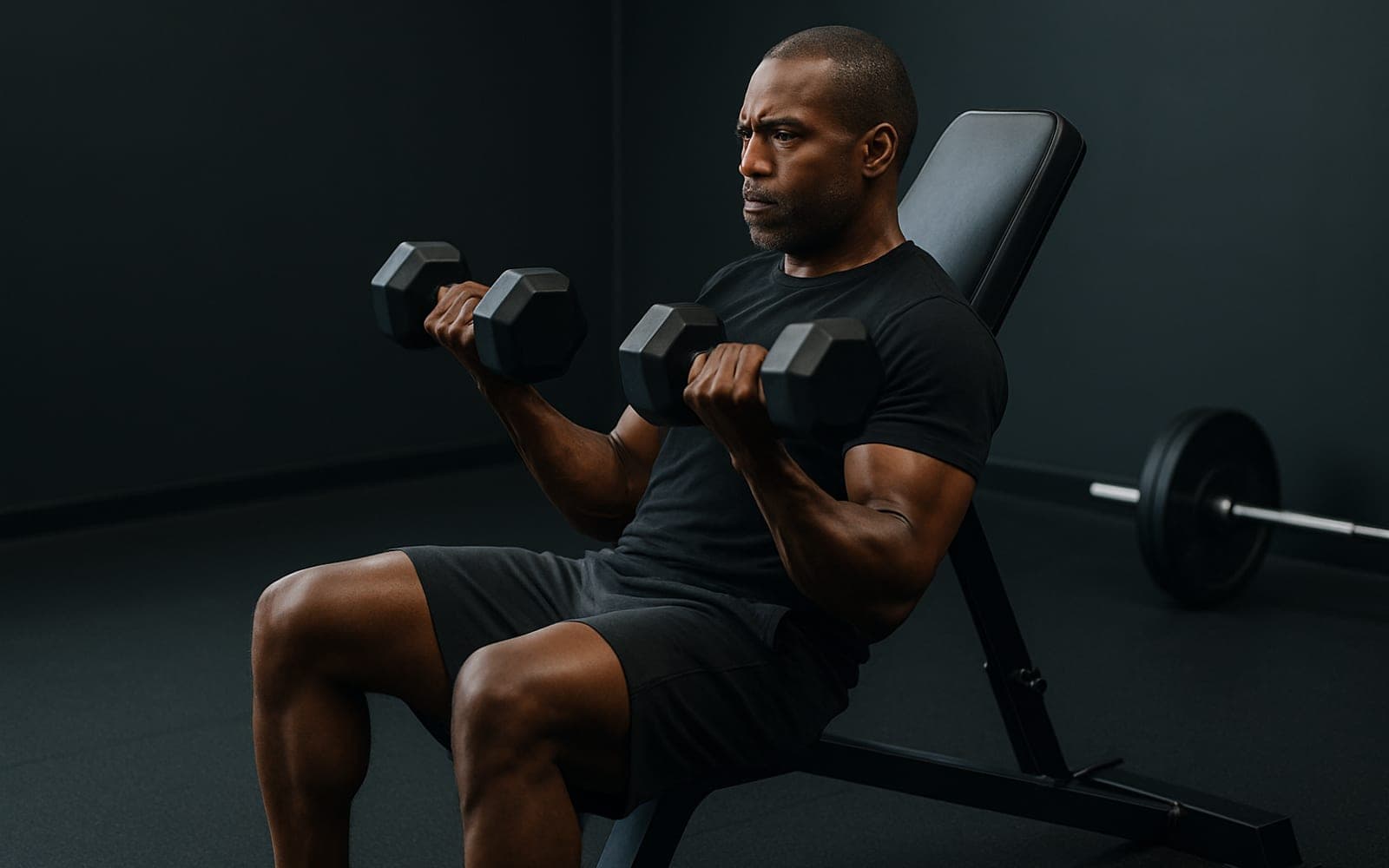
Dumbbells at the sides, neutral grip.
- 2
Execute the movement
Curl up keeping the thumbs up, lower slowly.
Common mistakes
- Elbows drifting forward
Make it harder
Make it easier
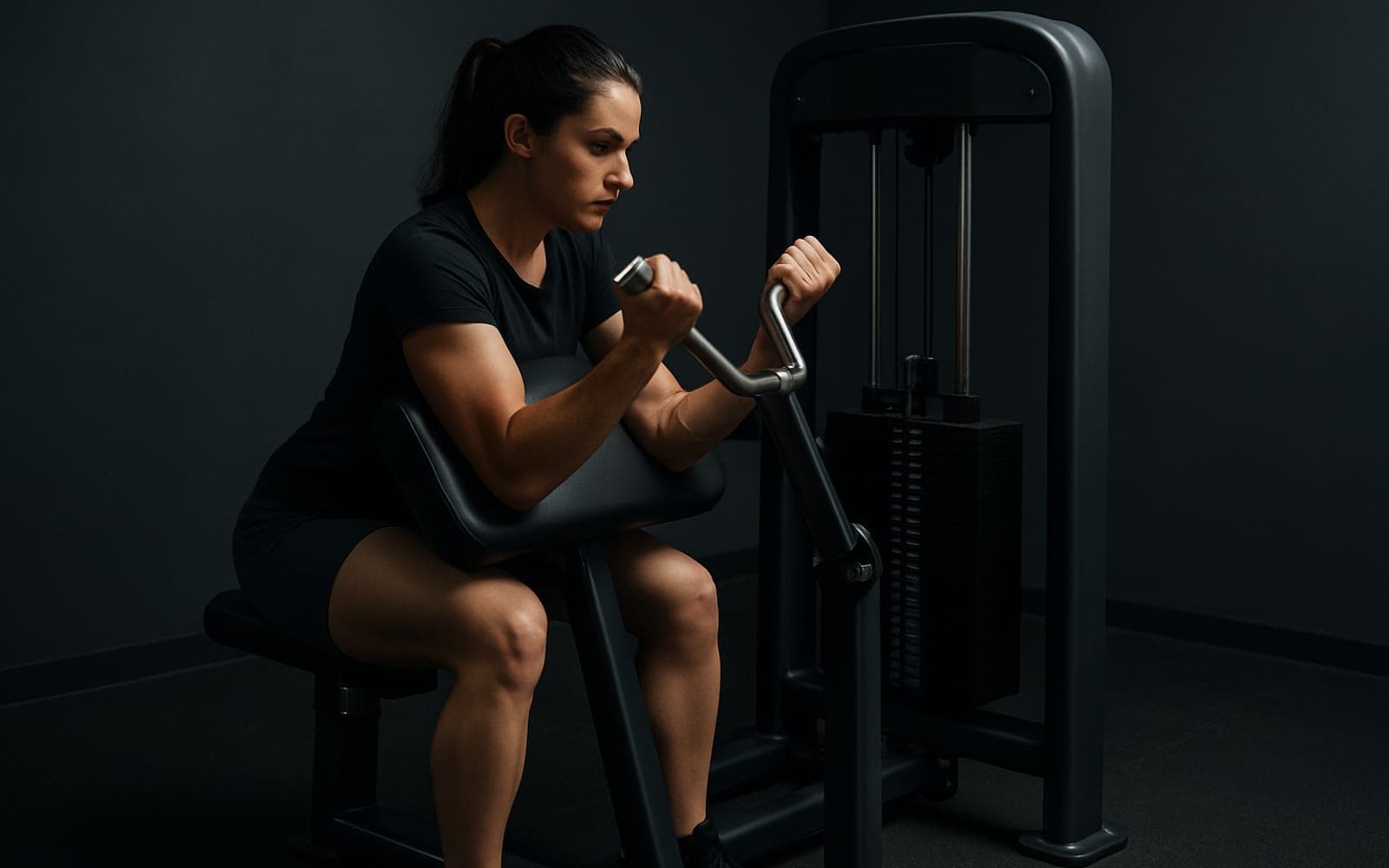
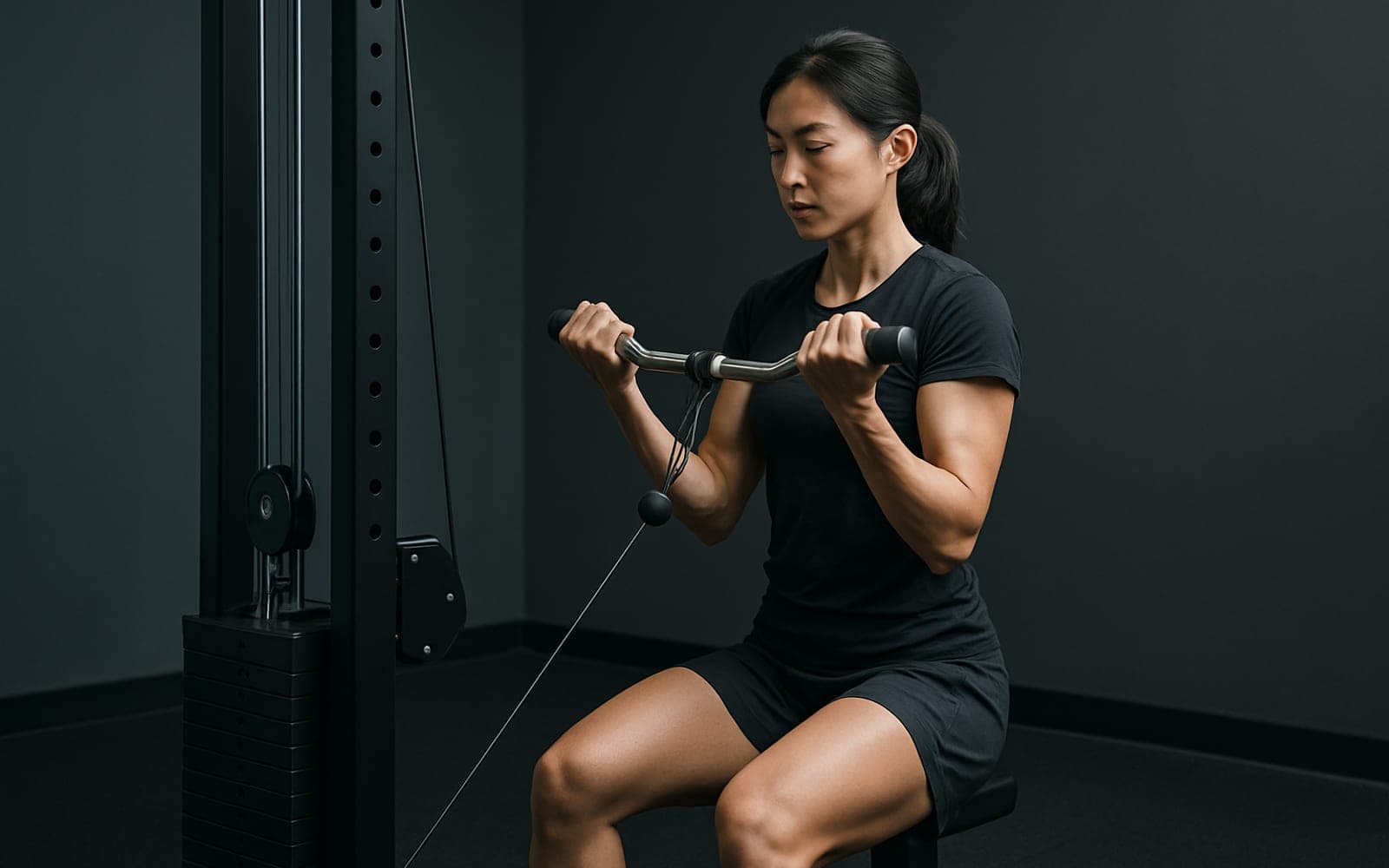
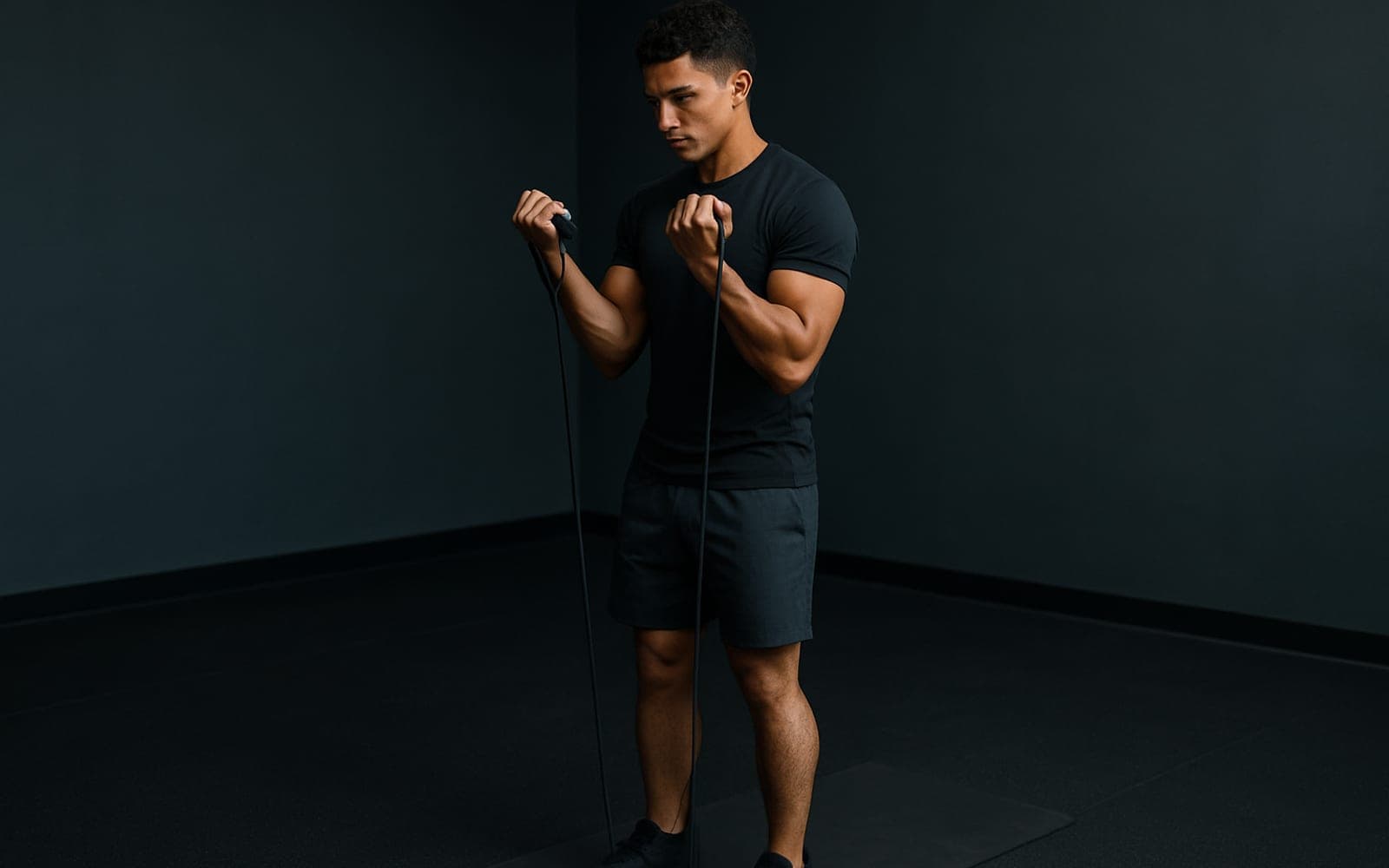
Substitutions
If a machine is busy or unavailable, these train the same pattern a different way.
Your progress over time
What to expect from training this consistently — everyone progresses at their own pace.
- 1
First few sessions
Learn the movement pattern, groove the thumbs-up (neutral) wrist position, handle light weights with controlled concentric and slow eccentric phases, and experience mild muscle soreness as neuromuscular coordination improves.
- 2
Weeks 2–4
Notice improved control and ability to increase set-to-set volume; initial increases in the amount of weight you can curl for moderate reps due mainly to neural adaptation and better technique.
- 3
Months 2–3
Visible increases in forearm and outer biceps thickness for most trainees, with consistent progressive overload producing measurable hypertrophy and improved one- or two-rep maxes on the exercise.
- 4
Months 4–6
Greater muscular endurance and strength in hammer curling capacity, more pronounced arm circumference gains if overall program and nutrition support it, and smoother, more efficient repetitions under heavier loads.
- 5
6+ months
Solid, lasting improvements in forearm and brachialis development contributing to overall arm size and grip resilience, plus reliable carryover to pulling tasks and other upper-body lifts when trained consistently as part of a balanced program.
Benefits of the hammer curl
Directly targets the brachialis and brachioradialis along with the biceps, promoting thicker-looking upper arms and stronger forearms.
The neutral (thumbs-up) grip reduces wrist strain compared with supinated curls, making it a good option for those with wrist discomfort during traditional curls.
Improves grip strength and elbow flexion power, which can carry over to better performance on pulling movements like rows and deadlifts.
As an isolation movement, it allows focused overload on the elbow flexors with relatively low systemic fatigue, useful for increasing volume without fatiguing larger muscles.
Can enhance everyday tasks that require holding or carrying objects with a neutral grip, such as lifting grocery bags or carrying suitcases.
Easy to learn and progress for beginners, making it a practical exercise to include for consistent arm development within a general fitness program.
Exercises that pair with this
Same muscles or the same movement pattern — useful for building the rest of the session.
Hammer Curl — questions people ask
What muscles does the hammer curl work?
The hammer curl trains the biceps and forearms as the primary target. It is a isolation pattern, so it also trains the coordination that pattern needs.
How many sets and reps of the hammer curl should I do?
Three sets of 8–12 reps with about 90 seconds of rest is a reliable default. Increase the weight once the last rep of every set still looks clean.
Is the hammer curl good for beginners?
Yes. The hammer curl is a beginner-friendly movement. Lighter dumbbells. If it feels like too much, build the pattern on the supported biceps curl first.
What can I do instead of the hammer curl?
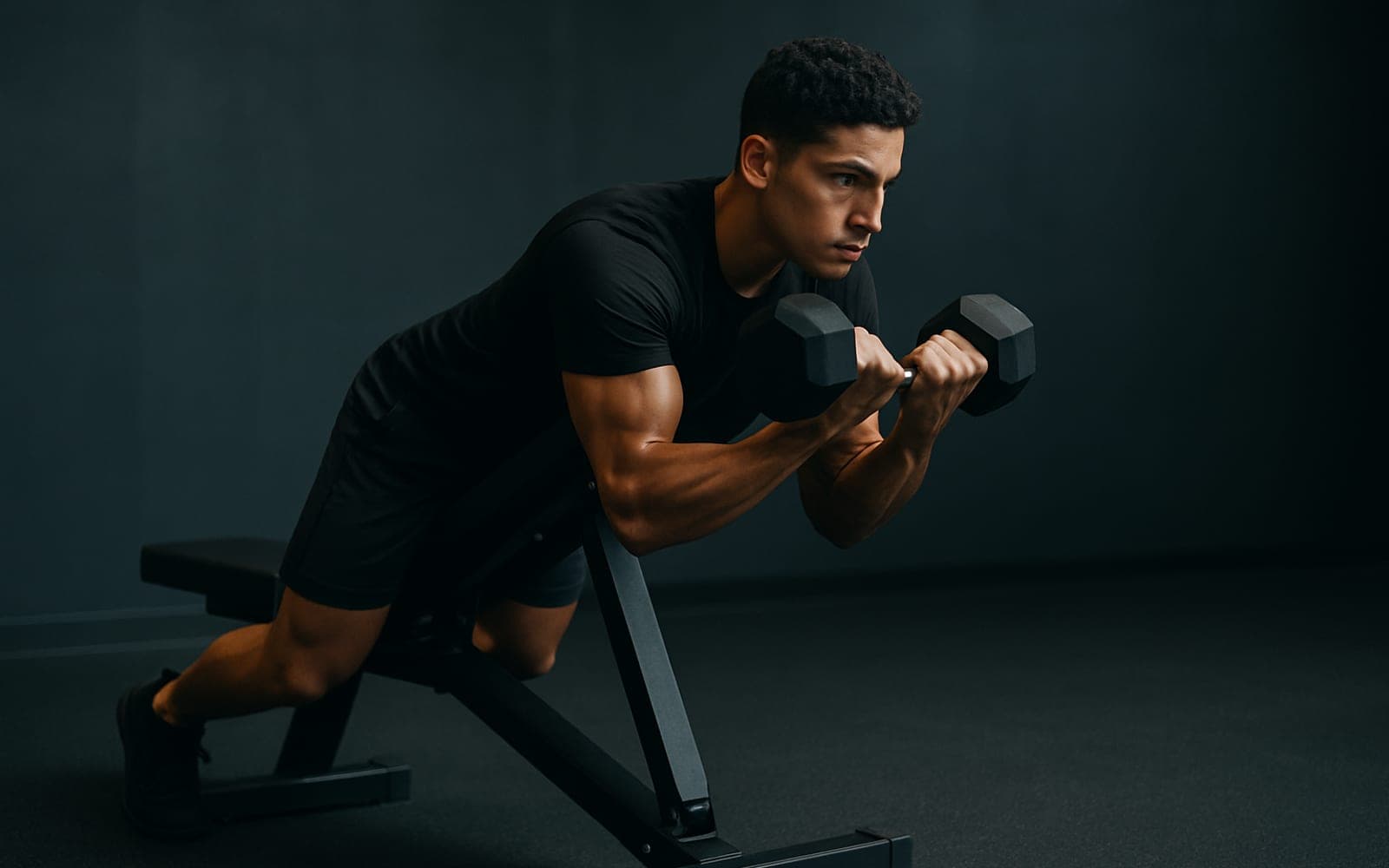
Supported Biceps Curl, Cable Curl, Band Curl all train the same isolation pattern with different equipment, so any of them works when the machine is busy or your gym does not have it.
What are the most common hammer curl mistakes?
Elbows drifting forward. Curl up keeping the thumbs up, lower slowly.
Can I do the hammer curl at home?
The hammer curl needs free weights equipment, which most home gyms do not have. The band curl trains the same pattern with nothing more than your bodyweight or a band.