Band Curl
Activation
Muscles worked
Movement
Isolation
Beginner · Bodyweight
Primary muscles
Secondary muscles
Movement pattern
Equipment category
How to perform
- 1
Set up
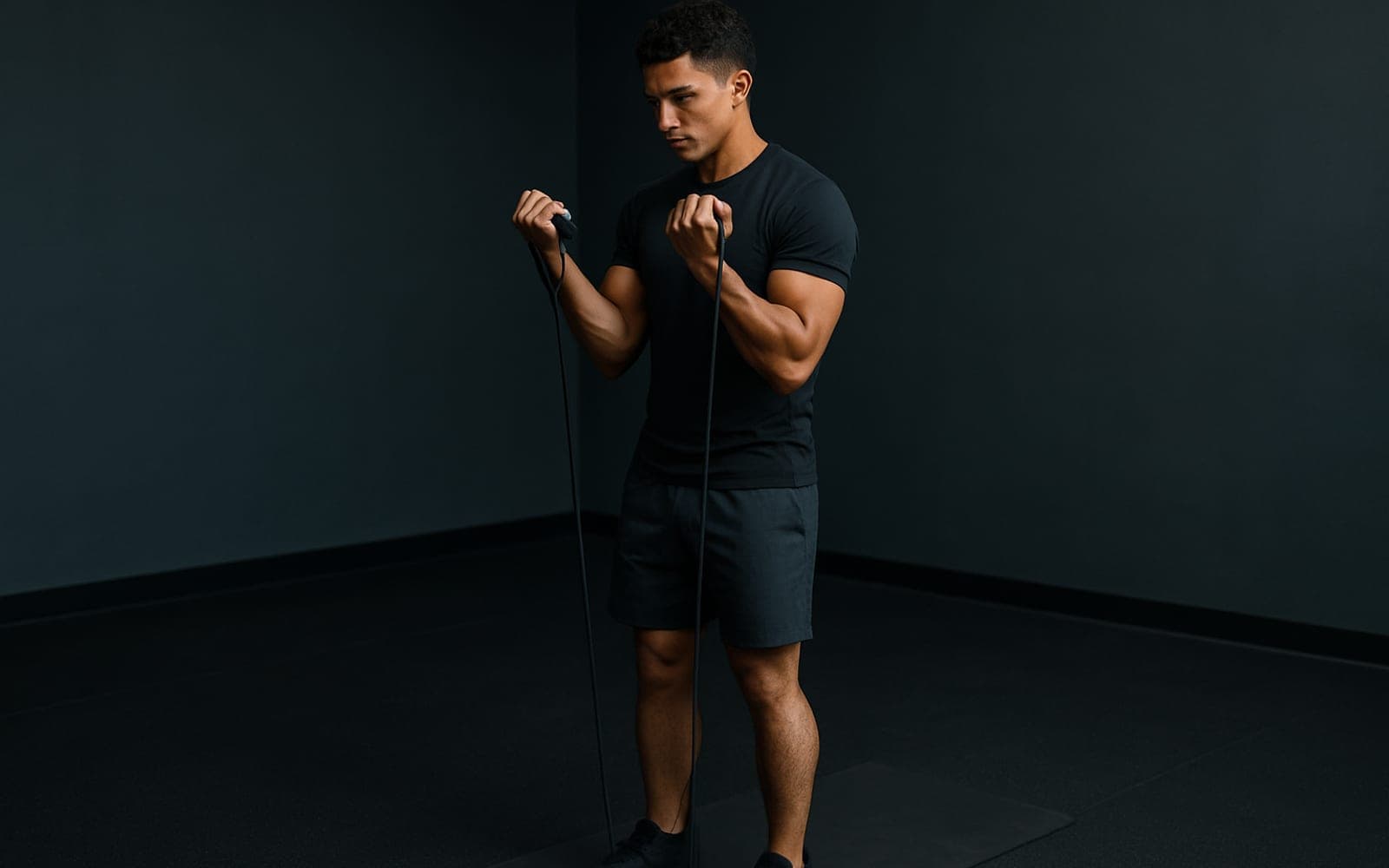
Stand on the band, palms up.
- 2
Execute the movement
Curl up, control down.
Common mistakes
- Too light a band
Make it harder
Make it easier
Accessibility
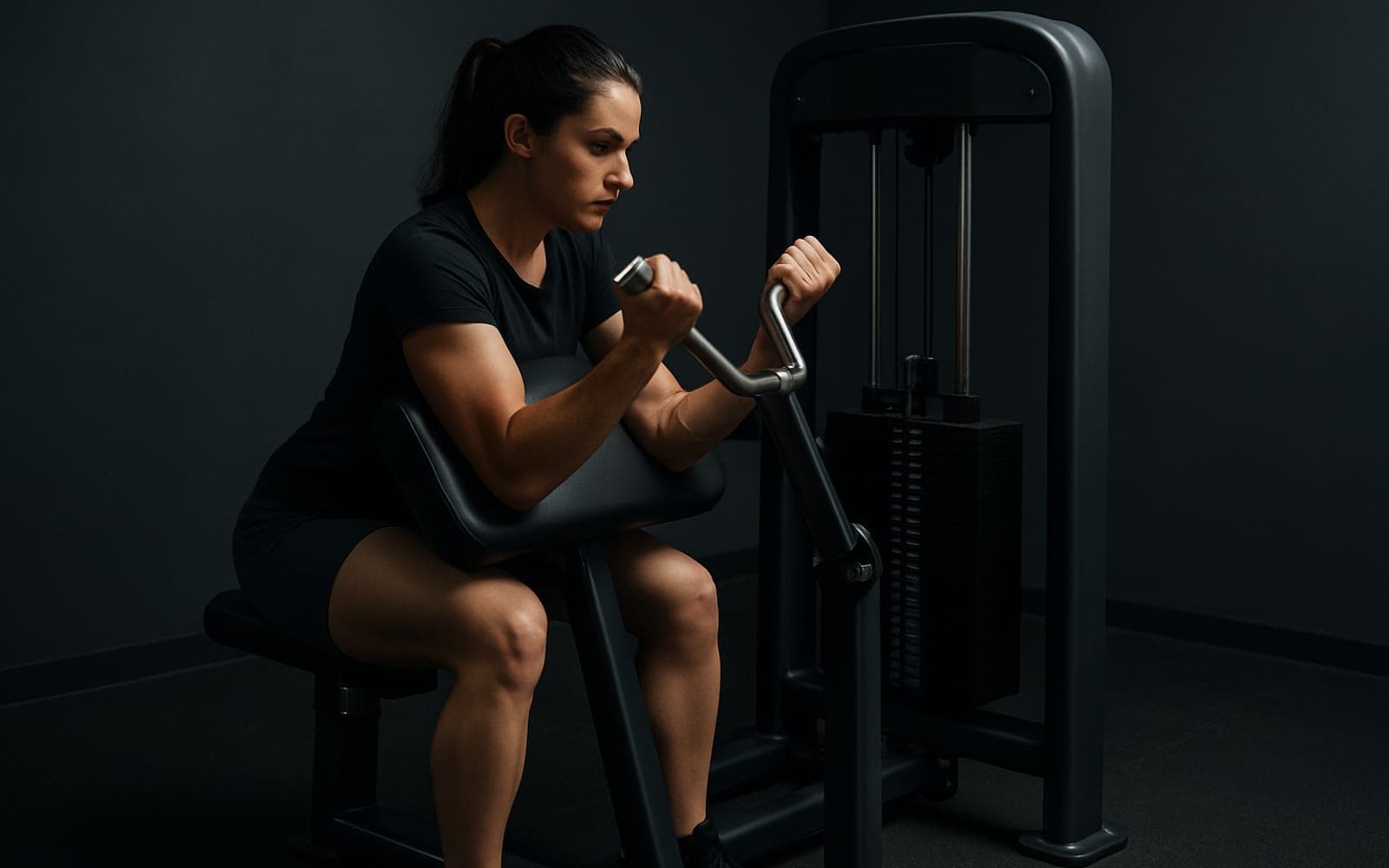
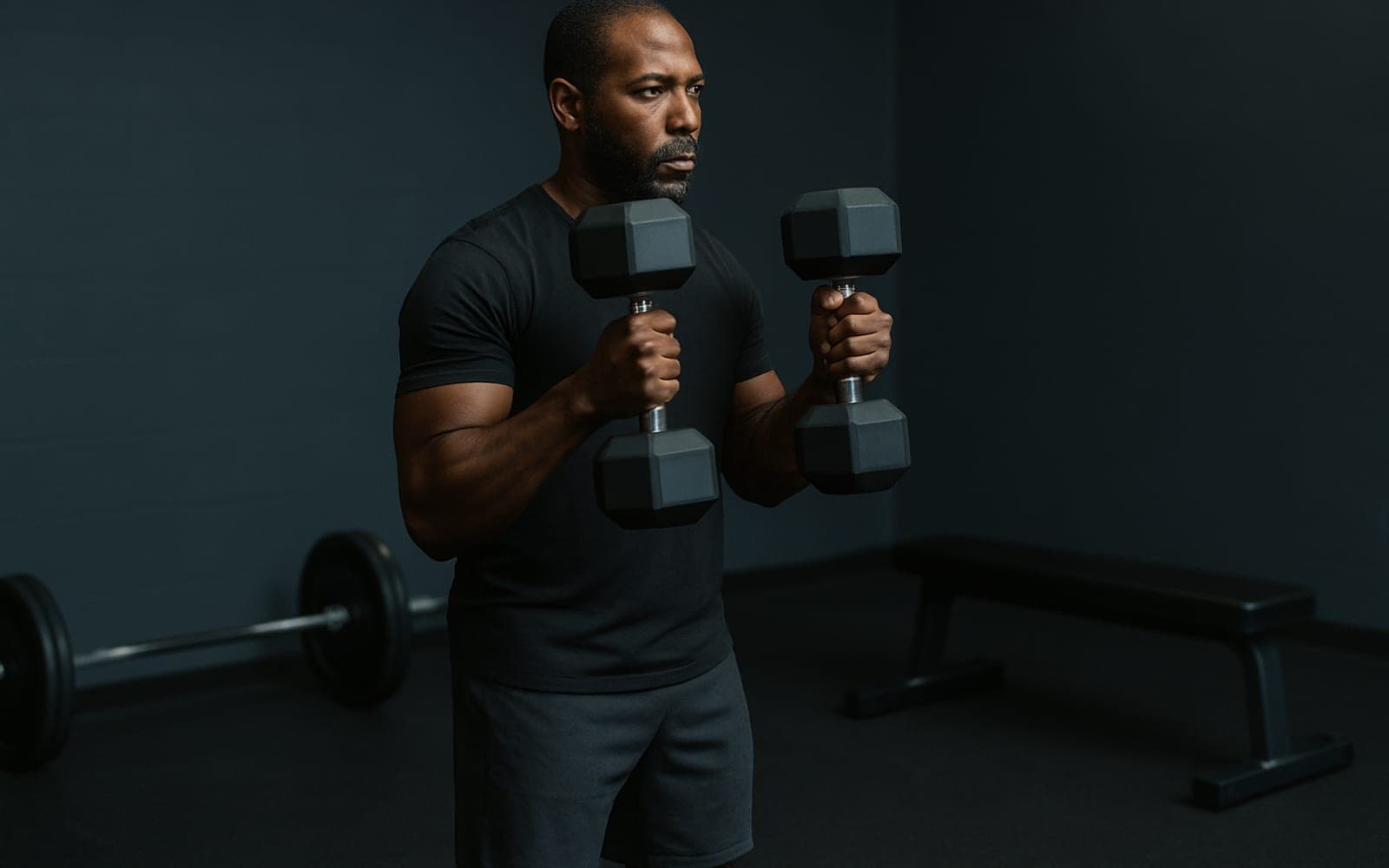
Substitutions
If a machine is busy or unavailable, these train the same pattern a different way.
Your progress over time
What to expect from training this consistently — everyone progresses at their own pace.
- 1
First few sessions
Learn movement pattern and tempo (curl up, control down), establish comfortable band tension and hand position, and reduce common errors like swinging or elbow drift.
- 2
Weeks 2–4
Notice improved muscular endurance in the biceps with more reps possible at a given band tension and cleaner, more consistent repetitions.
- 3
Months 1–3
Develop modest biceps size and visible toning for beginners, and increase single-set strength with thicker bands or added volume.
- 4
Months 3–6
Make steady strength and hypertrophy gains in elbow flexion; able to use higher-resistance bands or perform more challenging variations for repeated sets.
- 5
6+ months
Achieve durable elbow-flexor strength and muscular endurance useful for daily activities and as part of balanced arm development, while using band curls as an effective maintenance or accessory exercise.
Benefits of the band curl
Directly targets the biceps brachii to improve elbow flexion strength and muscular size when performed consistently.
Provides a low-impact, joint-friendly way to train the biceps because band resistance increases smoothly through the range of motion.
Easy to scale resistance and complexity by changing band thickness or hand position, making it beginner-friendly and adaptable as you progress.
Teaches tempo control and eccentric loading (controlling the lowering phase), which supports muscle development and movement quality.
Portable and inexpensive equipment option that enables consistent upper-arm training outside the gym, aiding general fitness and appearance goals.
Complements compound upper-body lifts by isolating the biceps for additional volume and helping reduce muscle imbalances when included in a balanced program.
Exercises that pair with this
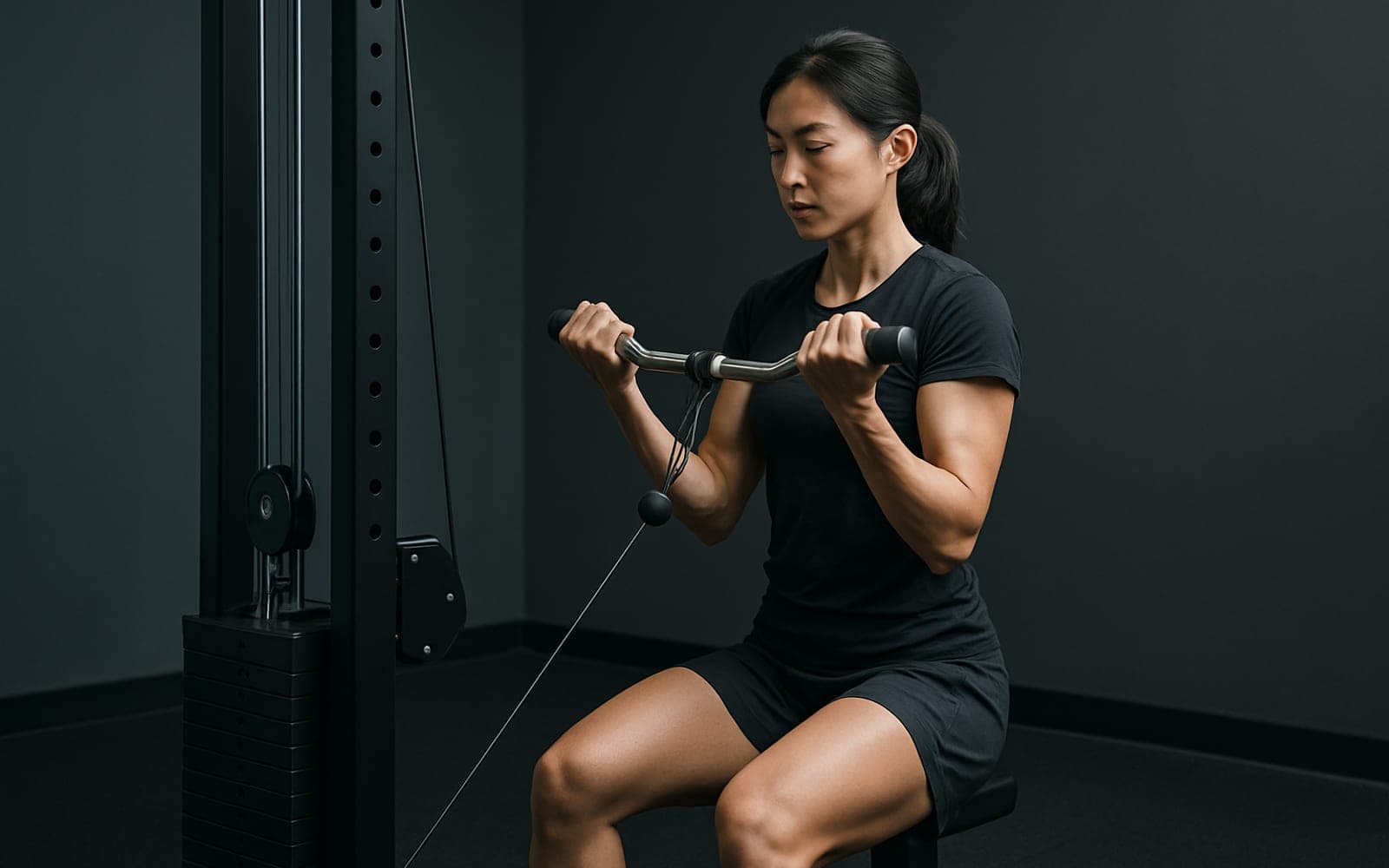
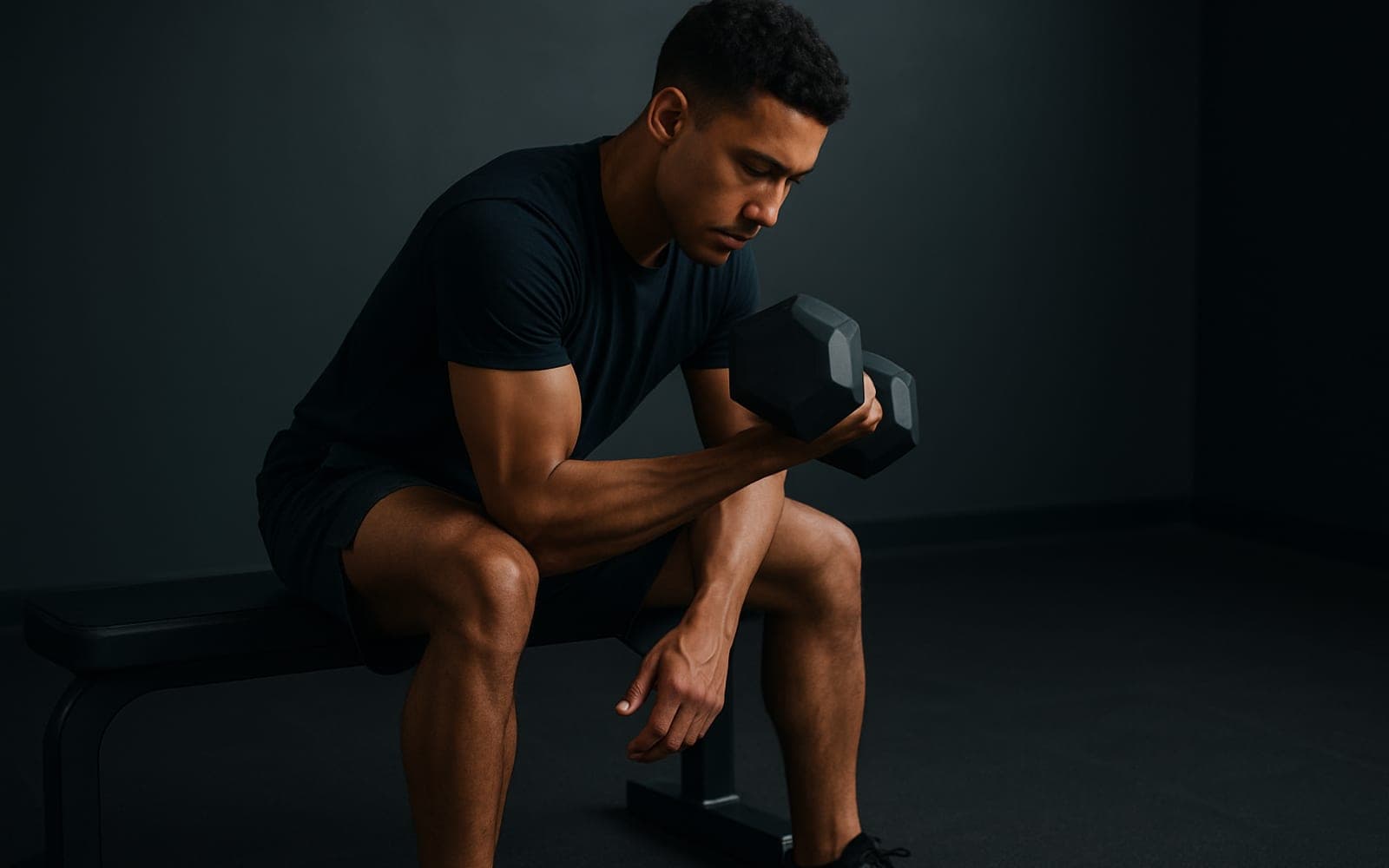
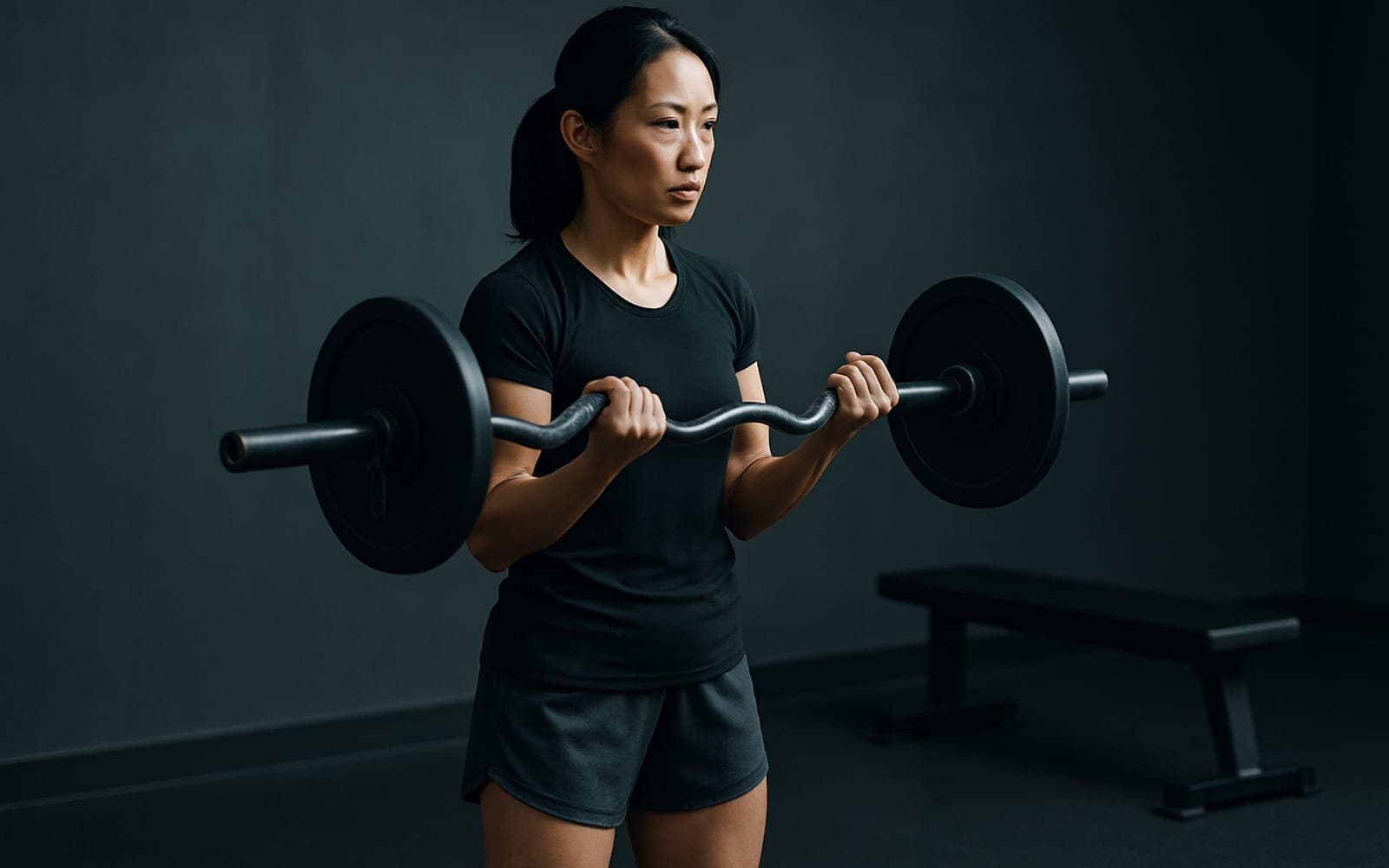
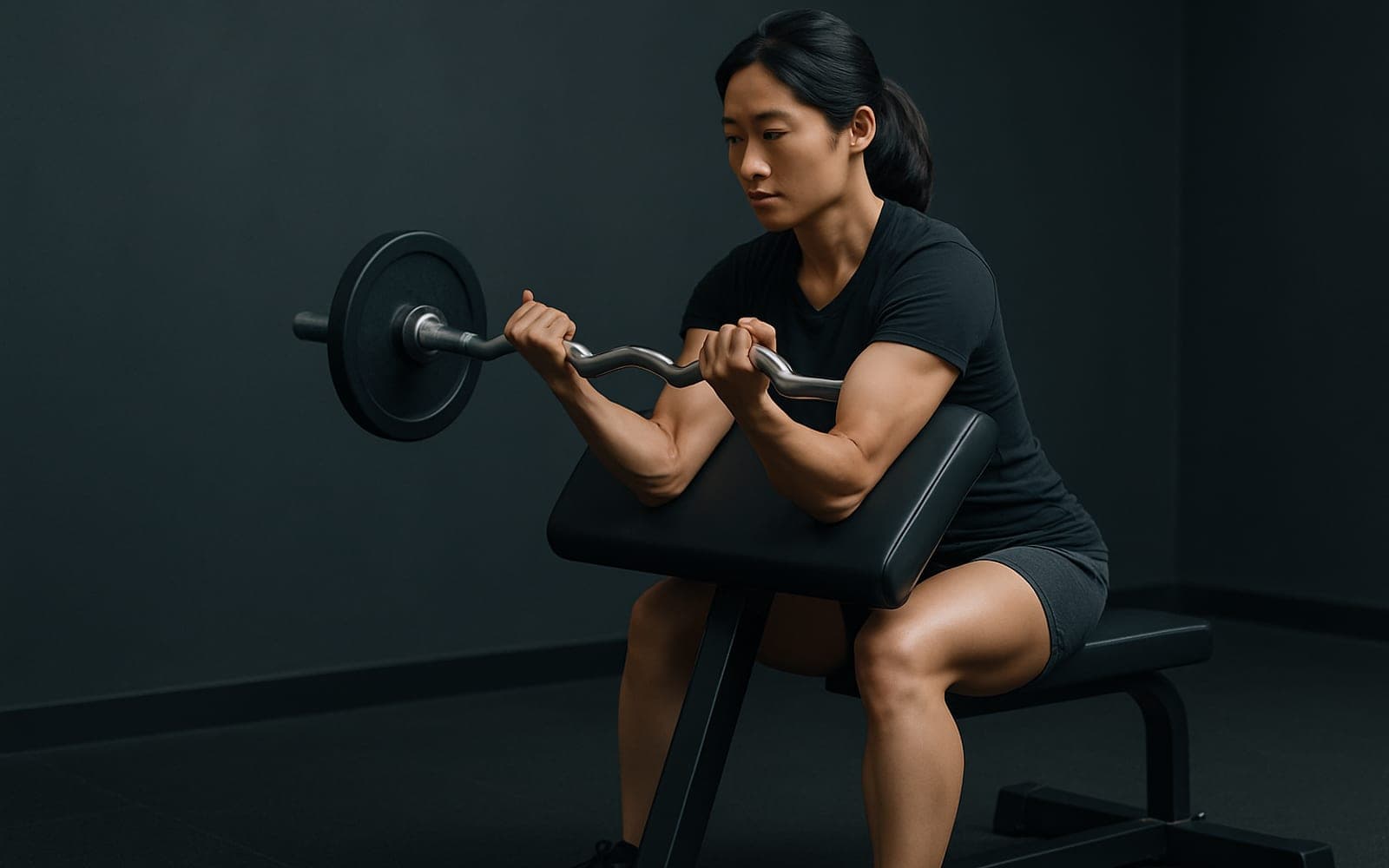
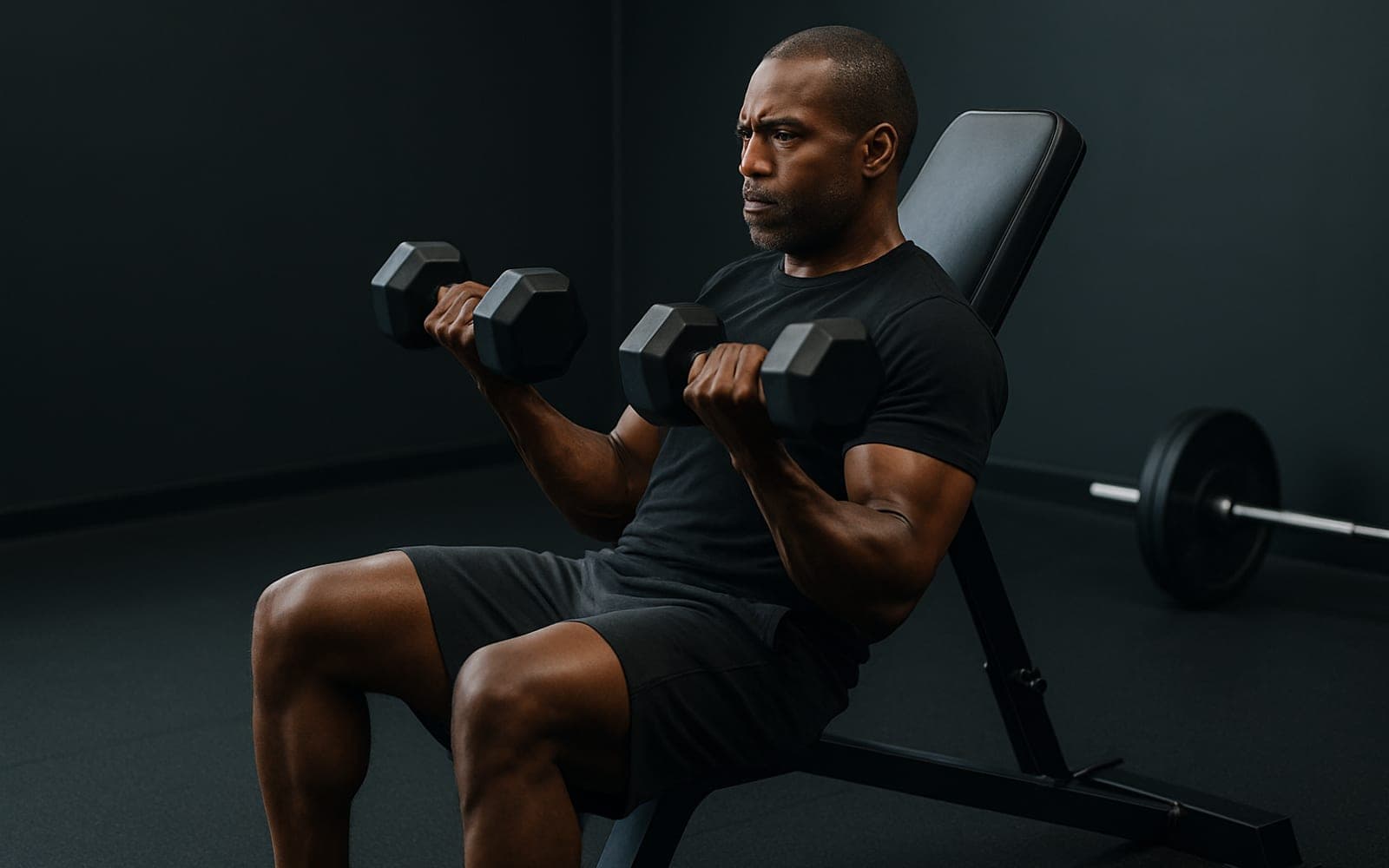
Same muscles or the same movement pattern — useful for building the rest of the session.
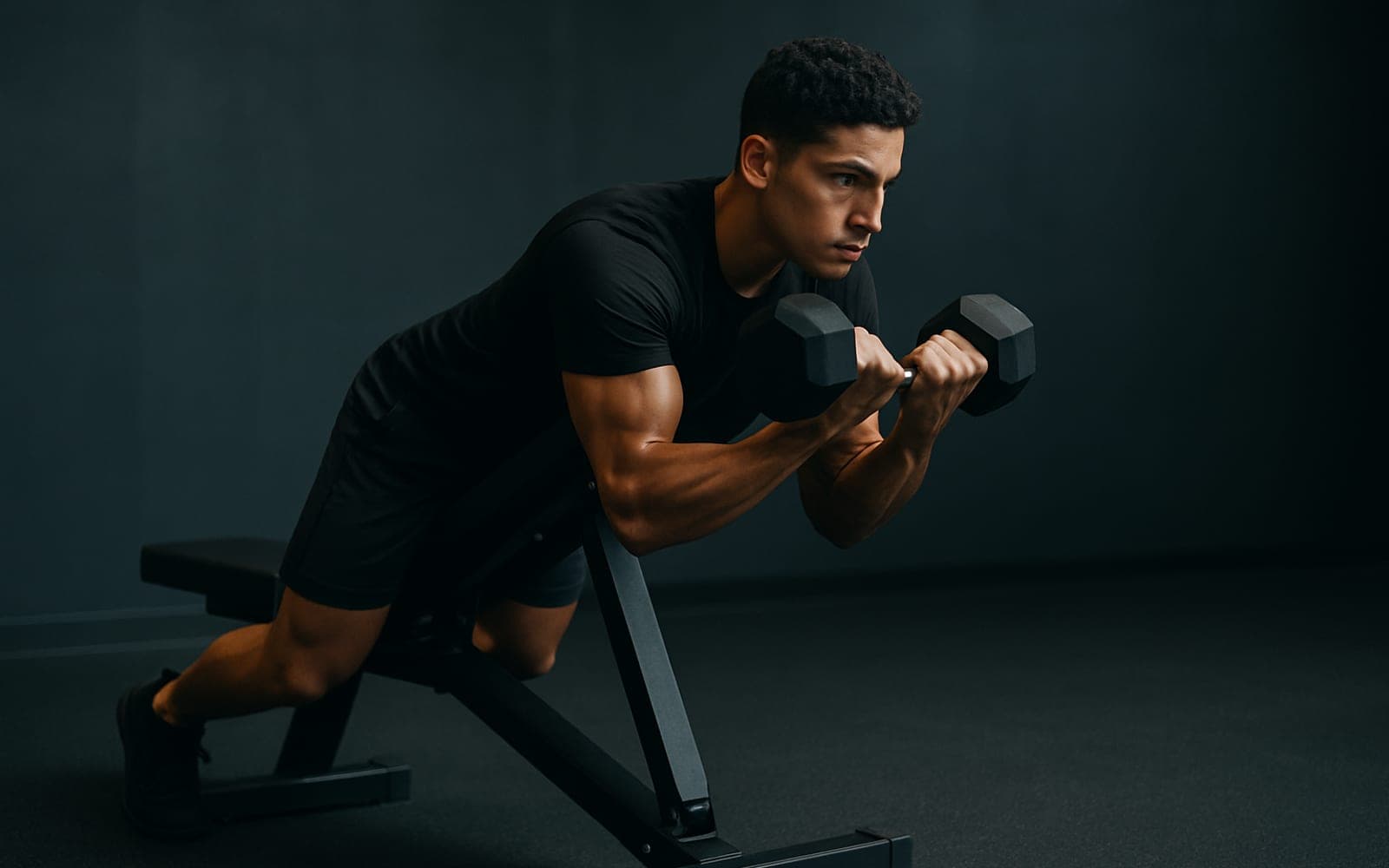
Band Curl — questions people ask
What muscles does the band curl work?
The band curl trains the biceps as the primary target. It is a isolation pattern, so it also trains the coordination that pattern needs.
How many sets and reps of the band curl should I do?
Three sets of 8–12 reps with about 90 seconds of rest is a reliable default. Increase the weight once the last rep of every set still looks clean.
Is the band curl good for beginners?
Yes. The band curl is a beginner-friendly movement. Lighter band. If it feels like too much, build the pattern on the supported biceps curl first.
What can I do instead of the band curl?
Supported Biceps Curl, Hammer Curl all train the same isolation pattern with different equipment, so any of them works when the machine is busy or your gym does not have it.
What are the most common band curl mistakes?
Too light a band. Curl up, control down.