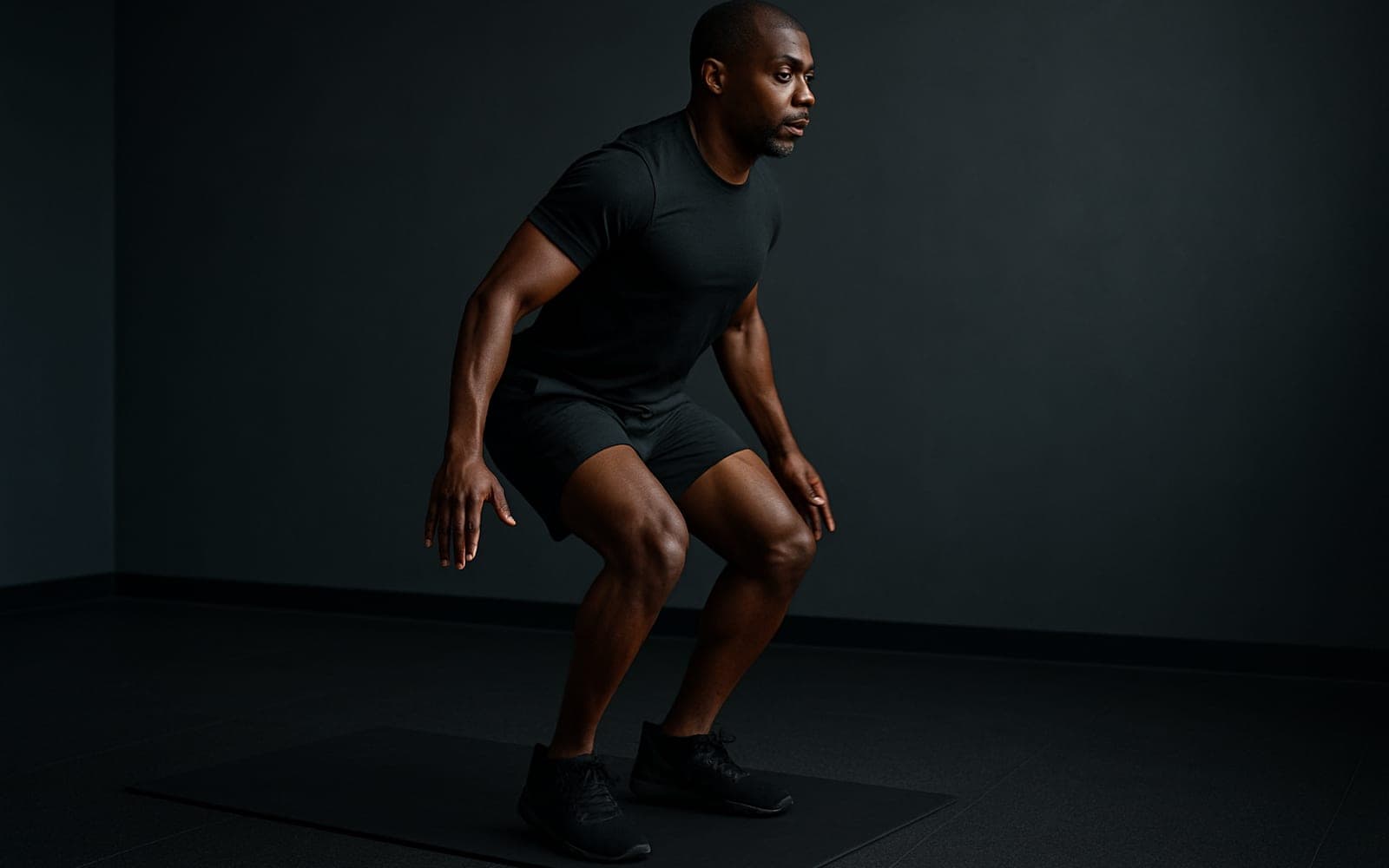
Jump Squat
Activation
Muscles worked
Movement
Squat
Intermediate · Bodyweight
Movement pattern
Equipment category
How to perform
- 1
Set up
Feet shoulder-width, room overhead.
- 2
Execute the movement
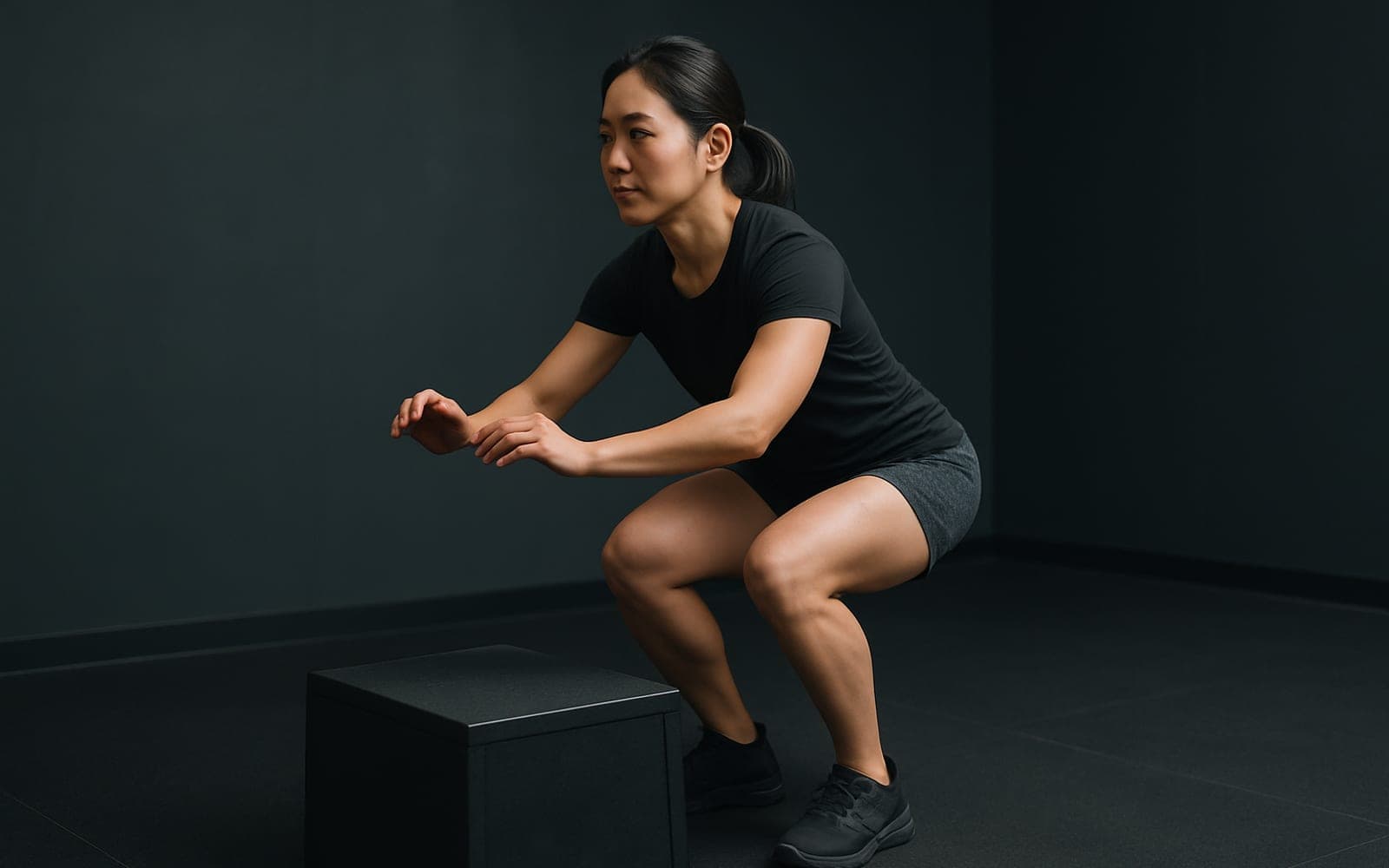
Squat to about parallel, then explode straight up; land softly with bent knees and immediately absorb into the next rep. Quality over quantity.
Common mistakes
- Stiff, loud landings
- Knees caving on landing
- Half-squatting
Make it harder
Make it easier
Substitutions
If a machine is busy or unavailable, these train the same pattern a different way.
Your progress over time
What to expect from training this consistently — everyone progresses at their own pace.
- 1
First few sessions
Learn and groove the movement: safe squat depth, soft landing mechanics, and timing of the explosive extension; expect modest fatigue and some muscle soreness as coordination and landing tolerance develop.
- 2
Weeks 2–4
Noticeable improvements in rate of force production and plyometric tolerance — quicker takeoffs, crisper landings, and modest gains in single-session jump height as neuromuscular coordination improves.
- 3
Months 2–3
Meaningful increases in vertical jump and power output for athletic tasks, improved reactive strength (less ground contact time), and visible conditioning benefits when plyometrics are included regularly in training.
- 4
Months 4–6
Further carryover to sport-specific explosiveness and sprint starts, greater muscular development in quads and glutes when combined with strength training, and enhanced work capacity for repeated high-intensity efforts.
- 5
6+ months
Well-developed explosive strength and plyometric efficiency, consistent increases in jump performance for trained athletes, and the ability to perform higher-volume or weighted jump squat variations with durable landing mechanics.
Benefits of the jump squat
Develops explosive lower-body power by training the quads and glutes through rapid triple-extension, directly improving vertical jump and sprint drive.
Improves reactive strength and reduced ground-contact time, which transfers to faster change-of-direction and sport-specific explosiveness.
Strengthens core and ankle stabilizers through dynamic landing control, enhancing balance and force transfer during athletic movements.
Builds conditioning and anaerobic capacity when done in repeated sets, supporting cardiovascular health and work-rate for interval-style training.
Encourages better movement mechanics and proprioception because of the emphasis on soft, controlled landings and coordinated hip-knee extension.
When combined with progressive resistance training, contributes to hypertrophy of the quads and glutes, helping overall lower-body strength and muscle resilience.
Exercises that pair with this
Same muscles or the same movement pattern — useful for building the rest of the session.

Jump Squat — questions people ask
What muscles does the jump squat work?
The jump squat trains the quads and glutes as the primary target, with the calves, core working as support. It is a squat pattern, so it also trains the coordination that pattern needs.
How many sets and reps of the jump squat should I do?
Three to five sets of 2–5 reps, fully rested between sets. Power work is about speed, so end the set the moment the bar slows down.
Is the jump squat good for beginners?
It is a reasonable second step. The jump squat asks for some control and body awareness. Do bodyweight squats without the jump. If it feels like too much, build the pattern on the bodyweight squat first.
What can I do instead of the jump squat?
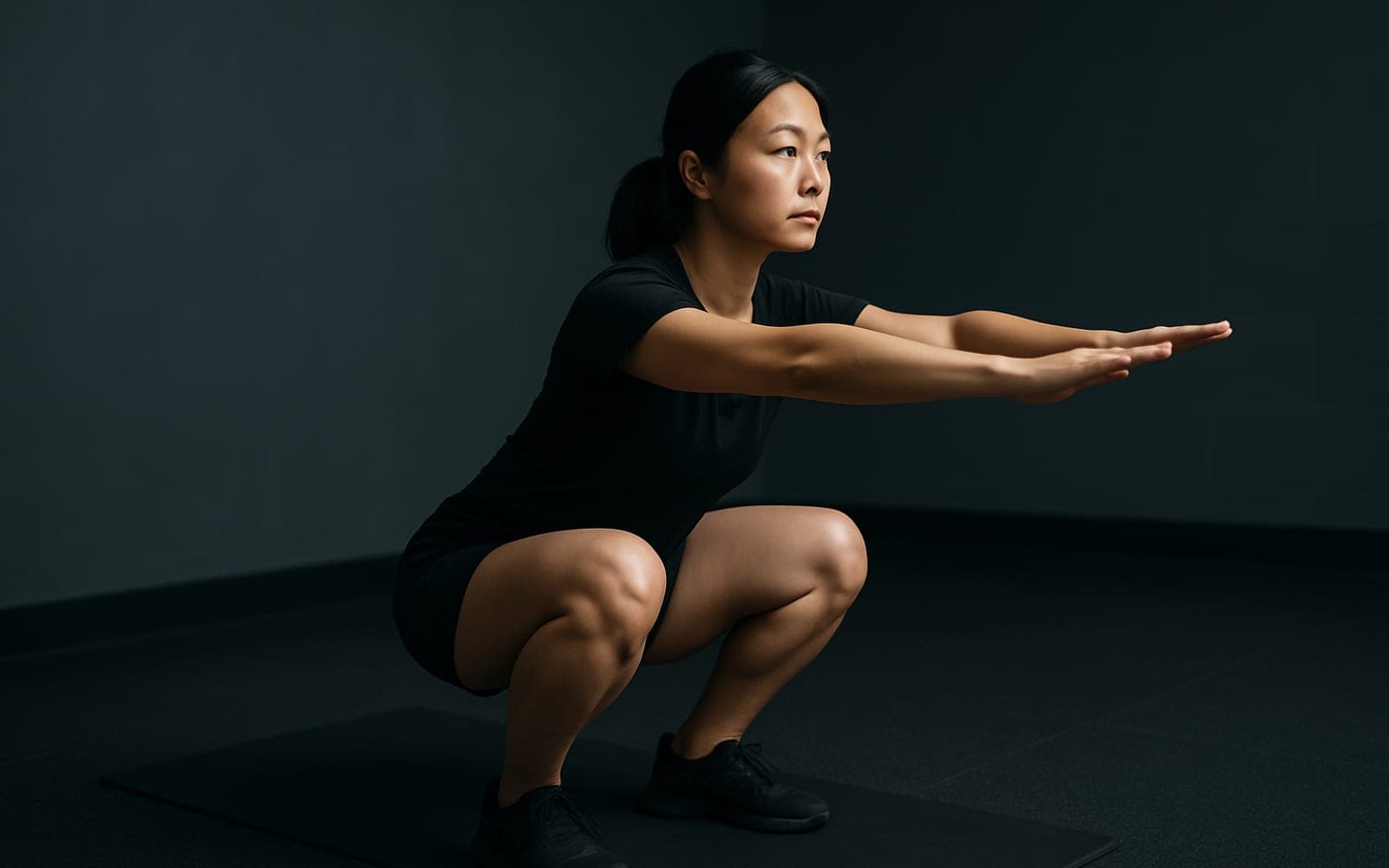
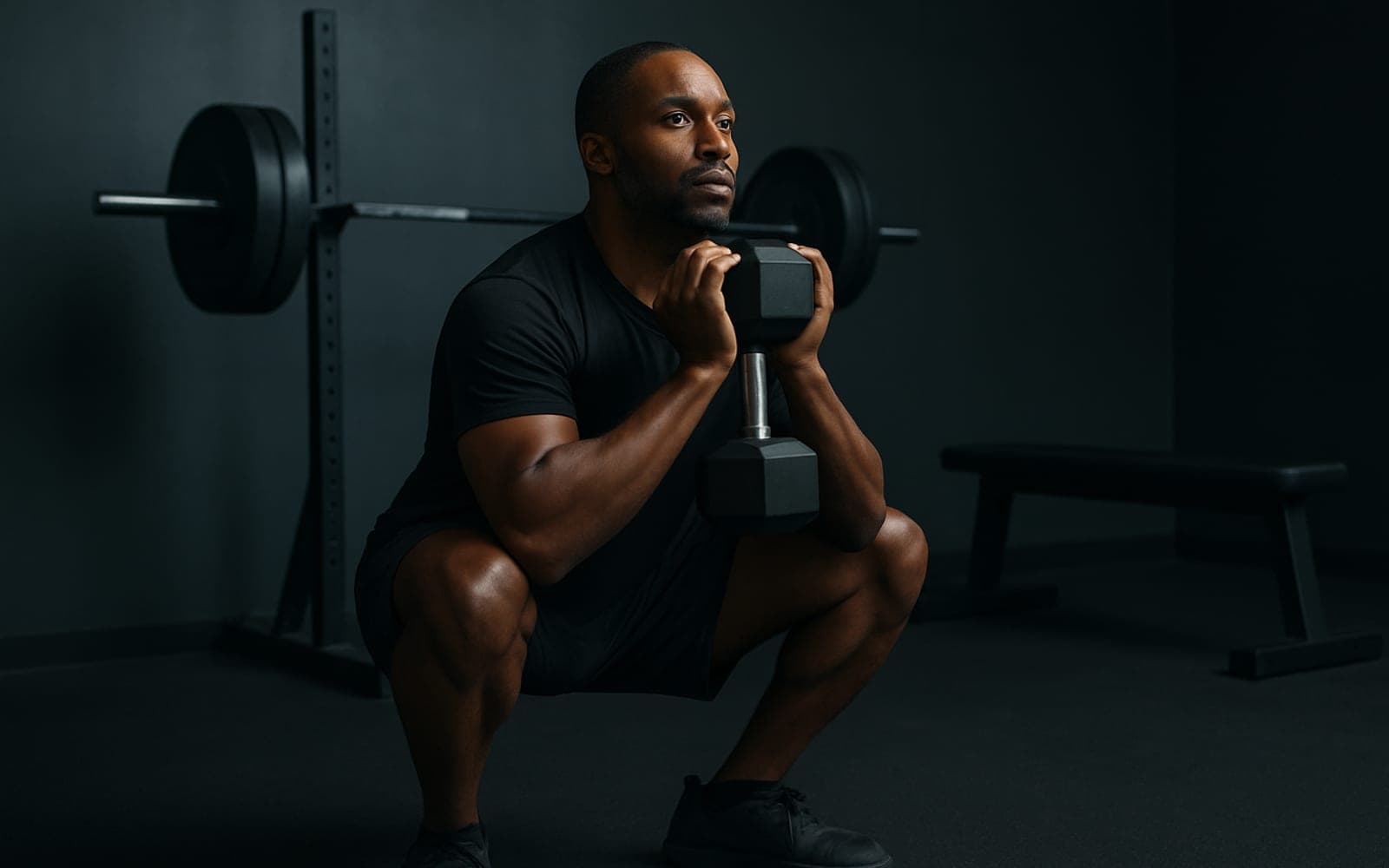
Bodyweight Squat, Goblet Squat all train the same squat pattern with different equipment, so any of them works when the machine is busy or your gym does not have it.
What are the most common jump squat mistakes?
Stiff, loud landings; Knees caving on landing; Half-squatting. Squat to about parallel, then explode straight up; land softly with bent knees and immediately absorb into the next rep. Quality over quantity.