Dumbbell Pullover
Activation
Muscles worked
Movement
Isolation
Intermediate · Free Weights
Primary muscles
Movement pattern
Equipment category
How to perform
- 1
Set up
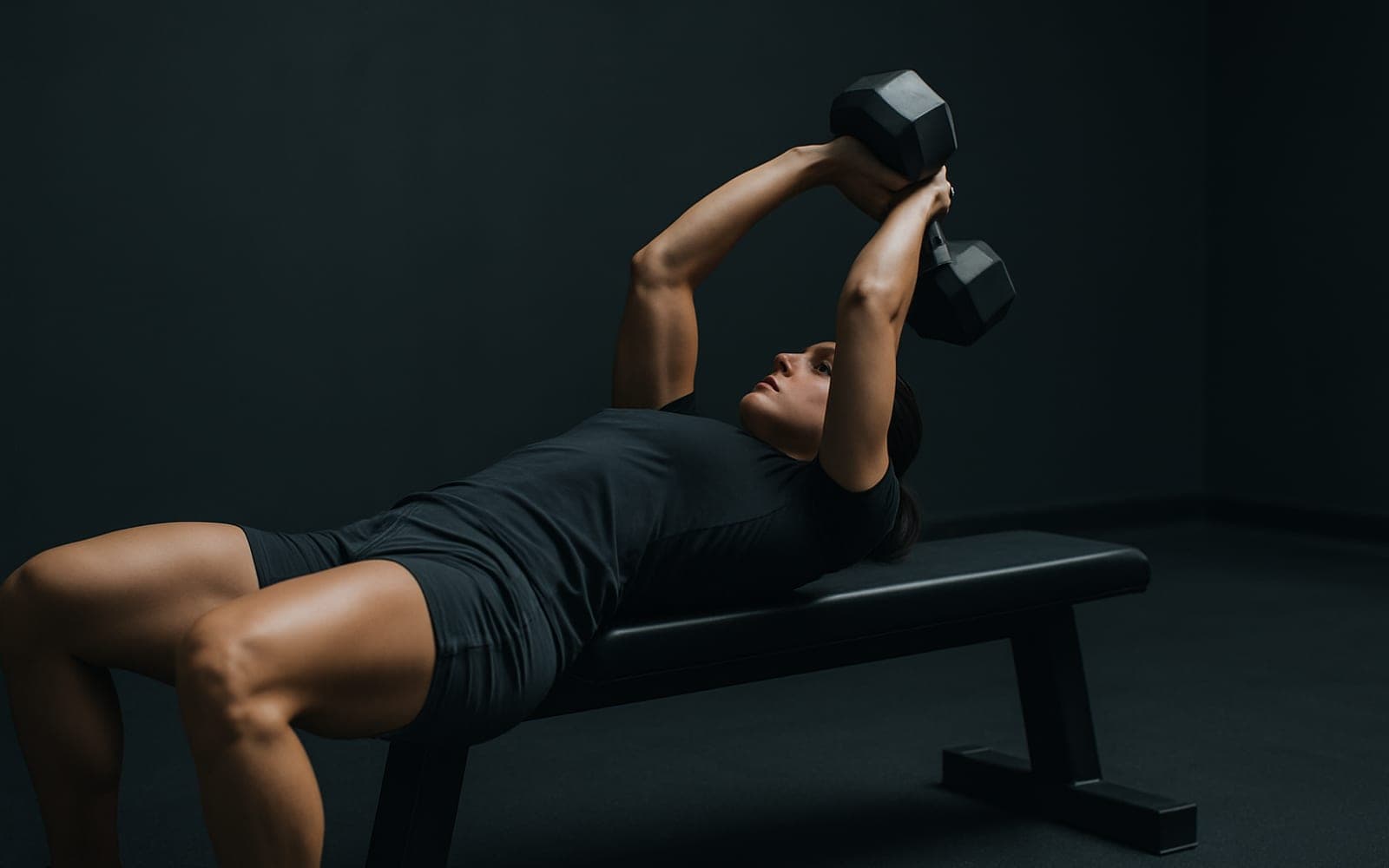
Lie across or along a flat bench holding one dumbbell over the chest with both hands.
- 2
Execute the movement
With a slight elbow bend, lower the dumbbell in an arc behind your head until you feel a lat/chest stretch, then pull it back over the chest.
Common mistakes
- Overreaching and stressing the shoulders
- Bending the elbows to press
Make it harder
Make it easier
Substitutions
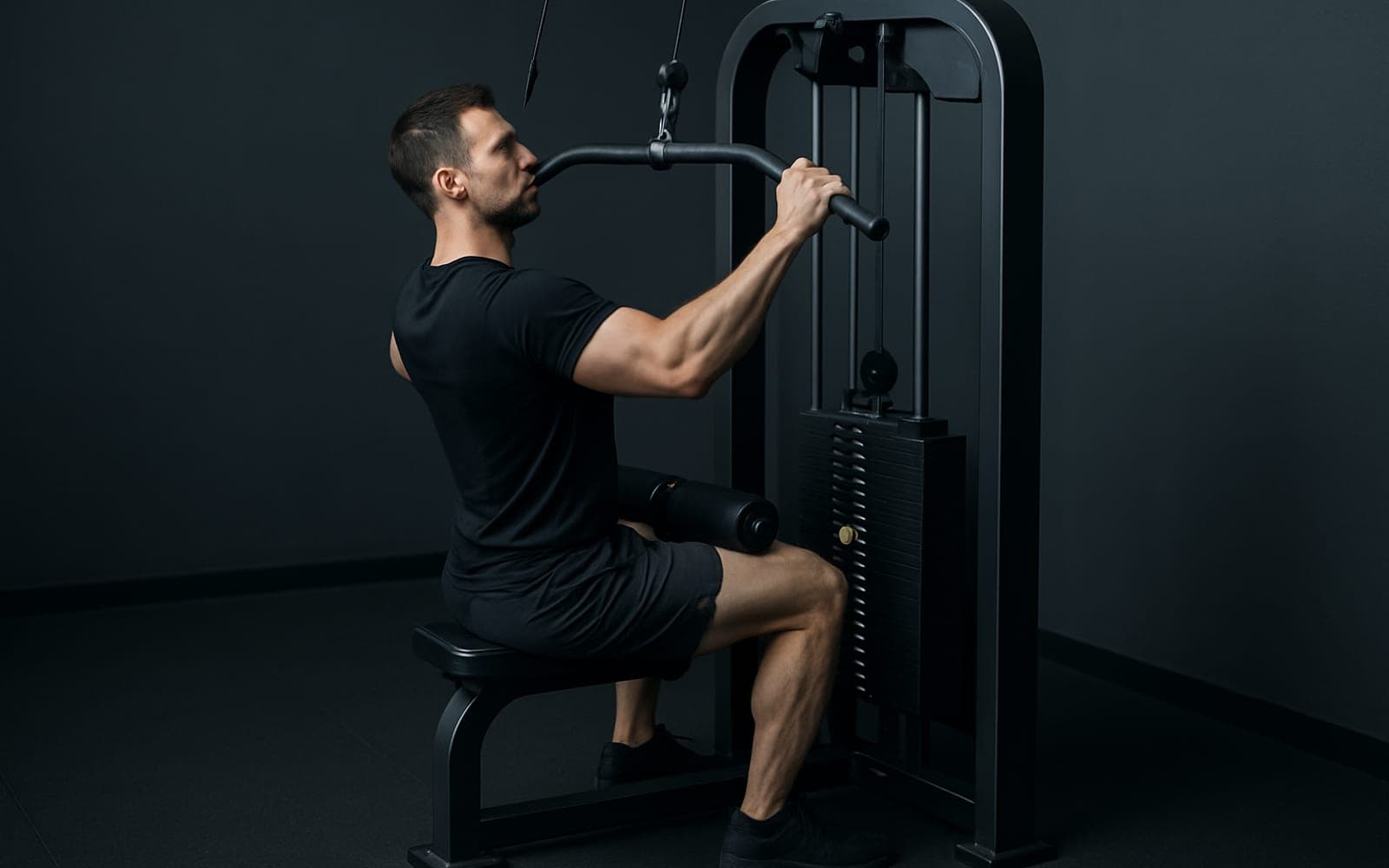
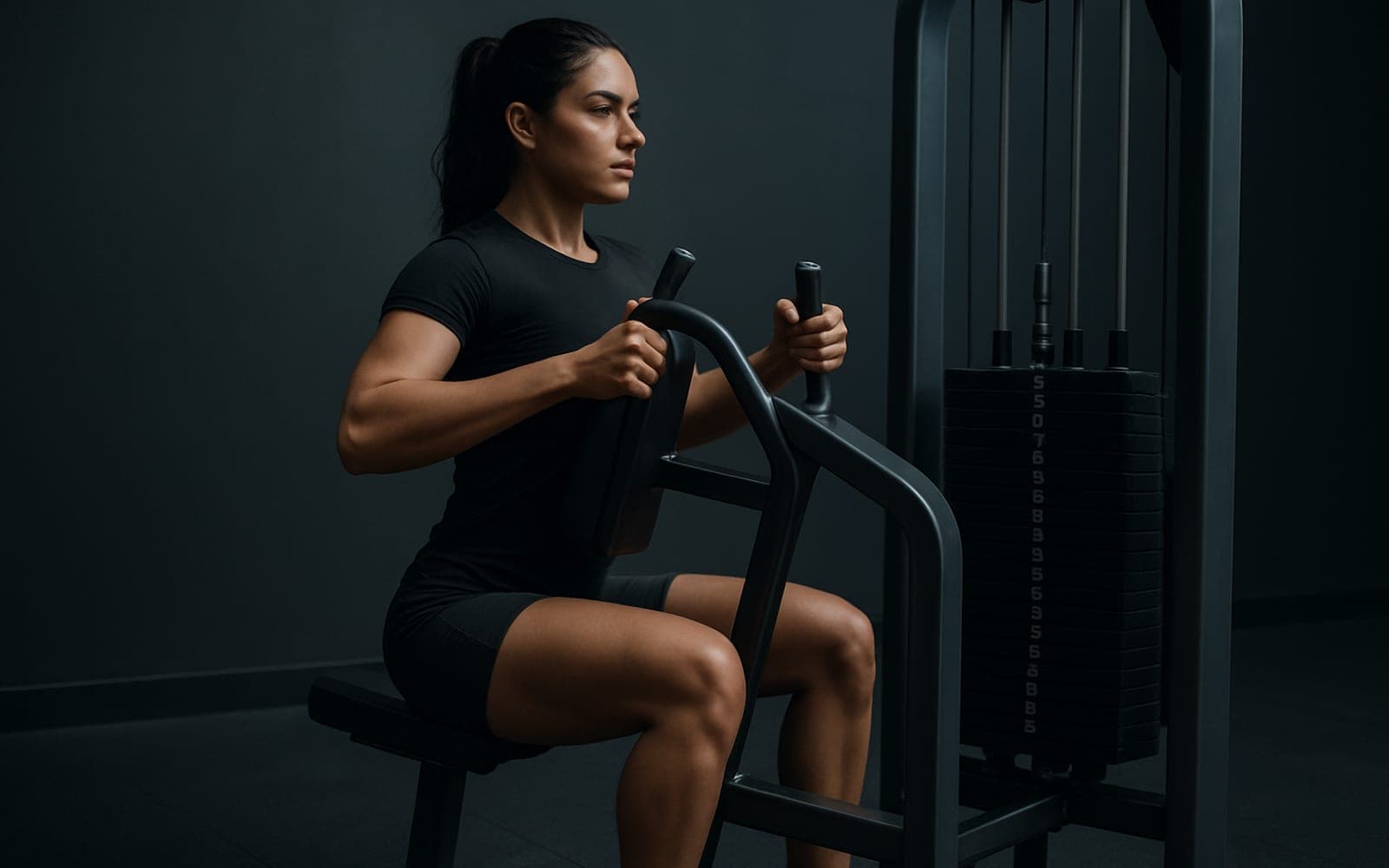
If a machine is busy or unavailable, these train the same pattern a different way.
Your progress over time
What to expect from training this consistently — everyone progresses at their own pace.
- 1
First session
You learn the movement pattern and feel for the arc, dialing in a slight elbow bend and the end-range stretch while using light weight to protect the shoulders.
- 2
Weeks 2–6
Neuromuscular coordination improves, you can control the dumbbell through a fuller ROM, and begin to use moderately heavier loads for 6–12 reps with less discomfort.
- 3
Months 2–4
Noticeable hypertrophy in the lats and some chest thickness if used consistently (8–15 rep ranges, progressive overload), plus better shoulder and thoracic mobility through the arc of motion.
- 4
Months 4–6
You can reliably increase working sets and load while maintaining technique, and the pullover contributes to greater upper‑body width/size and improved synergy with presses and rows.
- 5
6+ months
When programmed smartly alongside other lifts, the pullover becomes a solid accessory for sustained lat/chest development, offering reliable volume without excessive joint stress for most trainees.
Benefits of the dumbbell pullover
Strong stimulus for the latissimus dorsi through an extended range of motion, supporting upper‑back width and development.
Secondary recruitment of the chest and long‑head triceps helps add thickness across the anterior torso when used in higher volumes.
Teaches controlled overhead-to-chest movement and can improve thoracic extension and scapular control when performed with good form.
Offers a low‑impact accessory option to add horizontal/vertical pull-like stimulus without heavy loading on the spine.
Provides variety to a program, helping break plateaus by targeting the lats and chest with a different movement pattern than rows or presses.
Useful for trainees with limited equipment, as a single dumbbell pullover delivers meaningful volume for upper‑body muscle-building.
Exercises that pair with this
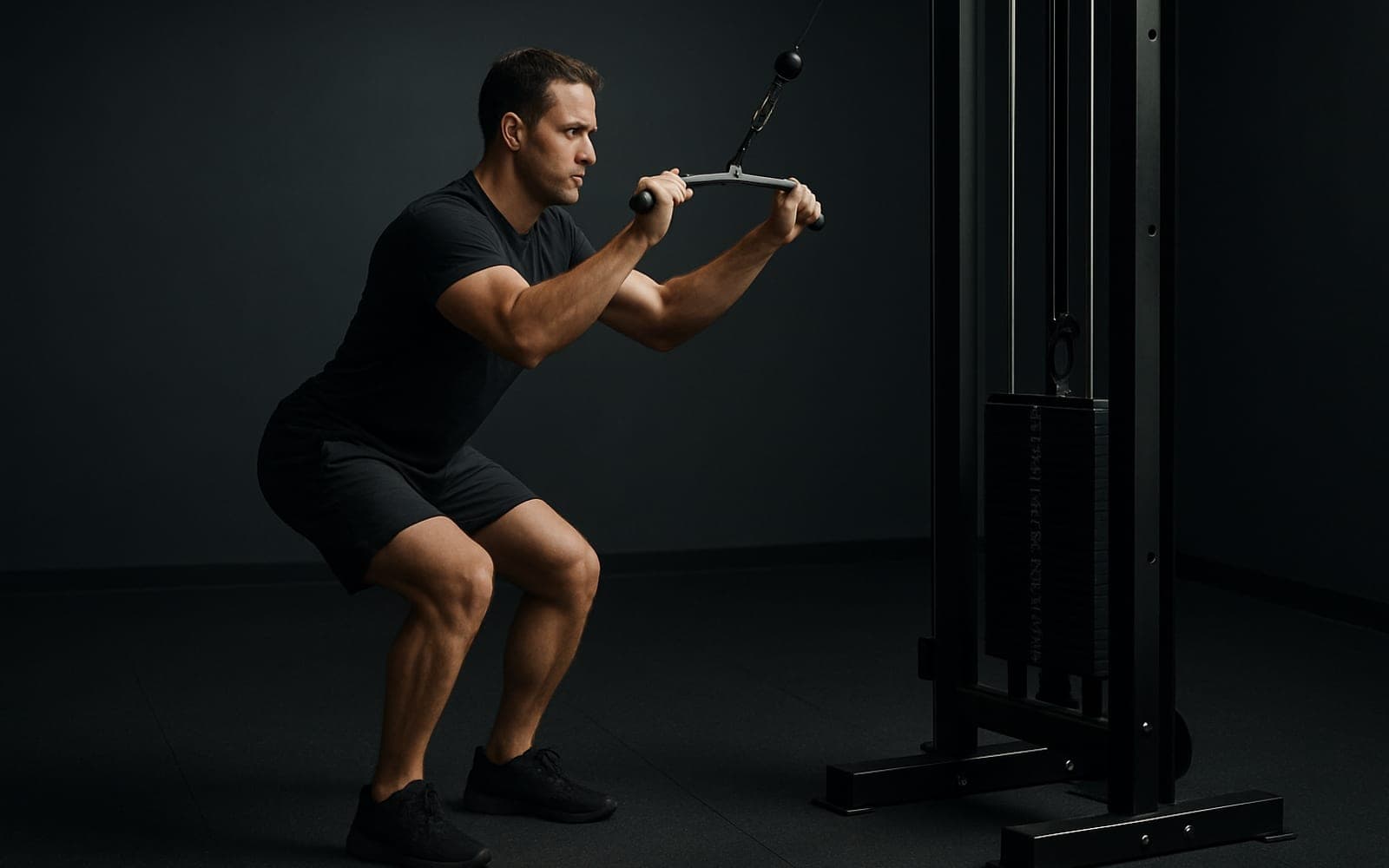
Same muscles or the same movement pattern — useful for building the rest of the session.

Dumbbell Pullover — questions people ask
What muscles does the dumbbell pullover work?
The dumbbell pullover trains the lats as the primary target, with the chest, triceps working as support. It is a isolation pattern, so it also trains the coordination that pattern needs.
How many sets and reps of the dumbbell pullover should I do?
Three sets of 8–12 reps with about 90 seconds of rest is a reliable default. Increase the weight once the last rep of every set still looks clean.
Is the dumbbell pullover good for beginners?
It is a reasonable second step. The dumbbell pullover asks for some control and body awareness. Use a lighter dumbbell and shorter range. If it feels like too much, build the pattern on the machine row first.
What can I do instead of the dumbbell pullover?
Lat Pulldown, Machine Row all train the same isolation pattern with different equipment, so any of them works when the machine is busy or your gym does not have it.
What are the most common dumbbell pullover mistakes?
Overreaching and stressing the shoulders; Bending the elbows to press. With a slight elbow bend, lower the dumbbell in an arc behind your head until you feel a lat/chest stretch, then pull it back over the chest.
Can I do the dumbbell pullover at home?
It needs free weights equipment, so it belongs in a gym session rather than a home workout unless you own that equipment.